- 23/12/2025
- MyFinanceGyan
- 369 Views
- 2 Likes
- Finance
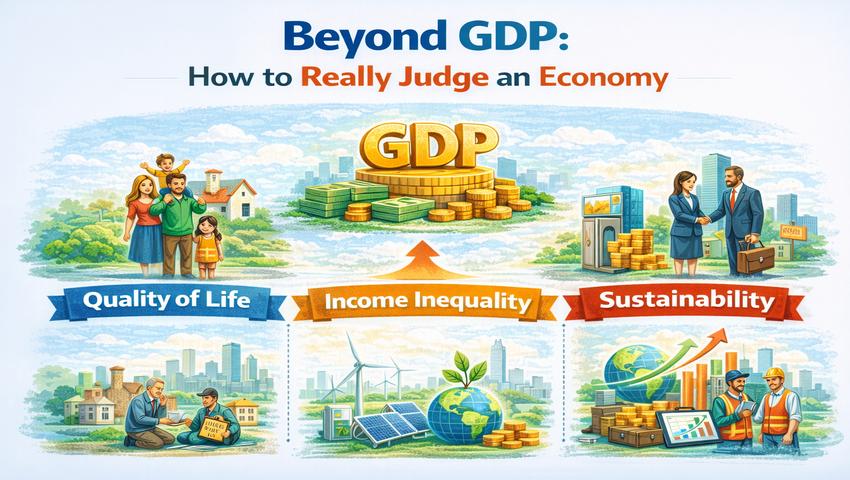
Beyond GDP: How to Really Judge an Economy?
Whenever a country shares its economic performance, the first number everyone talks about is GDP. A rising GDP often sounds like good news. But GDP alone does not tell the full story. It shows how big an economy is — not how healthy it is, or how people are actually living.
To understand an economy properly, we need to look beyond headline GDP. Three indicators together give a much clearer picture:
- Real GDP
- Core inflation
- Per-capita data
When these three are read together, they help investors, policy-makers, and ordinary citizens make better judgments.
Why GDP Alone Can Be Misleading?
GDP measures the total value of goods and services produced in a country. While useful, it has many limits:
- Inflation effect: If prices rise, GDP can increase even when production stays the same.
- Population size: A large GDP does not mean people are well-off if the population is very large.
- Unequal growth: Growth may benefit only a small group, leaving most people behind.
- Temporary growth: GDP can rise due to short-term factors like government spending or asset bubbles.
- Ignores wellbeing: GDP does not count unpaid work, environmental damage, or quality of life.
Because of this, GDP should never be seen in isolation.
Real GDP: Growth That Actually Counts:
Real GDP adjusts GDP for inflation. It shows whether the economy is producing more goods and services — not just charging higher prices.
What to Look at in Real GDP?
- Growth trend: Consistent growth over time matters more than one strong quarter.
- Sector growth: Healthy growth comes from multiple sectors like services, manufacturing, and exports.
- Productivity: Growth driven by better productivity is more sustainable than growth driven only by more workers.
- Nature of growth: Temporary boosts are less valuable than long-term structural growth.
Why Real GDP Is Important?
Real GDP tells us if the economy is truly expanding. It helps identify whether growth is sustainable and where it is coming from.
Core Inflation: Understanding Real Price Pressure:
Core inflation removes food and energy prices, which change often due to weather or global events. This helps show the underlying inflation trend.
Why Food and Energy Are Excluded?
Food and fuel prices can rise or fall suddenly. These short-term movements can hide the real inflation trend affecting wages, rent, and services.
What Core Inflation Shows?
- Demand pressure: Rising core inflation means demand is consistently higher than supply.
- Wage trends: It signals whether higher wages and prices are becoming permanent.
- Policy signals: Central banks use core inflation to decide interest rates.
Common Core Inflation Measures:
- CPI excluding food and energy
- PCE core inflation
- Trimmed mean or median inflation measures
Each gives a slightly different but useful view.
Per-Capita Data: Are People Actually Better Off?
GDP per capita divides total GDP by population. It gives an idea of average output per person.
Why Per-Capita Data Matters?
- Population adjustment: GDP growth means little if population growth absorbs most gains.
- Living standards: Rising real GDP per capita usually means better incomes and services.
- Fair comparisons: It helps compare countries of different sizes.
Go Beyond Averages:
GDP per capita is still an average. To understand real life conditions, also look at:
- Median income
- Income inequality (Gini coefficient)
- Poverty levels
- Access to healthcare, education, and jobs
Reading the Indicators Together:
Looking at all three indicators together gives deeper insight.
Common Situations:
- Strong real GDP + low core inflation + rising per-capita:
Healthy and balanced growth. Living standards are improving.
- High GDP growth + high core inflation + flat per-capita:
Prices are rising faster than real incomes. Growth feels painful.
- Real GDP growth + rising inflation + weak per-capita:
Growth benefits only some sectors or people.
- Weak GDP + low inflation + falling per-capita:
Economic slowdown or recession.
- GDP growth driven by population growth only:
Total output rises, but people do not feel richer.
A Simple 3-Step Framework to Judge Any Economy:
Step 1: Check Real GDP
- Is growth steady?
- Is it coming from multiple sectors?
Step 2: Look at Core Inflation
- Is inflation close to the target?
- Are wages and rents rising too fast?
Step 3: Review Per-Capita and Distribution Data
- Is real GDP per person increasing?
- Are median incomes rising?
- Is inequality worsening?
When all three point in the same direction, your conclusion is strong.
Important Data Limitations to Remember:
Real GDP:
- Early data can be revised
- Year-on-year comparisons can mislead
Core Inflation:
- Different measures show different trends
- Consumer behavior changes over time
Per-Capita Data:
- Population data may lag
- Always use inflation-adjusted figures
Simple Case Examples:
Example 1: Export Growth
Exports rise, real GDP grows, inflation stable, per-capita rises → positive growth phase.
Example 2: High Inflation Growth
Nominal GDP rises fast, inflation spikes, real incomes fall → growth is misleading.
Example 3: Population-Led Growth
GDP grows, per-capita stagnates, youth unemployment rises → reforms needed.
How Different Groups Can Use These Indicators?
Investors:
- Real GDP for market growth
- Core inflation for interest rate trends
- Per-capita data for consumer demand
Policy-Makers:
- Control inflation without hurting growth
- Focus on productivity and jobs
- Protect low-income groups
Citizens:
- Look beyond GDP headlines
- Track median income and job quality
- Ask if growth is reaching ordinary people
A Simple Economic Dashboard:
Track these regularly:
- Real GDP growth
- Core inflation
- Real GDP per capita
- Median wage growth
- Unemployment rate
- Inequality indicators
- Fiscal and external balances
Together, these show the true health of an economy.
Frequently Asked Questions:
For country size, GDP matters. For living standards, per-capita matters more.
Core inflation shows trends, but headline inflation matters for daily life.
Yes. Inflation, inequality, or population growth can reduce real incomes.
Conclusion: Focus on Meaningful Growth:
GDP numbers grab attention, but they do not tell the whole story.
- Real GDP shows actual production growth
- Core inflation reveals lasting price pressure
- Per-capita data shows whether people’s lives are improving
True progress comes from growth that is real, stable, and widely shared.
Disclaimer:
The views expressed in this article are personal and meant only for awareness and educational purposes. This content does not provide any product, investment, or financial recommendations.