- 17/01/2026
- MyFinanceGyan
- 121 Views
- 2 Likes
- Investment
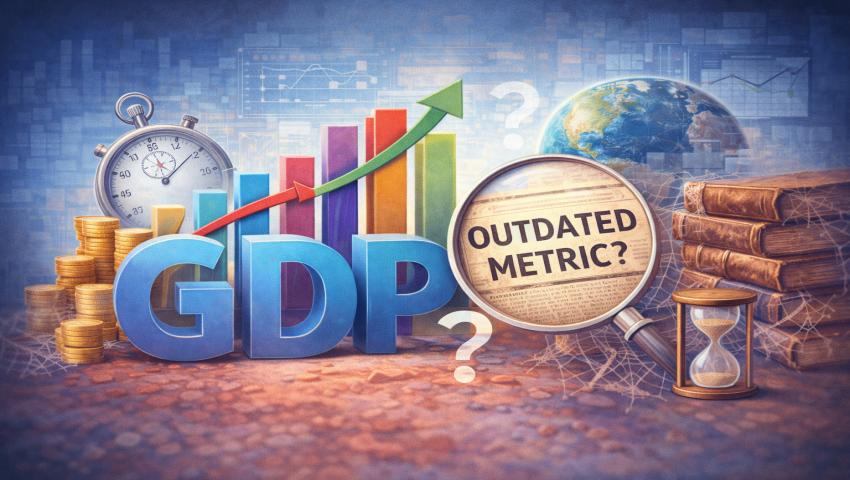
Is GDP an Outdated Metric?
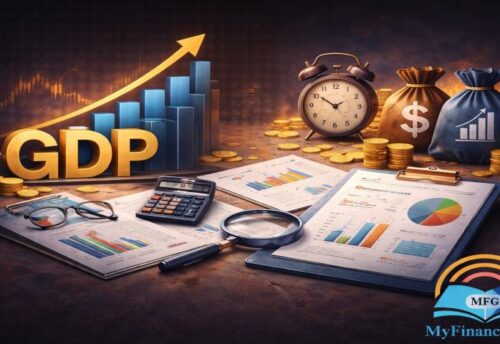
For decades, Gross Domestic Product (GDP) has been the headline indicator of a nation’s economic success. Rising GDP figures are often celebrated as proof of progress, prosperity, and stability. Governments highlight growth numbers, markets react to them, and the media treats them as a scorecard for national performance.
Yet beneath this familiar statistic lies an increasingly urgent debate: Does GDP still capture what truly matters in the 21st century?
As the world confronts climate change, widening inequality, and declining social well-being, it has become clear that economic growth alone does not guarantee a better life for citizens. A country can grow richer on paper while its environment deteriorates, social cohesion weakens, and large sections of the population are left behind.
This has prompted economists, policymakers, and international institutions to rethink a fundamental question: Should we redefine how progress is measured?
This article explores what GDP actually measures, why it is increasingly inadequate, its blind spots—especially related to the environment and inequality—and the alternative indicators emerging to provide a more complete picture of human well-being and sustainable development.
What GDP Really Measures?
Gross Domestic Product (GDP) represents the total monetary value of all final goods and services produced within a country’s borders over a specific period.
It is commonly calculated using three approaches:
- Production approach – the value of output minus intermediate inputs
- Income approach – total income earned through wages, rent, interest, and profits
- Expenditure approach – total spending on goods and services, calculated as:
GDP = Consumption + Investment + Government Spending + Net Exports
GDP was developed in the 1930s by economist Simon Kuznets as a practical tool to track economic activity during the Great Depression. Crucially, Kuznets himself warned against using GDP as a measure of social welfare.
Over time, however, GDP became synonymous with national success. Policymakers began equating higher growth with progress—assuming that rising output would automatically improve living standards for all.
The Core Problem: GDP Ignores the Costs of Growth
Environmental degradation:
GDP counts all market activity as positive—even when it causes environmental harm.
- Deforestation boosts timber sales and increases GDP
- Oil spills generate cleanup costs that add to GDP
- Higher industrial output raises carbon emissions, but the damage is never subtracted
In effect, GDP treats the destruction of natural resources as income, not as a loss of wealth. As climate change intensifies, this accounting flaw becomes increasingly dangerous.
Environmental economists have long advocated for a “green GDP”—one that deducts environmental degradation and resource depletion from economic output.
Blindness to inequality and distribution:
GDP measures total output, not who benefits from it.
A country’s GDP may rise sharply even if most gains flow to a small elite. If income growth is concentrated among the top few percent, the majority may experience stagnant wages, rising living costs, and economic insecurity.
This helps explain why countries with high GDP—such as the United States—can still face widespread dissatisfaction and deep inequality.
Nobel laureate Joseph Stiglitz argues that an excessive focus on GDP masks social and economic imbalances that ultimately threaten long-term stability.
Exclusion of unpaid and care work:
GDP only counts market transactions. It ignores unpaid activities such as:
- Childcare and elder care
- Household work
- Volunteer services
These activities are essential to economic and social functioning. According to the OECD, if unpaid work were included, it could account for 10–50% of GDP in many countries.
This omission disproportionately undervalues women, who perform the majority of unpaid care work worldwide.
The paradox of "defensive spending":
GDP increases when money is spent responding to negative events—such as crime, accidents, pollution-related diseases, or natural disasters.
Healthcare costs from pollution-related illness or reconstruction spending after disasters raise GDP figures, even though they reflect declining quality of life. These are known as defensive expenditures—they boost output without improving well-being.
The Environment: GDP's Biggest Blind Spot
Growth versus ecological survival:
Modern economic growth often relies on fossil fuels, intensive agriculture, and resource extraction. As a result, GDP growth is frequently accompanied by rising emissions, biodiversity loss, and ecological stress.
Fast-growing economies like India and China face severe environmental challenges—air pollution, water scarcity, and urban congestion—yet traditional GDP accounting continues to reward this unsustainable model.
Resource depletion as invisible debt:
When forests are cleared, minerals extracted, or fisheries depleted, GDP may rise in the short term. But this reflects the liquidation of natural assets, not genuine wealth creation.
The World Bank’s Inclusive Wealth Index shows that several countries with strong GDP growth have experienced declining overall wealth once natural capital losses are included—creating an illusion of prosperity that burdens future generations.
The move toward green accounting:
Recognising these gaps, institutions are adopting new frameworks. The UN’s System of Environmental-Economic Accounting (SEEA) integrates ecosystems, resource use, and environmental degradation into national accounts.
Countries such as New Zealand, Bhutan, and the UK are experimenting with beyond-GDP dashboards to align policymaking with sustainability and long-term well-being.
Inequality: When Growth Fails to Deliver Prosperity?
Between 1980 and 2020, global GDP more than tripled—yet inequality widened dramatically. In many countries, GDP per capita rose steadily while median wages stagnated.
GDP’s failure to capture distribution leads to misleading optimism. Governments may celebrate growth while citizens experience economic stress and declining trust in institutions.
This has fueled interest in well-being economics, which prioritises outcomes such as health, education, equality, and life satisfaction over aggregate output.
New Zealand’s Wellbeing Budget exemplifies this shift—evaluating policies based on their impact on mental health, child poverty, environment, and equity rather than GDP growth alone.
Beyond GDP: Better Ways to Measure Progress
A growing consensus suggests that GDP should be complemented—or partially replaced—by broader indicators. Key alternatives include:
- Human Development Index (HDI): Developed by the UNDP, HDI combines health, education, and income to assess human capabilities rather than production alone.
- Genuine Progress Indicator (GPI): GPI adjusts consumption-based measures by subtracting environmental and social costs and adding the value of unpaid work.
- Inclusive Wealth Index (IWI): Measures produced, human, and natural capital to assess long-term sustainability.
- Social Progress Index (SPI): Evaluates how effectively societies convert economic resources into improved quality of life—excluding economic output altogether.
- Gross National Happiness (GNH): Bhutan’s framework prioritises psychological well-being, cultural preservation, environmental protection, and good governance.
- Doughnut Economics: Proposed by Kate Raworth, this model defines a “safe and just space” for humanity—meeting social needs without breaching ecological limits.
Why GDP Still Dominates?
Despite its flaws, GDP persists because it is simple, comparable, and deeply embedded in global institutions. Political incentives, investor expectations, and the lack of a universally accepted alternative reinforce its dominance.
However, crises such as climate shocks, pandemics, and financial instability have exposed GDP’s limitations more clearly than ever.
The Future of Measuring Progress:
The future lies not in abandoning GDP entirely, but in multi-dimensional dashboards that integrate economic, social, and environmental indicators—such as carbon intensity, median income growth, life satisfaction, and ecological footprints.
Advances in digital data, satellite monitoring, and AI now make real-time measurement of environmental and social outcomes possible, enabling more responsive and informed policymaking.
Ultimately, this debate is philosophical as much as technical. The central question is whether societies should pursue endless expansion—or aim for balanced thriving within planetary boundaries.
Conclusion:
GDP was a powerful and necessary tool for its time. But in today’s interconnected and fragile world, its limitations are impossible to ignore. It fails to capture environmental depletion, social inequality, and the deeper dimensions of human well-being.
In an era of climate urgency and social unrest, progress must mean more than growth. Measuring what truly matters—sustainability, equity, and quality of life—is no longer optional; it is essential.
The real question is not whether GDP is outdated, but whether we are ready to redefine progress itself.
Please note:
The views expressed in this article are personal and intended solely for awareness and educational purposes. This content does not constitute product recommendations or professional advice.