- 20/01/2026
- MyFinanceGyan
- 154 Views
- 2 Likes
- Investment
Real vs Nominal GDP: Why Investors Should Always Think in Inflation-Adjusted Terms?
Every time governments release GDP data, headlines celebrate growth or warn of slowdown:
“India grows at 7%.”
“US GDP hits record highs.”
Markets react, policymakers claim success, and investors feel reassured.
Yet there is an uncomfortable truth behind these numbers: headline GDP often misleads investors. Not because it is wrong, but because most attention falls on nominal GDP, not real GDP.
For investors, this distinction is critical. It can determine the difference between:
- Genuine wealth creation and erosion of purchasing power
- Sound asset allocation and dangerous overexposure
- Beating inflation and merely running in place
This article explains the difference between real and nominal GDP, why inflation adjustment is essential, and how thinking in real terms leads to better investment decisions.
What Is GDP? A Brief Refresher
Gross Domestic Product (GDP) measures the total value of goods and services produced within an economy over a given period. It is used to:
- Compare economic size
- Track growth trends
- Guide monetary and fiscal policy
- Shape investor sentiment
However, GDP comes in two forms:
- Nominal GDP
- Real GDP
Confusing the two is one of the most common—and costly—analytical mistakes investors make.
Nominal GDP: Growth Without Context
What Is Nominal GDP?
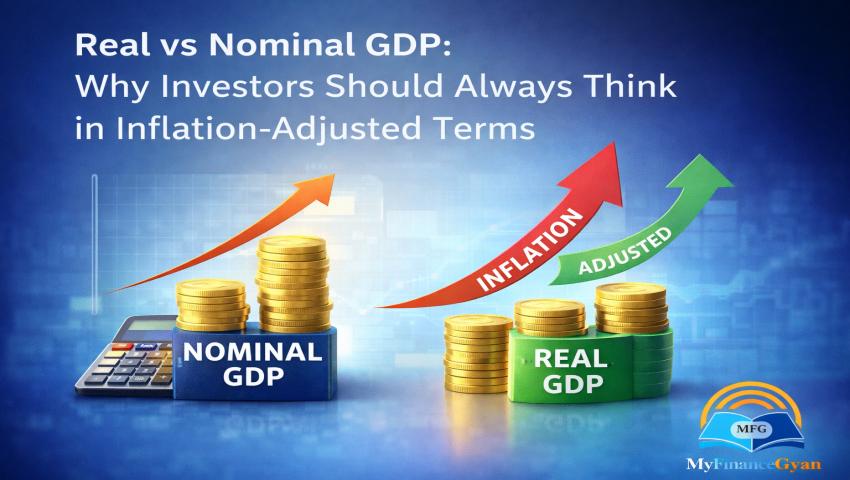
Nominal GDP measures output at current market prices, without adjusting for inflation.
In simple terms:
Nominal GDP = Changes in output + Changes in prices
When inflation rises, nominal GDP increases—even if actual production does not.
Example: The Illusion of Growth
Nominal GDP grows by 10%, yet real output is unchanged.
This is why nominal GDP can overstate progress during inflationary periods.
Real GDP: Growth That Actually Matters
What Is Real GDP?
Real GDP adjusts nominal GDP for inflation, isolating changes in actual output and purchasing power.
In essence:
Real GDP = Nominal GDP – Inflation Effect
It answers the question investors truly care about:
Is the economy producing more in real terms?
Why Real GDP Matters to Investors?
Real GDP:
- Strips out price distortions
- Reflects true productivity
- Allows meaningful comparisons across time
- Aligns with real incomes and consumption
For investors, real GDP is reality—nominal GDP is noise.
Inflation: The Silent Distorter of Wealth
Inflation is often described as rising prices. For investors, it is better understood as:
A stealth tax on purchasing power
When inflation rises:
- Revenues increase, but costs rise too
- Salaries grow, but real income may not
- Asset prices inflate, but real returns can turn negative
Nominal numbers look healthy. Real outcomes quietly deteriorate.
Nominal vs Real GDP: A Quick Comparison
Why Investors Should Care More Than Anyone Else?
1] Markets Price Reality, Not Headlines:
Asset prices respond to:
- Real earnings growth
- Real consumption trends
- Real interest rates
If nominal GDP rises but real GDP stagnates, corporate margins compress and valuations suffer.
2] Nominal Growth Can Hide Economic Stress:
The 1970s offer a powerful lesson:
- Nominal GDP: Strong
- Inflation: Very high
- Real GDP: Weak
- Equity returns: Poor in real terms
Investors who ignored inflation lost purchasing power despite positive nominal returns.
3] Real GDP Drives Sustainable Profits:
Companies benefit from inflation only if they have:
- Pricing power
- Cost control
- Balance-sheet advantages
Otherwise, rising costs offset revenues and real profit growth stalls. Over time, real GDP—not nominal GDP—anchors earnings growth.
Real vs Nominal Returns: The Same Investor Trap
The GDP confusion mirrors a common investing mistake.
Fixed deposit example:
- Nominal return: 7%
- Inflation: 6%
- Real return: 1%
Wealth appears to grow, but purchasing power barely improves. The same logic applies at the macro level.
Interest Rates, Inflation, and GDP: The Triangle Investors Must Watch
Nominal vs Real Interest Rates:
Real interest rate = Nominal rate – Inflation
Central banks respond to:
- Real growth
- Inflation expectations
If nominal GDP rises due to inflation, policy tightening may follow—often hurting equities and bonds. Investors must ask:
Is growth real or inflation-driven?
Why Governments Prefer Nominal GDP?
Inflation reduces debt-to-GDP ratios without repaying debt. Debt stays fixed while GDP inflates.
For investors, this means:
- Fiscal risks may be understated
- Currency depreciation risks rise
- Sovereign safety can be overstated
Real GDP and Equity Valuations:
Equity valuations depend on:
- Future earnings growth
- Real discount rates
When real GDP slows:
- Revenue growth weakens
- Earnings expectations fall
- Valuation multiples compress
Nominal GDP alone does not justify high market valuations.
Sectoral Impact: Inflation vs Real Growth
Sectors Favoured by Inflation:
- Commodities
- Energy
- Real estate (short term)
- Highly leveraged businesses
Sectors Dependent on Real Growth:
- Consumer discretionary
- Manufacturing
- Technology
- Services
Misreading nominal GDP as real growth leads to poor sector allocation.
Emerging Markets: Where the Trap Is Deepest
Emerging markets often show:
- High nominal GDP growth
- High inflation
- Currency depreciation
If inflation and currency losses exceed growth, foreign investors earn weak real returns. Real GDP plus currency stability matters far more than headline growth.
India: Why Real Growth Matters More Than Speed
India frequently reports:
- Nominal GDP growth: 10–12%
- Real GDP growth: 6–7%
For investors:
- Earnings track real growth
- Consumption tracks real income
- Markets discount real demand
Ignoring this leads to overestimating sustainability and mispricing cyclicals.
A Practical Framework for Investors:
Step 1: Strip out inflation
What is real GDP growth?
Step 2: Compare real GDP with earnings
- Earnings > real GDP → margin expansion
- Earnings < real GDP → pressure building
Step 3: Compare real GDP with real rates
- High real growth + low real rates → bullish
- Low real growth + high real rates → bearish
Real GDP per Capita: The Final Layer
Population growth matters.
If real GDP rises but population grows faster:
- Per-capita income stagnates
- Consumption weakens
Real GDP per capita is the true measure of prosperity—especially for consumer-focused investors.
Common Investor Mistakes:
- Celebrating GDP growth without inflation context
- Ignoring real yields on bonds
- Underestimating currency erosion
- Confusing asset inflation with wealth creation
- Using nominal CAGR instead of real CAGR
Why Inflation-Adjusted Thinking Is an Investor Superpower
Most investors think in nominal terms. Professionals think in real purchasing power.
Shifting to inflation-adjusted analysis instantly improves:
- Risk assessment
- Asset allocation
- Long-term wealth preservation
Key Takeaways:
- Nominal GDP can rise without real growth
- Inflation distorts returns and valuations
- Real GDP reflects true economic strength
- Real returns—not nominal—build wealth
- Always analyse growth, earnings, and rates in real terms
Conclusion: Don't Be Fooled by Bigger Numbers
In investing, bigger numbers do not always mean better outcomes. Nominal GDP growth may look impressive, but real GDP reveals the truth about productivity, demand, and long-term wealth creation.
The best investors don’t ask how fast the economy is growing. They ask:
How much real purchasing power is being created?
Once you shift from nominal to real thinking, your analysis becomes sharper, your expectations more realistic, and your investment decisions far more resilient—especially in an inflationary world.
Please note:
The views expressed in this article are personal and intended solely for awareness and educational purposes. This content does not provide any product recommendations or investment advice.