
- 04/02/2026
- MyFinanceGyan
- 155 Views
- 2 Likes
- Tax
Union Budget 2026 Highlights Simple Guide to Key Tax, Economy & Business Reforms
The Union Budget 2026–27, presented by Finance Minister Nirmala Sitharaman on 1 February 2026, focuses on fast economic growth, better tax compliance, strong infrastructure development, and long-term reforms. This budget aims to make India more business-friendly while keeping fiscal discipline and supporting investors, taxpayers, and industries.
Macroeconomic & Fiscal Outlook:
The government has clearly focused on economic stability and growth.
- Fiscal deficit target is set at around 3% of GDP for FY27, slightly lower than FY26. This shows commitment to responsible spending and long-term sustainability.
- Public capital expenditure increased, especially for roads, railways, ports, and urban infrastructure. This will improve productivity and create jobs.
- India is expected to remain among the fastest-growing major economies, with strong focus on exports, manufacturing, and productivity-led growth.
Direct Tax Reforms: Simpler Rules & Taxpayer Relief
Direct tax reforms are a major highlight of Budget 2026. The goal is to reduce complexity and improve ease of compliance.
1. New Income Tax Act 2025 Comes Into Effect:
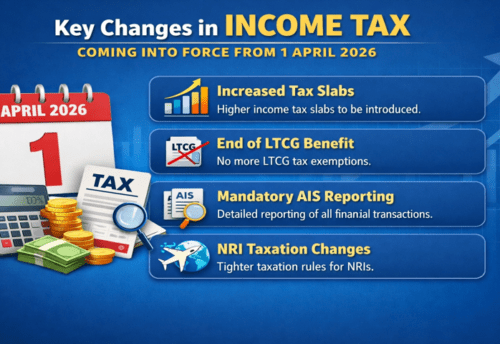
- The new Income Tax Act, 2025 will be effective from 1 April 2026. It replaces old and complex tax laws.
- The new law aims to reduce disputes, simplify language, and modernize compliance.
- Tax forms and return filing systems will be redesigned to make them user-friendly and faster.
2. TDS & TCS Rationalization:
To improve cash flow and reduce paperwork:
- TCS on foreign education and medical expenses under LRS reduced from 5% to 2%.
- TCS on overseas tour packages capped to reduce burden on travellers.
- Simplified TDS rules for manpower supply
- Small taxpayers can get automatic lower or nil TDS/TCS certificates, reducing manual approvals and delays.
3. Minimum Alternate Tax (MAT) Changes:
- MAT rate reduced from 15% to 14%.
- MAT is now proposed as a final tax, providing clarity to companies.
- Old MAT credits can still be used, protecting past tax benefits.
4. Other Direct Tax Benefits:
- Motor accident compensation interest is now tax-free, so claimants receive the full amount.
- Extended deadlines for filing and revising returns up to 31 March, instead of 31 December earlier. This gives more flexibility to taxpayers.
Indirect Tax Reforms: Customs & Trade Support
The budget brings major changes in customs duty and trade policies to promote exports and manufacturing.
1. Customs Duty Relief:
- Nuclear plant imports exempt from Basic Customs Duty (BCD) till 2035, supporting clean energy projects.
- Duty-free import limit for seafood export inputs increased to 3% of FOB value.
- Leather export time limit extended to 1 year, helping exporters manage production cycles.
- Lithium-ion cells and EV components exempted from BCD, boosting green energy and electric vehicles.
2. Sector-Specific Incentives:
- Duty exemption on aircraft MRO parts, supporting aviation maintenance in India.
- Biogas and CNG imports made duty-free, encouraging clean fuel use.
- Lower customs duty on critical medicines, improving healthcare affordability.
- Personal import duty reduced to 10% from 20% beyond free limits.
3. Customs Process Modernization:
- Increased use of automation and risk-based clearance, reducing officer intervention.
- AEO businesses get 30-day documentation timelines, improving ease of trade.
- Advance ruling validity extended to 5 years, helping businesses plan investments better.
GST and Consumption Growth:
While there are no major GST rate changes, strong GST collections show rising consumption and service sector growth. Better customs and tax systems are expected to further reduce compliance costs for businesses.
Sectoral Reforms & Strategic Projects:
Budget 2026 also focuses on long-term national growth:
- India Semiconductor Mission 2.0 launched to boost domestic chip manufacturing.
- Special schemes for high-value agriculture like coconut, cocoa, cashew, and sandalwood.
- Record spending on defence and infrastructure, including rail corridors and national waterways.
Impact of Budget 2026 on Taxpayers & Businesses:
1. For Individual Taxpayers:
- Simpler tax rules and easy-to-understand forms.
- Lower TCS on foreign spending.
- More time to revise tax returns.
2. For Corporates & MSMEs:
- Lower MAT and improved TDS/TCS rules improve working capital flow.
- Customs duty relief reduces manufacturing costs.
- ₹10,000 crore SME Growth Fund introduced to support small businesses.
- Support for services sector with medical tourism hubs, AVGC labs, and healthcare training programs.
3. Investor & Market Impact:
- Higher transaction tax on derivatives aims to control excessive speculative trading and stabilize markets.
Conclusion:
Union Budget 2026 shows a strong move towards a simpler tax system, better compliance, and business-friendly reforms. With focus on infrastructure, clean energy, exports, and digital systems, the budget balances growth with fiscal responsibility. These reforms are expected to strengthen India’s global competitiveness and support long-term economic development.
For any legal help related to these reforms, visit the Startup Portal.