- 14/01/2026
- MyFinanceGyan
- 113 Views
- 3 Likes
- Finance
When Rising GDP Doesn’t Beat Inflation? The Story Behind Stagnant Salaries
Introduction: The Paradox of Prosperity
Gross Domestic Product (GDP) is widely seen as the ultimate indicator of economic success. When GDP rises, it signals expansion—higher output, stronger industries, and national progress. Headlines celebrate growth as proof that an economy is thriving.
Yet for millions of workers, this growth feels abstract. Salaries fail to stretch far enough, essential expenses keep rising, and financial security remains elusive. This disconnect—where economies grow but household purchasing power stagnates—reveals a critical imbalance between macroeconomic performance and everyday well-being.
This article explores why GDP growth often fails to translate into higher real wages, how inflation quietly erodes income, and what governments, businesses, and workers can do to close this widening gap.
Understanding GDP and Its Limits:
What GDP Really Measures?
GDP captures the total value of goods and services produced in an economy over a given period. It measures economic activity, not economic fairness. While useful for tracking output and growth trends, GDP says little about how income is distributed or whether workers are better off.
A rising GDP can coexist with stagnant wages, rising inequality, and declining purchasing power—realities often masked by headline growth figures.
Where the Disconnect Begins?
GDP can rise due to higher corporate profits, increased capital investment, or booming financial markets, even when wages remain flat. Growth concentrated in sectors like technology or finance may inflate national output without improving incomes in agriculture, manufacturing, or low-skilled services.
As a result, economic gains often accrue to a narrow segment of the population, leaving the majority with little tangible benefit.
Inflation: The Quiet Erosion of Income
Nominal Income vs. Real Income:
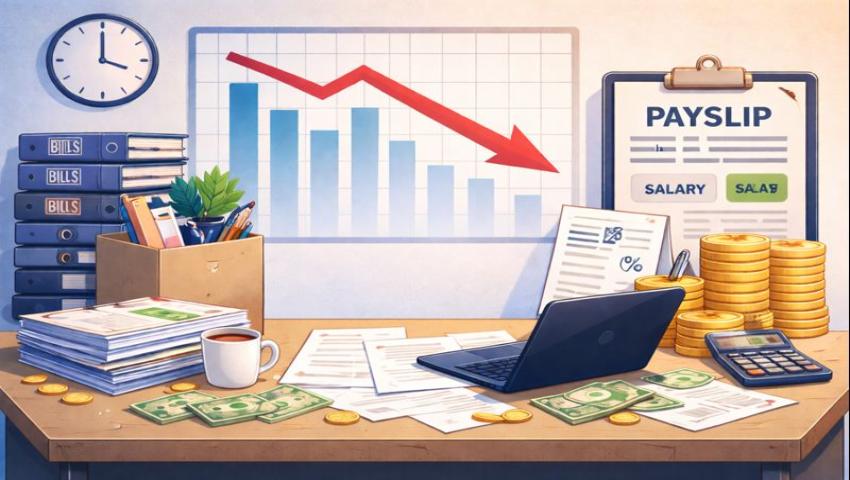
The key to understanding stagnant salaries lies in the difference between nominal income and real income. Nominal income is the amount earned on paper; real income reflects what that money can actually buy.
When inflation outpaces wage growth, purchasing power declines—even if salaries rise slightly. A 5% pay increase loses its impact when living costs climb by 7%.
Rising Costs and Uneven Inflation:
Inflation does not affect all expenses equally. Over time, essentials such as housing, healthcare, education, and transportation have risen far faster than average inflation measures. This disproportionately strains middle- and lower-income households.
While central banks monitor headline inflation using broad indices, individuals experience inflation differently depending on geography, income level, and lifestyle. What looks manageable on paper can feel overwhelming in practice.
Productivity Without Pay Growth:
The Broken Link Between Productivity and Wages:
For decades after World War II, productivity growth and wage growth moved together. As workers became more productive, they shared in the economic gains. That relationship has since weakened.
Technological advances, automation, and globalization have increased productivity, but wages have failed to keep pace. Workers produce more value than ever, yet their compensation reflects only a fraction of those gains.
Who Captures the Benefits?
Instead of boosting wages, productivity gains increasingly flow to:
- Corporate profits
- Executive compensation
- Shareholder returns
The emphasis on maximizing shareholder value has turned labor costs into a variable to be minimized rather than an investment to be rewarded. This structural shift leaves workers behind even as companies prosper.
Globalization and Technology: Structural Pressures on Wages
- Globalization’s Wage Impact: Global trade and outsourcing have expanded markets and reduced costs, but they have also intensified competition for labor. Jobs in higher-wage economies face pressure from lower-cost regions, weakening bargaining power for workers.
While globalization has lifted incomes in some developing economies, it has also led to job insecurity, wage stagnation, and precarious employment in many sectors worldwide. - Automation and the “Barbell Economy”: Technology has transformed productivity, but not employment evenly. Automation and artificial intelligence have replaced many middle-income roles, while creating high-paying technical jobs and low-paying service roles.
This polarization results in a “barbell economy”—growth at the top and bottom, with shrinking opportunities in the middle—making upward mobility increasingly difficult.
GDP Growth, Inflation, and Policy Challenges:
- Rethinking the Phillips Curve: Traditional economic theory suggested that low unemployment would lead to rising wages and inflation. Today, that relationship has weakened. Economies can experience strong growth and low unemployment without meaningful wage gains.
Weak labor bargaining power, corporate concentration, and flexible labor markets explain why wage growth remains subdued even during expansions. - Central Bank Constraints: When inflation rises, central banks raise interest rates to cool demand. While effective in controlling prices, tighter monetary policy can slow business investment and hiring, further limiting wage growth.
This creates a policy dilemma: fighting inflation may stabilize prices, but it can also deepen income stagnation for workers.
Real-World Evidence of the Disconnect:
- United States: U.S. GDP expanded significantly between 2000 and 2020, yet inflation-adjusted median wages grew modestly. Housing, healthcare, and education costs surged, while income gains were concentrated among top earners.
- India: India’s rapid GDP growth has not translated into broad-based wage growth. Food and fuel inflation continue to erode real incomes, while job creation struggles to keep pace with population growth.
- Europe: Several European economies experienced solid GDP growth during the 2010s, yet real wages stagnated. Labor market flexibility increased employment but often at the cost of job security and benefits.
Inequality: The Hidden Cost of Growth:
- Wealth Concentration: When growth primarily rewards asset owners, inequality widens. Those with stocks, property, and businesses accumulate wealth, while wage earners struggle to save.
This imbalance reinforces the perception that GDP growth benefits the few rather than the many. - Social and Economic Consequences: Rising inequality weakens consumer demand, undermines social trust, and fuels political discontent. Economies cannot sustain long-term growth when purchasing power is concentrated among a small elite.
The Psychological Impact of Stagnation:
Economic stress is not only financial—it’s emotional. When people see strong national growth but feel personally stuck, frustration and disengagement grow.
This erosion of economic confidence affects productivity, innovation, and social stability. Prosperity must be felt, not just measured.
Why GDP Alone Is Not Enough?
GDP overlooks crucial aspects of well-being: income distribution, environmental sustainability, health, education, and quality of life. Alternative measures like the Human Development Index (HDI) and Genuine Progress Indicator (GPI) offer broader perspectives on progress.
Shifting focus beyond GDP can help policymakers design more inclusive and resilient economic strategies.
Bridging the Gap Between Growth and Income:
- Strengthening Wage Policies: Index wages to inflation and productivity, support collective bargaining, and promote living wage standards.
- Smarter Tax and Transfer Systems: Progressive taxation and targeted social transfers can reduce inequality without stifling growth.
- Inflation-Relief Measures: Temporary subsidies for essentials during inflationary periods help protect real incomes.
- Corporate Accountability: Encouraging stakeholder capitalism, fair pay practices, and employee ownership aligns growth with shared prosperity.
- Investment in Skills and Education: Upskilling and reskilling programs prepare workers for technological change and improve long-term earning potential.
Rethinking Economic Success:
GDP should measure output—not human well-being. True prosperity requires growth that is inclusive, sustainable, and fairly distributed.
Inflation control must be balanced with income resilience. When workers share in productivity gains, growth becomes durable and socially stable.
Conclusion: From Growth to Genuine Prosperity
When GDP rises but salaries stagnate, the gap between economic expansion and economic equity becomes undeniable. Growth without inclusion is fragile and ultimately unsustainable.
The challenge ahead is to ensure that rising GDP translates into higher real incomes, stronger social cohesion, and improved quality of life. Only then will economic growth reflect genuine prosperity—not just impressive numbers on paper.
Disclaimer:
The views expressed in this article are personal and solely those of the author. This content is intended for educational and awareness purposes only and does not constitute financial or product-related advice.