- 21/02/2026
- MyFinanceGyan
- 149 Views
- 3 Likes
- Company Law
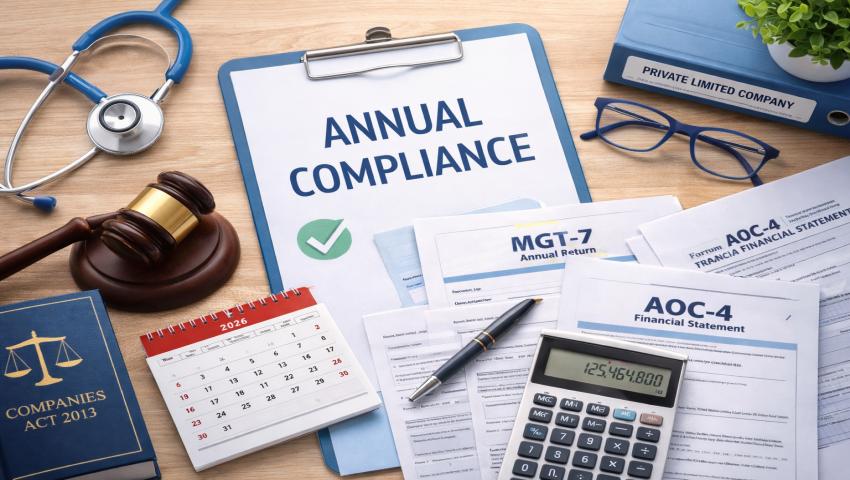
Annual Compliance of Private Limited Company: Complete Guide for Indian Businesses (2026)
A Private Limited Company is one of the most popular business structures in India due to its credibility, structured governance, and ability to raise funds. However, these advantages come with defined statutory obligations. Annual compliance of a Private Limited Company is mandatory under the Companies Act, 2013 and related regulations.
Many promoters focus heavily on company incorporation but overlook post-incorporation compliance. Missing annual filings can result in heavy penalties, director disqualification, and even company strike-off.
This comprehensive guide explains annual compliance requirements, due dates, penalties, and practical strategies to remain compliant.
What Is Annual Compliance of a Private Limited Company?
Annual compliance refers to mandatory filings and procedural requirements that every private limited company must complete after the end of each financial year.
These filings are made with:
- The Ministry of Corporate Affairs (MCA)
- The Income Tax Department
The purpose of annual compliance is to ensure:
- Transparency in financial reporting
- Proper disclosure of company operations
- Accountability of directors
- Maintenance of accurate public records
Even companies with no business activity must comply.
Why Annual Compliance Is Important?
Annual compliance is not just a statutory formality—it directly impacts a company’s legal standing and reputation.
Key Benefits of Timely Compliance:
- Maintains active company status
- Prevents penalties and additional fees
- Avoids director disqualification
- Builds trust with investors, banks, and vendors
- Enables smooth fundraising, restructuring, or closure
- Strengthens corporate governance
Non-compliance can escalate into serious financial and legal complications.
Who Is Responsible for Compliance?
The responsibility lies with:
- Company Directors
- Company Secretary (if appointed)
Even if professionals handle filings, the legal liability remains with the directors.
Key Annual Compliance Requirements:
The major annual compliance requirements include:
- Board Meetings
- Annual General Meeting (AGM)
- Statutory Audit
- Filing of Financial Statements (Form AOC-4)
- Filing of Annual Return (Form MGT-7 / MGT-7A)
- Income Tax Return Filing
- Director KYC (DIR-3 KYC)
Let’s understand each in detail.
Board Meetings:
Every private limited company must:
- Hold at least two board meetings in each financial year
- Maintain a maximum gap of 120 days between two meetings
- Conduct the first board meeting within 30 days of incorporation
Minutes of board meetings must be properly recorded and preserved as statutory records.
Annual General Meeting (AGM):
The AGM allows shareholders to review financial performance and approve important matters.
AGM Timeline:
- First AGM: Within 9 months from the end of the first financial year
- Subsequent AGMs: Within 6 months from the end of each financial year
- Typically held by 30th September (unless extended)
During the AGM, shareholders approve:
- Financial statements
- Director appointments
- Auditor appointment or reappointment
Statutory Audit – Mandatory for All Companies:
Unlike LLPs, audit is compulsory for every private limited company, regardless of turnover or profit.
Audit Requirements:
- Auditor must be appointed within 30 days of incorporation
- Annual statutory audit by a Chartered Accountant
- Audit report required for MCA and tax filings
Audit enhances financial transparency and regulatory compliance.
Filing Financial Statements – Form AOC-4:
What Is AOC-4? Form AOC-4 is used to file financial statements with the Registrar of Companies (ROC).
Documents Included:
- Balance Sheet
- Profit & Loss Account
- Auditor’s Report
- Director’s Report
Due Date: Within 30 days of the AGM.
Delay attracts additional fees and penalties.
Filing Annual Return – Form MGT-7 / MGT-7A:
What Is MGT-7? MGT-7 provides a snapshot of the company’s structure and management.
Information Included:
- Shareholding pattern
- Director and shareholder details
- Changes in management
- Registered office details
Due Date: Within 60 days of AGM.
Note: MGT-7A applies only to OPCs and small companies, while most private limited companies file MGT-7.
Income Tax Return Filing:
Every private limited company must file its income tax return annually under the Income Tax Act, 1961.
Due Date: 31st October (since audit is mandatory).
The return is filed using ITR-6, along with applicable audit reports. Even companies with no revenue must file returns.
Director KYC – DIR-3 KYC:
Every director holding a DIN must complete annual KYC.
Key Points:
- Mandatory for all directors
- Filed through DIR-3 KYC or DIR-3 KYC Web
- Non-filing results in DIN deactivation
DIN deactivation can block future company filings.
Due Date: 30th June
Other Important Compliances (If Applicable):
Depending on company operations, additional filings may include:
- MSME Form I (outstanding payments to MSMEs)
- DPT-3 (details of loans and deposits)
- GST returns (if registered)
- Event-based ROC filings
These may not apply to all companies but are equally critical where relevant.
Penalties for Non-Compliance:
Failure to complete annual compliance can result in:
Monetary Penalties:
- ₹100 per day late fee for AOC-4 and MGT-7
- Additional fees under tax laws
- Penalties on directors for defaults
Non-Monetary Consequences:
- Director disqualification
- Company marked “Non-Compliant” on MCA portal
- Difficulty in opening bank accounts or raising funds
- Risk of company strike-off
Repeated non-compliance can seriously affect business operations.
Annual Compliance Checklist:
To stay compliant, ensure:
- Conduct minimum two board meetings
- Prepare and audit financial statements
- Hold AGM within prescribed timeline
- File AOC-4 within 30 days of AGM
- File MGT-7 within 60 days of AGM
- File income tax return
- Complete DIR-3 KYC for all directors
Maintaining a compliance calendar helps avoid delays.
Common Myths About Compliance:
- No Business Means No Filing – Incorrect. Even dormant companies must file annual returns.
- Small Companies Have No Compliance – Certain relaxations exist, but core filings are mandatory.
- Professionals Are Responsible for Penalties – Legally, directors remain accountable for defaults.
Private Limited Company vs LLP – Compliance Comparison:
Compared to LLPs:
- More statutory filings
- Audit mandatory irrespective of turnover
- AGM and board meetings compulsory
- Higher compliance cost
However, private limited companies offer greater scalability and investor confidence.
Best Practices for Staying Compliant:
- Maintain proper accounting records throughout the year
- Plan meetings and filings well in advance
- Review compliance status quarterly
- Monitor MCA notifications and tax updates
- Seek professional advice when needed
Proactive compliance is always less expensive than corrective compliance.
Conclusion:
Annual compliance of a private limited company is a crucial legal responsibility that ensures transparency, accountability, and uninterrupted business operations.
Though the compliance framework may appear detailed, systematic planning makes it manageable. Staying compliant protects directors from penalties, enhances corporate credibility, and positions the company for sustainable growth.
For businesses aiming to scale responsibly, annual compliance is not merely a legal obligation—it is a strategic necessity.
Disclaimer:
The views expressed in this article are personal and intended solely for educational and awareness purposes. This content does not constitute legal, financial, or professional advice and is not intended to recommend any specific product or service.