- 06/01/2026
- MyFinanceGyan
- 216 Views
- 6 Likes
- Company Law
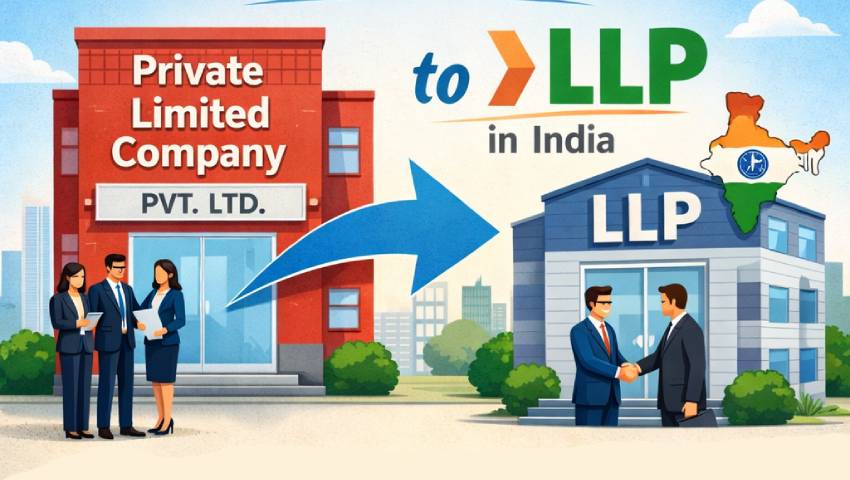
Conversion of Private Limited Company to LLP in India
Running a business in India can be tough due to heavy paperwork. Many start with a private limited company but find the tax and compliance costs too high. This is why the conversion of company into limited liability partnership is a smart move. My Finance Gyan provides more latest updates and Info to help you manage these changes easily.
An LLP gives you the legal safety of a company with the freedom of a partnership. If you want to simplify your work and save money, a conversion of a private limited liability company to an LLP is the best path. This guide explains everything about the conversion of a company to an LLP to help your brand grow.
Conversion of Company into Limited Liability Partnership:
The conversion of company into limited liability partnership is a legal process governed by the Limited Liability Partnership Act, 2008. It allows an existing company to transform into an LLP structure without losing its legal identity.
When you opt for the conversion of company into llp, all the assets, liabilities, and contracts of the old company automatically move to the new LLP. This ensures that your business continues to run smoothly during the transition. Whether you are a small startup or a growing firm, understanding the llp meaning in company terms helps you decide if this move is right for your long-term goals.
Conversion of Private Limited Company to LLP:
Most businesses in India are registered as Private Limited Companies. However, many owners eventually find that the private limited company converted to llp structure is more tax-efficient. The conversion of pvt ltd to llp is specifically designed for small and medium enterprises (SMEs) that don’t plan on raising public funds or going for an IPO soon.
By choosing the conversion of company to llp, you eliminate the need for mandatory board meetings and reduce the number of annual forms you file with the Registrar of Companies (ROC). The conversion of company into llp basically “unclutters” your legal structure while keeping your “limited liability” status intact.
Eligibility for Company to LLP Conversion:
Before you start the conversion of company into limited liability partnership, you must check if your company is eligible. Not every company can make this switch. Here are the mandatory conditions:
- 100% Shareholder Consent: Every single shareholder of the company must agree to the conversion. Even one dissenting vote can stop the process.
- Same Partners: All the shareholders of the company must become partners in the LLP. You cannot add new partners during the conversion process; you must do it after the LLP is formed.
- No Security Interest: The company must not have any “unsatisfied charges” (active loans) on its assets. If you have a bank loan, you must either clear it or get a No Objection Certificate (NOC) from the bank.
- Up-to-date Filings: The company must have filed its latest Balance Sheet and Annual Returns with the MCA.
- No Prosecution: There should be no active legal cases or prosecutions against the company under the Companies Act.
Benefits of Converting a Company into an LLP:
Why do so many entrepreneurs choose the conversion of pvt ltd to llp? The reasons are mostly financial and administrative.
- No Dividend Distribution Tax (DDT): In a company, you pay tax on profits, and then shareholders pay tax on dividends. In an LLP, once the entity pays its income tax, the profits can be distributed to partners tax-free.
- Audit Exemptions: A limited liability partnership company doesn’t need a mandatory audit unless its turnover exceeds ₹40 Lakhs or its capital contribution exceeds ₹25 Lakhs. For a Pvt Ltd company, an audit is mandatory from Day 1.
- Fewer Compliances: You don’t need to maintain heavy statutory registers or hold 4 board meetings every year. This saves a lot on professional fees.
- No Minimum Capital: There is no requirement for a minimum capital to start an llp means in business.
Procedure for Conversion of Company to LLP:
The formation of llp procedure during a conversion follows a systematic path. Here is the step-by-step procedure for formation of llp from an existing company:
- Step 1: Board Meeting: Call a board meeting to pass a resolution for the conversion of company into limited liability partnership. You also need to authorize one director to file the application.
- Step 2: Name Reservation (RUN-LLP): Apply for the name of your LLP using the RUN-LLP form on the MCA portal. Usually, the name remains the same, but the suffix “Private Limited” is replaced by “LLP.”
- Step 3: Filing Form 18 and FiLLiP: This is the most critical stage of the conversion of company into llp. You file Form 18 (Application for Conversion) and Form FiLLiP (Incorporation document) together. These forms tell the ROC that you are moving from a company structure to a limited liability company india style partnership.
- Step 4: Certificate of Incorporation: Once the ROC is satisfied with your documents, they will issue a Certificate of Incorporation. At this moment, your private limited company converted to llp becomes a reality.
- Step 5: Filing the LLP Agreement (Form 3): Within 30 days of incorporation, you must file the LLP Agreement in Form 3. This document defines the rights, duties, and profit-sharing ratios of the partners.
Documents Required for Conversion to LLP:
To ensure a smooth conversion of company to llp, keep the following documents ready:
- Consent of all Shareholders: A signed statement from every member.
- Statement of Assets & Liabilities: This must be certified by a Chartered Accountant and should not be older than 30 days.
- List of Creditors: A complete list of people or banks the company owes money to, along with their consent for the conversion.
- KYC of Partners: PAN cards and Aadhaar cards of all proposed partners.
- Address Proof: Latest utility bill (electricity/water) for the registered office.
- Income Tax Return: A copy of the latest ITR filed by the company.
Fees and Time for Company to LLP Conversion:
The conversion of company to llp takes time because it involves multiple government departments. Generally, you should expect the process to take 30 to 45 days.
- Government Fees: The fee depends on the capital contribution. For a small LLP with capital up to ₹1 Lakh, the government fee for Form 18 and FiLLiP is roughly ₹500 each.
- Stamp Duty: This varies by state. Since the conversion of a private limited liability company to llp involves an agreement, you must pay stamp duty on the LLP Agreement based on your state’s laws.
LLP Meaning and LLP Business Overview:
To truly understand the llp meaning in company terms, you have to look at it as a “hybrid.” If you’re asking what is llp company, it is a body corporate that has a separate legal identity from its partners.
The llp means in company context that the partners are not responsible for each other’s mistakes or “misconduct.” If one partner makes a bad business deal, only their share and the LLP’s assets are at risk—the other partners’ personal houses or cars remain safe. This LLP company’s meaning is why professionals like CAs, Lawyers, and Consultants prefer this structure.
In India, a limited liability company (which is effectively what an LLP is) combines the flexibility of a partnership with the brand value of a company.
Private Limited Company vs Limited Liability Partnership:
Many owners struggle to choose between LLP to Pvt Ltd or vice versa. Here is a breakdown of the private limited company vs limited liability partnership differences:
- The Law: A company is governed by the Companies Act, 2013, which is quite strict. An LLP is governed by the LLP Act, 2008, which is much more flexible.
- Management: In a company, you have a Board of Directors. In an LLP, the business is managed directly by the “Partners.”
- The Owners: In a company, owners are “Shareholders.” In an LLP, owners are “Partners.”
- The Audit: Companies must get an audit every single year. For an LLP, you only need an audit if your business grows beyond a certain size (₹40L turnover or ₹25L capital).
- Raising Money: If you want to raise money from Venture Capitalists, a company is better. If you are a service firm or a small family business, the llp company meaning offers better tax savings.
- The Name: A private limited liability company definition requires the name to end with “Private Limited,” while an LLP ends with “LLP.”
Conclusion:
The conversion of company into limited liability partnership is a smart move for many Indian business owners who want to reduce their “compliance headache.” While the conversion of company to llp requires strict adherence to the procedure for formation of llp, the long-term benefits in terms of tax savings and audit exemptions are massive.
Whether you are looking for llp to private limited migration or starting fresh with a limited liability partnership company, always ensure your paperwork is 100% accurate.
Remember, the private limited liability company definition might offer more prestige, but the llp means in business is often more practical for the everyday entrepreneur. Don’t let the legal jargon stop your business growth. Any Professional help choose only Startup Portal Business Services to handle your conversion from start to finish. They are experts in ensuring your conversion of pvt ltd to llp is done without any legal hiccups.