- 09/02/2026
- MyFinanceGyan
- 17 Views
- 2 Likes
- Tax
Different Ways to Invest in Silver and Its Taxes: What Every Indian Investor Should Know?
Silver has steadily emerged as a practical and affordable investment option for Indian investors. Apart from its cultural significance and aesthetic appeal, silver is increasingly valued for its industrial use and long-term growth potential. Whether you plan to buy physical silver or invest through digital and market-linked instruments, understanding the taxation rules is essential before buying or selling.
This article explains the different ways to invest in silver in India and the tax implications associated with each option.
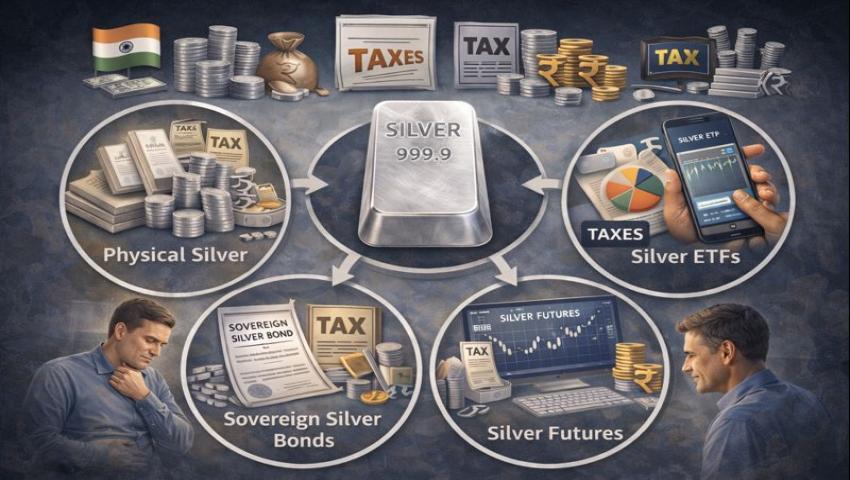
Popular Ways to Invest in Silver in India:
1. Silver Jewellery:
Silver jewellery is not only ornamental but also a tangible form of investment. When purchasing silver jewellery, it is important to check for quality and purity. Look for the 925 hallmark, which signifies 92.5% purity (sterling silver).
While jewellery allows ownership of physical silver, investors should note that making charges and GST increase the overall cost, which may impact returns.
2. Silver Coins and Bars (Bullion):
Silver coins and bars are one of the most preferred forms of silver investment. These can be purchased from banks, authorised dealers, or reputed jewellers.
Key advantages:
- No making charges compared to jewellery
- Easy valuation based on market price
- Suitable for long-term holding
This makes bullion a cost-effective and straightforward option for silver investors.
3. E-Silver / Digital Silver:
E-silver or digital silver allows investors to buy silver online without worrying about physical storage. The silver is stored securely by the service provider and can usually be redeemed physically if required.
This option is convenient, flexible, and suitable for investors who want to start with small amounts.
4. Silver Exchange Traded Funds (ETFs):
Silver ETFs invest at least 95% of their assets in physical silver or silver-linked instruments. These ETFs are traded on stock exchanges like shares, offering liquidity and transparency.
The Net Asset Value (NAV) of silver ETFs moves in line with silver prices, making them an efficient paper-based investment option.
Additional Silver Investment Options:
- Digital Silver (Platform-based): Online platforms allow electronic buying and selling of silver without physical possession.
- Silver Futures: Traded on commodity exchanges such as MCX. These are high-risk instruments and suitable only for experienced investors with strong market knowledge.
Why Silver Is Becoming a Popular Investment Option?
Silver is increasingly viewed as a smart alternative to gold due to:
- Lower cost and higher affordability
- Growing industrial and green energy demand
- Availability in physical and digital formats
- Ease of small-ticket investments through digital silver
However, like all investments, silver also attracts taxes, which investors must understand clearly.
Taxation on Silver in India:
Silver holds deep cultural and emotional value in India, but from a taxation perspective, it is treated as a capital asset under the Income Tax Act.
Taxation depends on the type of silver investment and the holding period.
Capital Gains Tax on Silver ETFs and FoFs (Union Budget 2024 Updates):
The Union Budget 2024 introduced a simplified and favourable tax structure for silver ETFs and Fund of Funds (FoFs).
Taxation for Fresh Purchases (On or After April 1, 2023):
✓ Long-Term Capital Gains (LTCG):
- Silver ETFs: Holding period more than 12 months → Taxed at 5% + applicable surcharge and cess
- Silver ETF FoFs: Holding period more than 24 months → Taxed at 5% + applicable surcharge and cess
✓ Short-Term Capital Gains (STCG):
- Silver ETFs: Held for 12 months or less → Taxed at applicable income tax slab rate (effective July 23, 2024)
- Silver ETF FoFs: Held for 24 months or less → Taxed at applicable income tax slab rate (effective July 23, 2024)
Taxation for Existing Holders (Purchased Before April 1, 2023):
- Existing investors can opt for the new tax regime if units are redeemed after July 23, 2024
- ETFs: Holding period above 12 months → 5% LTCG tax
- FoFs: Holding period above 24 months → 5% LTCG tax
GST on Buying Silver in India:
GST is applicable on all forms of silver purchases:
- GST Rate on Silver: 3%
- Applicable on silver coins, bars, jewellery, and raw silver
Example:
If you purchase silver worth ₹1,00,000, GST payable will be ₹3,000.
Registered businesses may claim Input Tax Credit (ITC), but individual investors must treat GST as an additional cost.
Taxation of Digital Silver:
Digital silver is taxed in the same manner as physical silver:
- GST is applicable at the time of purchase
- Gains on sale are taxed as capital gains
- Short-term gains: If held for up to 36 months, taxed as per slab rate
- Long-term gains: If held for more than 36 months, taxed as LTCG with applicable benefits
TDS on High-Value Silver Transactions:
If silver transactions exceed ₹50 lakh in a financial year, TDS provisions may apply in certain cases. Though uncommon for retail investors, it is advisable to consult a tax professional for large-value bullion transactions.
Reporting Silver Gains in Income Tax Return (ITR):
Capital gains from selling silver must be disclosed in the Capital Gains section of your ITR.
- Report both short-term and long-term gains
- Even loss-making or break-even transactions should be disclosed for compliance and transparency
Quick Tax Tips for Silver Investors:
- Maintain purchase invoices and sale receipts
- Track holding period carefully
- Factor GST into your investment cost
- Report silver transactions accurately in your ITR
Conclusion:
Silver is more than a precious metal—it is a growing investment opportunity with cultural, industrial, and financial significance. Whether you invest in silver coins, bars, ETFs, or digital silver, understanding the tax implications is essential to avoid unpleasant surprises.
With proper planning, documentation, and tax compliance, your investment in silver can truly shine without legal or financial complications.
Disclaimer: This article is for general informational purposes only and does not constitute legal, tax, or professional advice; readers are advised to consult a qualified tax professional for guidance specific to their situation.