- 27/08/2025
- MyFinanceGyan
- 308 Views
- 2 Likes
- Cryptocurrency, Investment
HODLing vs Staking: Which Strategy Should You Choose?
A Brief History of HODLing and Staking:
In the world of crypto investing, two of the most popular strategies are HODLing and Staking. Both involve holding onto cryptocurrencies for a certain period of time, but they work in very different ways. As the crypto economy continues to grow, more transactions are being made, tokens are gaining wider utility, and opportunities for earning are expanding. To make the most of these opportunities, it’s important to understand how HODLing and Staking differ, and which might be better suited for your investment goals.
What is HODLing?
HODLing is the simple strategy of buying crypto and holding it for the long term, without selling or trading frequently. The idea is that the value of your assets will grow significantly over time. The term “HODL” actually originated from a misspelling of the word ‘hold’ by a forum user named GameKyuubi on Bitcointalk in December 2013. What started as a typo quickly turned into a popular meme, and today, it’s one of the most recognized terms in the crypto world.
Example: Someone who bought Bitcoin in 2013 and simply held it for the next 10 years would have seen their portfolio grow by nearly 80x.
What is Staking?
Staking, on the other hand, is a process used in cryptocurrencies that run on Proof of Stake (PoS), Delegated Proof of Stake (DPoS), or Proof of Authority (PoA) consensus mechanisms. When you stake, you lock your tokens into the network to help validate transactions. In return, you earn rewards in the form of interest or newly minted tokens. Unlike HODLing, which usually works best over a very long period, staking is often done for shorter durations. While your tokens are locked, you benefit not only from any increase in token price but also from the additional rewards earned.
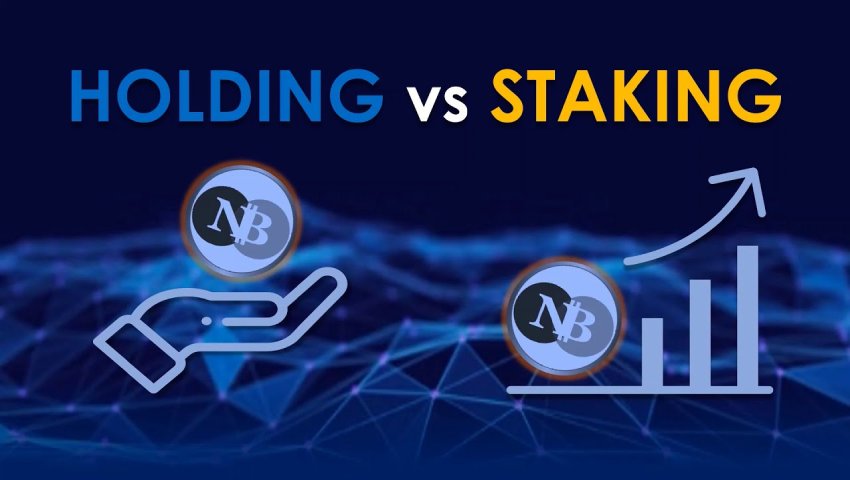
HODLing vs Staking - Key Differences:
Token Growth:
- HODLing: The number of tokens remains the same; your profit depends only on price growth.
- Staking: The number of tokens increases since you earn rewards while staking.
Market Impact:
- HODLing: Reduces token circulation, which may slow down utility and transactions.
- Staking: Increases activity within the network by supporting transaction validation.
Best Fit by Token Type:
- HODLing: Works best for deflationary tokens like Bitcoin, which gain value over time.
- Staking: Works better for inflationary tokens, where returns come through rewards even if prices remain relatively stable.
Pros and Cons of HODLing vs Staking (Long-Term Investment)
HODLing:
- Pros: Huge potential upside if the token price rises significantly.
- Cons: If demand or price falls, you could face losses with no additional rewards.
Staking:
- Pros: Steady flow of rewards over time plus the potential for price appreciation.
- Cons: If the token price drops, rewards may not fully offset your losses.
Pros and Cons of HODLing vs Staking (Short-Term Investment)
HODLing:
- Pros: Can be profitable if the token is trending upward in the short run.
- Cons: Returns are smaller compared to holding long-term.
Staking:
- Pros: Earns rewards even in a shorter timeframe.
- Cons: Returns are relatively small compared to long-term staking.
Conclusion:
Both HODLing and Staking are effective ways to grow your crypto portfolio, but each comes with its own strengths and risks.
- HODLing works best if you believe in the long-term potential of a deflationary token like Bitcoin.
- Staking, however, allows you to earn extra rewards while supporting the network, making it attractive for more inflationary tokens.
Ultimately, whether you choose to HODL or Stake depends on your risk appetite, time horizon, and belief in the future of the token. Just remember—crypto investments are always subject to market risks, and careful strategy is key.
Start investing in cryptocurrencies today!
Open a free account on CoinDCX:https://join.coindcx.com/invite/n75xR
Disclaimer: The views in this article are personal and for educational purposes only. They are not intended as financial advice or product recommendations.