
- 19/03/2026
- MyFinanceGyan
- 15 Views
- 5 Likes
- Company Law
Legal Due Diligence Checklist: A Practical Guide for Confident Business Decisions
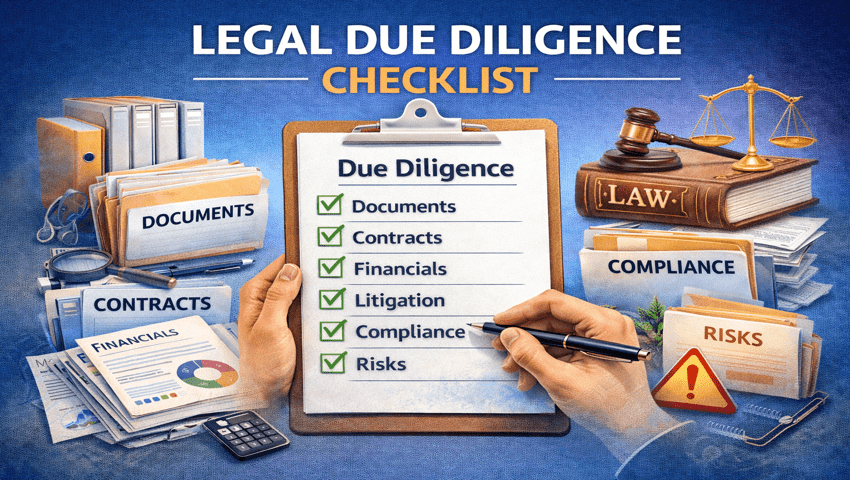
Legal due diligence is one of the most critical steps in any significant business transaction. Whether you are acquiring a company, investing in a startup, entering a joint venture, or planning a merger, a comprehensive legal review helps uncover risks that may not be immediately visible. A well-prepared legal due diligence checklist ensures that all important areas are examined so decisions are based on verified facts rather than assumptions.
This guide explains what legal due diligence involves, why it is important, and provides a practical checklist that professionals can use to conduct a thorough legal review.
What Is Legal Due Diligence?
Legal due diligence is the process of systematically reviewing a company’s legal status and obligations to identify risks, liabilities, and compliance gaps before completing a transaction. The review typically includes examination of corporate documents, contracts, licenses, intellectual property, litigation records, employment matters, and regulatory compliance.
The purpose of legal due diligence is not only to verify ownership and authority but also to identify hidden legal issues that could affect the company’s valuation, operations, or future growth.
A structured legal due diligence checklist serves as both a risk assessment tool and a framework for informed decision-making.
Why a Legal Due Diligence Checklist Is Essential?
Failing to conduct proper legal due diligence can lead to costly surprises after a transaction is completed. Undisclosed litigation, invalid contracts, regulatory violations, or ownership disputes may significantly impact the value and viability of a business.
Using a structured checklist helps to:
- Identify legal risks at an early stage
- Verify representations made by the seller
- Support accurate business valuation
- Strengthen negotiation strategies
- Ensure compliance with legal and regulatory requirements
- Reduce the likelihood of post-transaction disputes
For investors, founders, and legal professionals, a checklist-based approach ensures consistency and completeness in the review process.
Key Components of a Legal Due Diligence Checklist:
1. Corporate Structure and Governance:
The first step is to review the company’s legal identity and governance structure.
Important documents to examine include:
- Certificate of incorporation or registration
- Memorandum and Articles of Association (or equivalent governing documents)
- Shareholding structure and capitalization table
- Shareholder agreements
- Board resolutions and meeting minutes
- Details of subsidiaries, joint ventures, or affiliated entities
The objective is to confirm that the company is properly formed, legally compliant, and authorized to enter into the proposed transaction.
2. Ownership of Shares and Securities:
Clear ownership of shares is essential for any investment or acquisition.
Items to review include:
- Issued and outstanding share capital
- Share transfer records
- Stock options, warrants, or convertible instruments
- Any encumbrances, pledges, or liens on shares
- Pre-emptive rights or transfer restrictions
A proper review ensures that the shares are free from disputes and can be transferred without legal complications.
3. Material Contracts and Commercial Agreements:
Contracts define the company’s rights, obligations, and commercial relationships. Reviewing them helps assess operational stability and financial exposure.
Documents typically reviewed include:
- Customer and supplier agreements
- Distribution or franchise agreements
- Partnership and joint venture agreements
- Loan and financing agreements
- Guarantees and indemnity agreements
- Clauses related to termination, exclusivity, and change of control
Special attention should be given to provisions that may be triggered during mergers or acquisitions.
4. Regulatory Compliance and Licenses:
Compliance with applicable laws and regulations is critical for business continuity.
A legal due diligence checklist should include review of:
- Industry-specific licenses and permits
- Government registrations and approvals
- Compliance with corporate, tax, labor, and environmental regulations
- Past regulatory notices or inspections
- Data protection and privacy compliance
All licenses should be valid, current, and transferable where required.
5. Litigation and Dispute History:
Existing or potential legal disputes can significantly impact the value and reputation of a company.
The review should include:
- Ongoing or pending litigation
- Arbitration or mediation proceedings
- Settlement agreements
- Regulatory investigations
- Historical disputes with financial or operational impact
Understanding the scope and potential consequences of disputes is essential for evaluating risk.
6. Intellectual Property Rights:
For many companies, intellectual property represents a valuable asset. A legal due diligence checklist should thoroughly assess ownership and protection of these assets.
Key areas include:
- Registered trademarks, patents, copyrights, and design rights
- IP registration certificates and filing status
- Licensing agreements (both inbound and outbound)
- Intellectual property assignment agreements with employees and contractors
- Any infringement claims or potential risks
The goal is to confirm that the company legally owns its intellectual property and that it is adequately protected.
7. Employment and Labor Matters:
Employment-related issues often emerge during due diligence and can pose legal or financial risks.
Key items to review include:
- Employment agreements and offer letters
- Independent contractor agreements
- Employee policies and handbooks
- Compensation structures, bonuses, and incentive plans
- Termination and severance obligations
- Compliance with labor laws and social security requirements
Particular attention should be paid to key employees and any change-of-control provisions in employment contracts.
8. Real Estate and Asset Ownership:
Physical assets and property arrangements should be carefully examined.
The checklist should include review of:
- Property ownership documents or title deeds
- Lease agreements and renewal terms
- Zoning and land-use compliance
- Mortgages, liens, or charges on property
- Environmental concerns related to property use
This helps confirm that the company has valid legal rights to use its assets.
9. Financial and Security Arrangements (Legal Review):
Although financial due diligence is conducted separately, legal review of financial obligations is equally important.
Documents to review include:
- Loan agreements and credit facilities
- Security and collateral documentation
- Guarantees and letters of comfort
- Default notices or breach communications
These reviews help identify restrictions or covenants that may affect future operations.
10. Data Protection and Cybersecurity:
With increasing regulatory scrutiny around data privacy, this area has become a key component of legal due diligence.
Checklist considerations include:
- Data protection policies and procedures
- Privacy notices and consent mechanisms
- History of data breaches or cybersecurity incidents
- Agreements with third-party data processors
- Compliance with applicable data protection laws
Weak controls in this area may expose the business to regulatory penalties and reputational damage.
Common Red Flags Identified During Legal Due Diligence:
An effective legal due diligence checklist often uncovers warning signs such as:
- Missing or unsigned contracts
- Unregistered intellectual property rights
- Undisclosed litigation
- Regulatory non-compliance
- Inconsistent corporate records
- Heavy reliance on informal or undocumented agreements
Identifying such issues early allows parties to renegotiate transaction terms, seek indemnities, or reconsider the deal entirely.
Best Practices for Using a Legal Due Diligence Checklist:
To maximize the effectiveness of the due diligence process:
- Customize the checklist based on the industry and transaction type
- Prioritize high-risk areas first
- Use secure virtual data rooms for document sharing
- Engage experienced legal professionals
- Document findings clearly and systematically
A checklist provides structure, but it must be combined with professional legal judgment for meaningful analysis.
Final Thoughts:
A well-designed legal due diligence checklist is more than a procedural requirement—it is a strategic tool that helps businesses protect their interests and make informed decisions. By systematically reviewing corporate records, contracts, compliance status, and operational risks, organizations can identify potential liabilities before completing a transaction.
Whether you are an investor, acquirer, or founder, investing time and effort into legal due diligence is essential for minimizing risk and ensuring long-term success.
Disclaimer:
The views expressed in this article are personal to the author and are intended solely for awareness and educational purposes. The content does not constitute professional advice or product recommendations.