- 08/04/2026
- MyFinanceGyan
- 17 Views
- 0 Likes
- GST
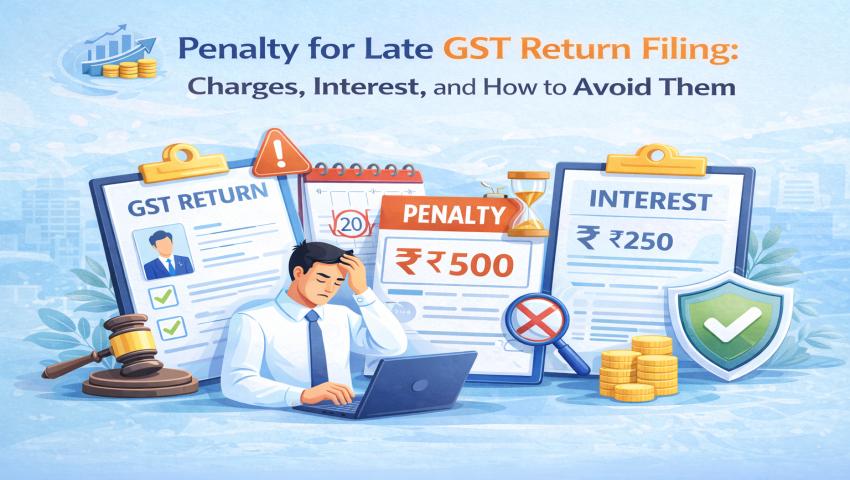
Penalty for Late GST Return Filing: Charges, Interest, and How to Avoid Them
Timely GST return filing is not just a compliance requirement—it directly impacts your business’s cash flow, credibility, and smooth operations. Missing GST deadlines can result in late fees, interest, penalties, and even suspension of your GST registration.
This guide explains the penalty for late GST return filing, including applicable charges, interest rates, return-wise penalties, consequences of delays, and practical tips to stay compliant.
Why Timely GST Return Filing Matters?
Under GST law, every registered taxpayer must file returns within prescribed deadlines. These returns help:
- Track tax collections
- Verify Input Tax Credit (ITC)
- Ensure transparency in transactions
Late filing can lead to:
- Financial penalties
- Interest on unpaid tax
- Blocking of ITC
- Suspension or cancellation of GST registration
Understanding the penalty structure helps businesses avoid unnecessary costs.
Types of GST Returns and Due Dates:
Key GST returns include:
- GSTR-1 – Details of outward supplies (monthly/quarterly)
- GSTR-3B – Summary return with tax payment
- GSTR-4 – Annual return for composition dealers
- GSTR-9 / 9A – Annual return
- CMP-08 – Quarterly statement for composition taxpayers
Each return has a specific due date, and penalties apply separately for delays in each.
Late Fee Under GST: An Overview
Late fee is the most common penalty for delayed filing. It is charged per day from the due date until the return is filed.
It is levied under:
- CGST Act
- SGST Act
The late fee is split equally between CGST and SGST.
Late Fee for GSTR-3B:
GSTR-3B is the most critical return as it involves tax payment.
Late Fee Structure:
- ₹50 per day (₹25 CGST + ₹25 SGST)
- ₹20 per day (₹10 CGST + ₹10 SGST) for Nil returns
Maximum Late Fee:
- ₹10,000 per return (₹5,000 CGST + ₹5,000 SGST)
- Lower caps may apply for Nil returns as notified
Late fees start from the day after the due date.
Late Fee for GSTR-1:
GSTR-1 impacts the buyer’s Input Tax Credit.
- ₹50 per day for regular returns
- ₹20 per day for Nil returns
👉 The government may announce waivers or caps from time to time.
Penalty for Late Filing of Annual Returns (GSTR-9):
Even though GSTR-9 does not involve tax payment, penalties can be significant.
Late Fee:
- ₹200 per day (₹100 CGST + ₹100 SGST)
- Maximum: 0.5% of turnover in the state/UT
Late Fee for Composition Taxpayers:
CMP-08 (Quarterly):
- Late fee applicable per day
- Subject to notified limits
GSTR-4 (Annual):
- ₹200 per day
- Maximum: 0.25% of turnover
Interest on Late GST Payment:
Apart from late fees, interest applies on delayed tax payment.
Interest Rate:
- 18% per annum
Key Points:
- Calculated from due date to payment date
- Applies only to tax amount (not late fee)
- Continues until full payment is made
Difference Between Late Fee, Interest, and Penalty:
Additional Consequences of Non-Compliance:
- Blocking of E-Way Bills: Non-filers may be restricted from generating e-way bills.
- Suspension of GST Registration: Returns not filed continuously can trigger automatic suspension.
- Cancellation of GST Registration:
- 6 months default (regular taxpayers)
- 2 tax periods default (composition taxpayers)
Impact on Input Tax Credit (ITC):
Late filing affects both you and your customers:
- ITC gets blocked if GSTR-3B is not filed
- Buyers may avoid non-compliant suppliers
- Business credibility is impacted
Relief Measures and Waivers:
The government may periodically provide:
- Late fee caps
- Waivers or reductions
- Extended due dates
These are temporary and should not be relied upon regularly.
How to Avoid Penalty for Late GST Return Filing?
Practical Tips:
- Maintain a GST compliance calendar
- Set reminders before due dates
- Reconcile books monthly
- File Nil returns when applicable
- Pay tax before filing returns
- Take professional help when needed
Can Late Fees Be Waived?
Late fees can only be reduced if:
- Government issues a notification
- You qualify under specific relief schemes
Otherwise, once levied, late fees cannot be manually reversed.
Final Thoughts:
The penalty for late GST return filing can quickly escalate through late fees, interest, and compliance restrictions. While GST provides a structured taxation system, it demands discipline in filing and payments.
Small delays may seem manageable, but repeated non-compliance can lead to:
- Registration cancellation
- Business disruption
- Loss of credibility
Timely filing, proper planning, and regular monitoring are the best ways to stay compliant and avoid penalties.
If GST compliance feels overwhelming, professional support can help you focus on growing your business instead of worrying about deadlines and penalties.
Disclaimer:
The views expressed in this article are personal and intended for educational and awareness purposes only. They do not constitute professional advice or recommend any specific product or service.