- 21/07/2025
- MyFinanceGyan
- 608 Views
- 4 Likes
- Tax
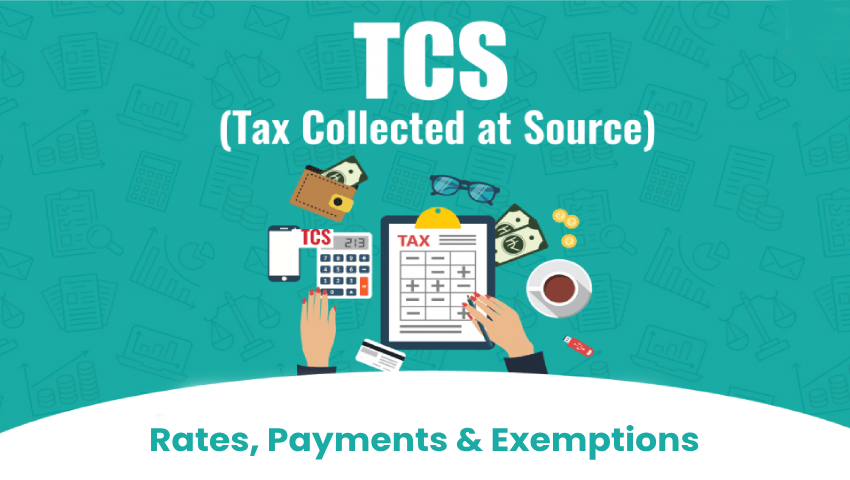
Tax Collected at Source (TCS): Rates, Payments & Exemptions
Tax Collected at Source (TCS) is a tax that a seller collects from the buyer at the time of sale of certain specified goods or services. It’s governed by Section 206C of the Income Tax Act, 1961. Let’s understand what TCS means, when it applies, the rates, payment due dates, exemptions, and more.
What is TCS?
- TCS is the tax payable by the buyer but collected by the seller while making a sale.
- The seller collects this tax and deposits it to the government.
- It applies to specific goods, high-value purchases, certain services, and foreign remittances.
Example: If a product is sold for ₹1,00,000 and TCS applies at 1%, the seller collects ₹1,01,000 (₹1,00,000 + ₹1,000 TCS) from the buyer and deposits ₹1,000 with the government.
Who Must Collect TCS?
- Sellers involved in the sale of specified goods or services.
- Sellers must have a TAN (Tax Collection Account Number) to collect & deposit TCS.
- The buyer pays the TCS amount in addition to the purchase price.
TCS vs TDS: What's the Difference?
When Should TCS Be Collected?
TCS should be collected by the seller at the earlier of:
- The sale recorded in the books (credit entry), or
- The receipt of payment from the buyer (in any mode)
For motor vehicles, TCS is collected only on receipt of payment.
TCS Rates for Specified Goods under Section 206C (1)
TCS on Leasing, Toll, Parking, Mining (Section 206C(1C))
TCS @ 2% applies if you’re granting:
- Lease
- License
- Mining rights
- Parking lots or toll plazas
TCS on High-Value Motor Vehicles & Luxury Goods (Section 206C(1F))
- Applies to sale of motor vehicles exceeding ₹10 lakhs.
- Also covers high-value luxury goods like:
- Wristwatches, antique art, coins/stamps
- Sunglasses, shoes, handbags
- Sports equipment, yachts, horses, home theatres
- TCS @ 1% on the total sale value above ₹10 lakhs.
Example: Buy a car worth ₹11 lakh → Pay ₹11,11,000 (including ₹11,000 TCS).
TCS on Foreign Remittance & Overseas Tour (Section 206C(1G))
Collected by:
- Authorized dealers under the Liberalized Remittance Scheme (LRS)
- Sellers of overseas travel packages
TCS ranges from 5% to 20% depending on the type and amount of the remittance.
When is TCS Not Required? (Exemptions)
TCS is not applicable if:
- The buyer provides a declaration that the goods are used for manufacturing, processing, or generation of power.
- Certain government entities may also be exempt.
TCS Payment & Filing:
- Payment Due Date: TCS must be deposited within 7 days from the end of the month in which it was collected.
- Return Filing: TCS returns must be filed quarterly using Form 27EQ.
TCS Certificate – Form 27D:
- Issued by the seller to the buyer after filing Form 27EQ.
- Contains:
- Seller and buyer’s name
- TAN and PAN details
- Amount of tax collected
- Date of collection
- Rate of tax applied
Late Fees, Interest & Penalties:
Frequently Asked Questions (FAQs):
Yes, TCS is collected on the total sale consideration, which includes GST.
Yes, it appears in your Form 26AS under the TCS section.
Yes, TCS can be claimed like TDS while filing your income tax return.
TCS helps prevent tax evasion in high-risk trades and ensures advance tax collection.
Yes, if the remittance qualifies as a loan or gift under LRS, TCS will apply.
From April 22, 2025, TCS also applies to luxury goods (e.g., watches, antiques, handbags, home theatres) if the sale value exceeds ₹10 lakhs.
Final Thoughts:
TCS is an important compliance requirement under the Income Tax Act. Whether you’re a seller or a buyer, understanding the applicable rates, due dates, exemptions, and penalties can help you stay tax-compliant and avoid unnecessary costs.
Disclaimer: This blog is for educational purposes only and does not constitute financial advice or product recommendation.