- 01/07/2025
- MyFinanceGyan
- 775 Views
- 3 Likes
- Share Market
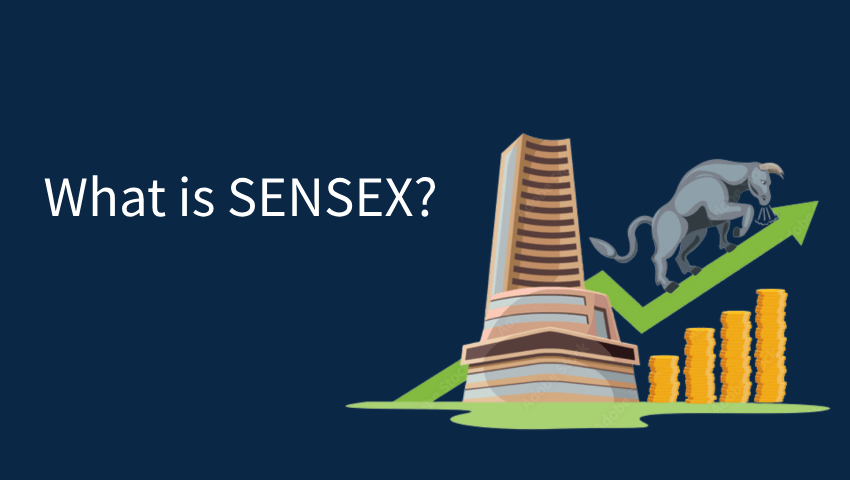
What is SENSEX?
SENSEX is a combination of the words Sensitive and Index. It was coined by market expert Deepak Mohoni to refer to the benchmark index of the Bombay Stock Exchange (BSE). Launched in 1986, SENSEX is a barometer of India’s stock market and includes 30 of the largest and most actively traded companies listed on the BSE. These companies are considered to represent various key sectors of the Indian economy and reflect the overall market sentiment and economic trends in the country.
Features of SENSEX:
- SENSEX tracks 30 blue-chip companies across major sectors.
- These companies are selected based on market capitalization, liquidity, and industry representation.
- It is India’s oldest stock market index and is widely used as a performance benchmark for mutual funds and investment portfolios.
Criteria for Company Inclusion in SENSEX:
The S&P BSE Index Committee selects the SENSEX constituents based on the following five criteria:
- The company must be listed on the Bombay Stock Exchange (BSE).
- It should be a large-cap or mega-cap stock.
- The stock must be highly liquid (actively traded).
- The company must generate revenue primarily from core business operations.
- It should reflect sectoral balance in line with India’s equity market structure.
How is SENSEX Calculated?
Initially, SENSEX used a market capitalization-weighted method. Since 2003, it uses the free-float market capitalization method, which considers only those shares that are available for public trading (excluding promoter holdings or other locked-in shares).
Calculation Formula:
sql
CopyEdit
Free Float Market Cap = Market Cap × Free Float Factor
This ensures that the index value represents only the traded portion of a company’s stock, providing a more realistic view of market trends.
How to Invest in SENSEX?
There are two primary ways to invest in SENSEX:
- Direct Stock Purchase: You can buy shares of the 30 SENSEX-listed companies in the same proportion as their weightage in the index.
- Index Mutual Funds / ETFs: A simpler option is to invest in index mutual funds or exchange-traded funds (ETFs) that mimic the SENSEX composition.
- Basic Requirements:
- Demat Account – To hold shares in electronic form.
- Trading Account – To buy/sell shares on the BSE.
- Bank Account & PAN Card – Mandatory for transactions.
Key Milestones of SENSEX Over the Years:
Major Market Plunges in SENSEX:
- Jan 21, 2008: Lost 1408 points – worst single-day loss due to global crisis.
- 2008 Financial Crisis: Fell to 8509.56 in October 2008.
- Satyam Scam in 2009: Index dropped by 750 points due to corporate fraud.
Despite these plunges, SENSEX has shown long-term resilience, offering consistent returns over decades.
FAQs About SENSEX:
SENSEX is the benchmark index of the Bombay Stock Exchange, representing the top 30 companies from various sectors of the Indian economy. It reflects overall market trends and investor sentiment.
SENSEX tracks the performance of 30 large-cap stocks based on their free-float market capitalization. If these companies perform well, the index rises, and if they underperform, the index falls.
SENSEX acts as a barometer of the Indian economy. It helps investors, economists, and policymakers understand how the financial markets are performing.
SENSEX fluctuates due to:
- Company earnings
- Global and domestic economic news
- Government policies
- Investor sentiment
- Global market trends
As prices of constituent stocks rise or fall, the index moves accordingly.
You can:
- Buy shares of all 30 companies in the same proportion.
- Invest in Index Funds or ETFs that replicate SENSEX.
These methods allow you to benefit from the overall growth of India’s top companies.
Conclusion:
SENSEX is a critical financial indicator that reflects India’s economic health and market sentiment. With a history of growth, resilience, and strong representation across industries, it remains a popular investment benchmark for domestic and global investors alike.
Disclaimer: This blog is for educational purposes only and reflects the author’s personal views. It is not intended as financial advice or product recommendation. Always consult a certified financial advisor before investing.