

GST Cancellation Procedure Step-by-Step Guide, Rules & Key Considerations
GST registration is mandatory for many businesses in India, but it is not always permanent. If a business closes, restructures, transfers ownership, or no longer meets the registration threshold, cancellation of GST registration becomes necessary.

How to Check Company Name Availability Before Registration?
Many founders underestimate the importance of a thorough company name availability search. They often pick a name, fall in love with it, and then face heartbreak when the ROC (Registrar of Companies) rejects their application.

Designated Partner Meaning: Roles, Responsibilities, and Importance in an LLP
Limited Liability Partnerships (LLPs) have emerged as a preferred business structure for startups, professionals, and growing enterprises in India. Governed by the Limited Liability Partnership Act, 2008, LLPs offer operational flexibility along with limited liability protection.

Compliance Ignorance Costs More Than Fees: Why Businesses Cannot Afford to Ignore It?
For many startups and growing enterprises, compliance is often treated as a routine expense — something to be managed later or minimized to save costs. Filing charges, professional fees, and regulatory documentation may seem like avoidable overheads.

Comparison Guide: 44AD vs 44ADA vs Regular Tax – Which Tax Regime Should You Choose?
This practical guide explains the difference between 44AD vs 44ADA vs Regular Tax, helping you understand eligibility, income calculation, compliance requirements, and when each option may be suitable.

Common ROC Penalties in India: A Practical Guide for Companies and Directors
The Registrar of Companies functions under the Ministry of Corporate Affairs (MCA). It is responsible for administering company law, monitoring statutory filings, and ensuring corporate governance standards are upheld.

Difference Between Partnership Firm and LLP: A Detailed Comparison for Business Owners
A partnership firm is formed when two or more individuals agree to carry on a business and share profits as per mutually agreed terms. The relationship between partners is defined through a Partnership Deed.

Annual Compliance of LLP in India: Updated Guide on Filings, Deadlines & Penalties (2026)
Annual compliance of LLP refers to statutory filings that every LLP registered in India must complete after the end of each financial year (ending 31st March).
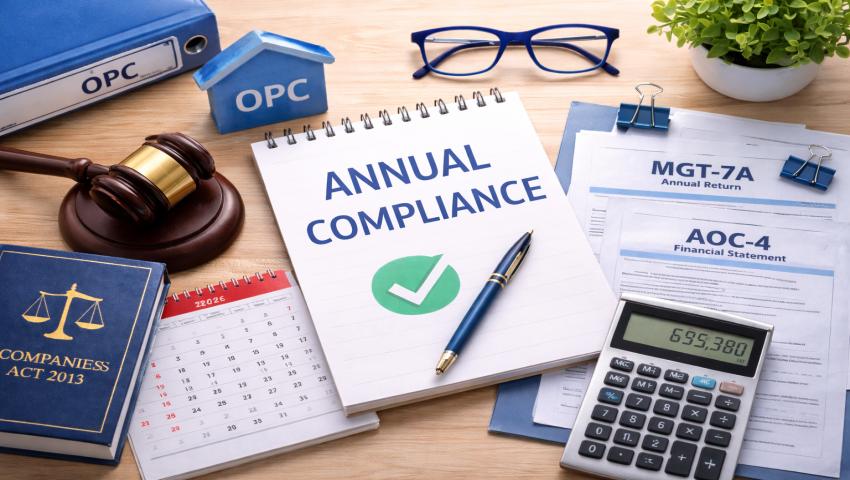
Annual Compliance of One Person Company (OPC): Complete Guide for Business Owners (2026)
The One Person Company (OPC) structure was introduced under the Companies Act, 2013 to encourage individual entrepreneurs to operate within a corporate framework while enjoying limited liability and separate legal identity.

Annual Compliance of Private Limited Company: Complete Guide for Indian Businesses (2026)
Annual compliance refers to mandatory filings and procedural requirements that every private limited company must complete after the end of each financial year.