
- 27/07/2026
- Govind S. Jethani
- 278 Views
- 3 Likes
- Share Market
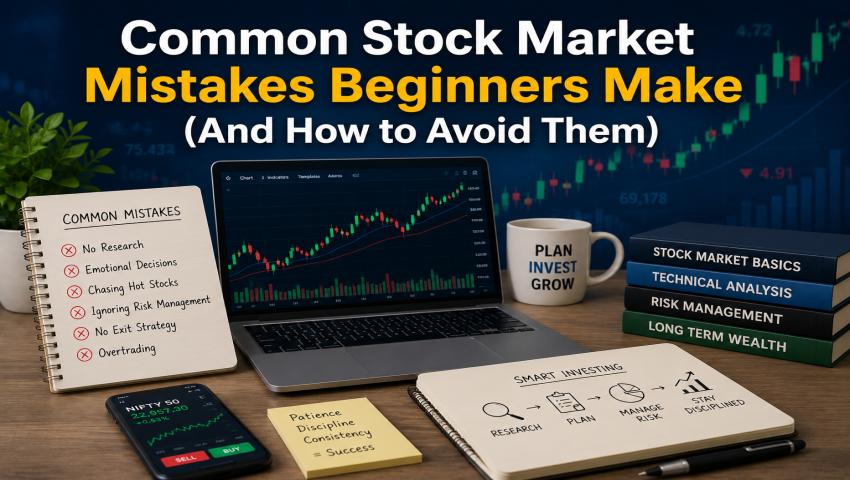
Common Stock Market Mistakes Beginners Make (And How to Avoid Them?)
The stock market is one of the best ways to build long-term wealth. However, many beginners enter the market without proper knowledge, planning, or discipline. As a result, they often make avoidable mistakes that can lead to financial losses and disappointment.
The good news is that most of these stock market mistakes can be avoided with the right mindset and investment strategy.
In this guide by My Finance Gyan, we’ll explore the most common stock market mistakes beginners make and how you can avoid them.
1. Investing Without Learning the Basics:
Many beginners buy stocks based on tips from friends, social media, or online influencers without understanding how the stock market works.
How to Avoid It?
- Learn basic stock market concepts.
- Understand terms like market capitalization, P/E ratio, EPS, and dividends.
- Study company financial statements before investing.
- Invest only in businesses you understand.
2. Following Stock Tips Blindly:
One of the biggest mistakes is purchasing stocks simply because someone says they’re “guaranteed” to rise.
Remember:
If a stock tip sounds too good to be true, it probably is.
Always do your own research before investing.
3. Trying to Get Rich Quickly:
Many new investors expect to double their money within a few months. In reality, successful investing is a long-term process.
Instead of chasing quick profits, focus on:
- Quality companies
- Consistent investing
- Long-term wealth creation
4. Investing Without Financial Goals:
Without clear goals, it’s difficult to choose the right investments.
Examples of investment goals:
- Buying a home
- Children’s education
- Retirement planning
- Building long-term wealth
- Financial independence
Define your investment objective before selecting stocks.
5. Not Diversifying Your Portfolio:
Putting all your money into one company or one sector increases risk.
For example, investing only in technology stocks can expose your portfolio to significant losses if that sector underperforms.
Smart Strategy
Diversify across:
- Large-cap companies
- Mid-cap companies
- Different industries
- Mutual funds
- Other asset classes like debt or gold
Diversification helps reduce overall portfolio risk.
6. Panic Selling During Market Corrections:
Stock markets naturally go through periods of decline. Many beginners panic and sell their investments when prices fall.
Historically, markets have recovered from downturns over the long term, although past performance does not guarantee future results.
Stay focused on your long-term financial goals instead of reacting emotionally to short-term market fluctuations.
7. Investing All Your Savings:
Never invest all your available money in the stock market.
Before investing, ensure you have:
- An emergency fund
- Health insurance
- Adequate cash for short-term expenses
Only invest money that you won’t need immediately
8. Ignoring Company Fundamentals:
Some investors buy stocks solely because the share price is low. A lower share price doesn’t necessarily mean the stock is a good investment.
Instead, evaluate:
- Revenue growth
- Profitability
- Debt levels
- Cash flow
- Business model
- Competitive advantage
- Management quality
9. Buying High and Selling Low:
Many beginners buy stocks after prices have already risen significantly and sell when prices fall. This emotional cycle often leads to poor investment outcomes.
Instead:
- Invest systematically.
- Focus on valuation rather than market hype.
- Think long term.
10. Trading Too Frequently:
Constant buying and selling can result in:
- Higher transaction costs
- Increased taxes
- Emotional decision-making
- Lower overall returns
Successful investing usually requires patience rather than constant activity.
11. Ignoring Risk Management:
Every investment carries risk.
Never invest all your money in one company or use borrowed funds to invest in stocks unless you fully understand the risks involved.
Maintain a balanced portfolio that matches your risk tolerance.
12. Letting Emotions Drive Decisions:
Fear and greed are among the biggest reasons investors lose money.
Avoid making investment decisions based on:
- News headlines
- Social media hype
- Market rumors
- Fear of missing out (FOMO)
Successful investors rely on research, discipline, and patience.
Tips for Beginner Stock Market Investors:
- Start with fundamentally strong companies.
- Invest regularly instead of trying to time the market.
- Diversify your portfolio.
- Keep an emergency fund.
- Review your investments periodically.
- Think long term.
- Continue learning about investing.
- Consult a qualified financial advisor if needed.
What Should Beginners Focus On?
Instead of searching for the “next multibagger,” beginners should focus on building good investing habits.
A strong foundation includes:
- Financial discipline
- Consistent investing
- Diversification
- Long-term thinking
- Continuous learning
These habits often contribute more to long-term success than trying to predict short-term market movements.
Final Thoughts:
Making mistakes is part of every investor’s journey, but learning from common beginner errors can save both time and money. The stock market rewards patience, discipline, and informed decision-making rather than speculation or emotional reactions.
Start with a clear financial plan, invest only after proper research, diversify your portfolio, and remain committed to your long-term goals. Remember, successful investing isn’t about making quick profits—it’s about building sustainable wealth over time.
Disclaimer:
This article is for educational and informational purposes only and should not be considered financial, investment, or tax advice; please consult a qualified financial advisor before making any investment decisions.