- 19/05/2026
- Govind S. Jethani
- 356 Views
- 3 Likes
- Company Law
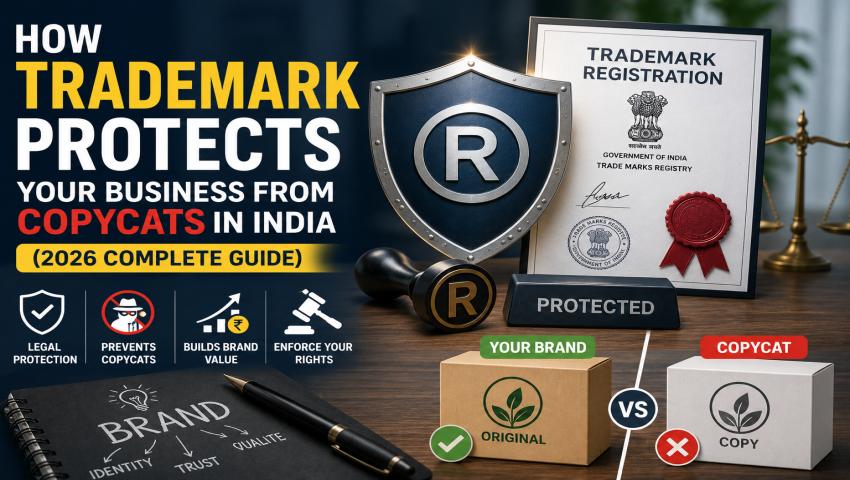
How Trademark Protects Your Business from Copycats in India? (2026 Complete Guide)
In today’s highly competitive business environment, building a successful brand requires significant time, effort, and investment. Businesses spend years creating a unique identity through branding, packaging, marketing, and customer trust. However, protecting that brand from imitation is equally important.
With the rapid growth of e-commerce, digital marketing, and online marketplaces in India, copycat businesses have become increasingly common. Competitors may attempt to use similar brand names, logos, packaging, or online identities to benefit from your reputation and customer base.
This is where trademark registration becomes one of the strongest legal tools for brand protection.
This guide by My Finance Gyan explains how trademark protection helps businesses prevent copycats in India under the Trade Marks Act, 1999, along with practical examples, legal remedies, and business benefits.
What Is a Trademark?
A trademark is a legally protected sign or identifier that distinguishes your products or services from others in the market.
A trademark may include:
- Brand name
- Logo
- Tagline or slogan
- Symbol
- Product packaging or trade dress (in certain cases)
Once registered, a trademark grants exclusive legal rights to the owner for using the mark in relation to specified goods or services.
What Are Copycat Businesses?
Copycat businesses are individuals or companies that imitate another brand to take advantage of its popularity, customer trust, or market presence.
Common forms of copying include:
- Exact Brand Copy: Using the same brand name or logo.
- Similar Brand Names: Using slightly modified spellings or similar pronunciation.
- Example: “QuickKart” vs “KwikKart”
- Similar Packaging: Imitating color schemes, designs, labels, or product appearance.
- Online Marketplace Misuse: sing another brand name on e-commerce platforms to attract customers.
- Similar Domain Names: Registering look-alike website domains to confuse users.
Why Copycats Are Harmful to Businesses?
Copycat businesses can create serious problems, including:
- Loss of customers
- Brand confusion in the market
- Damage to business reputation
- Revenue loss
- Reduced brand value
- Legal disputes over ownership
If a copycat sells poor-quality products or services, consumers may wrongly associate that experience with the original brand.
How Trademark Protects Your Business from Copycats?
1. Provides Exclusive Legal Ownership:
Trademark registration establishes you as the legal owner of your brand identity.
This means:
- Others cannot legally use identical or deceptively similar marks
- You gain enforceable ownership rights
Without trademark registration, proving ownership can become significantly more difficult.
2. Gives the Right to Take Legal Action:
A registered trademark allows you to:
- Send cease-and-desist notices
- File trademark infringement cases
- Seek injunctions from courts
- Claim compensation or damages
Under the Trade Marks Act, 1999, trademark owners have statutory rights against unauthorized use.
3. Protects Against Similar and Confusing Marks:
Trademark protection is not limited to exact copies.
It can also protect against:
- Similar brand names
- Phonetically similar words
- Confusingly similar logos or branding
Example:
- Original Brand: “UrbanKart”
- Copycat Brand: “UrbanCart”
A registered trademark strengthens your ability to challenge such imitation.
Protection on E-Commerce Platforms:
Online marketplaces increasingly support trademark owners through brand protection systems.
Platforms such as:
- Amazon
- Flipkart
often provide:
- Removal of counterfeit listings
- Protection against unauthorized sellers
- Better control over product pages
Trademark registration is usually required to access these protections effectively.
Benefits of Brand Registry Programs:
Programs such as Amazon Brand Registry require valid trademark ownership.
These programs help businesses:
- Prevent listing hijacking
- Protect product content
- Report counterfeit sellers faster
- Maintain brand authenticity online
This is especially important for e-commerce businesses.
Trademark Acts as a Deterrent:
Displaying:
- ™ (Trademark)
- ® (Registered Trademark)
signals that your brand is legally protected.
This often discourages competitors and copycats from attempting imitation.
Legal Presumption of Ownership:
In legal disputes, a registered trademark gives the owner a stronger position.
Courts generally presume the registered owner has lawful rights over the mark.
Without registration, businesses may need to spend significant time and resources proving prior use and reputation.
Nationwide Brand Protection:
Trademark registration provides protection across India.
This allows businesses to:
- Expand into new cities or states
- Protect their identity nationally
- Prevent unauthorized use across markets
Without registration, protection may be limited to local business reputation.
Protection for Digital Presence:
Trademark protection also helps in resolving:
- Domain name disputes
- Social media username conflicts
- Unauthorized online branding
As businesses increasingly operate online, digital brand protection has become essential.
Example Scenario:
- Case Example: “UrbanKart”
- Situation: A business builds a successful brand called “UrbanKart”.
- Copycat: Another business launches “UrbanCart” with similar branding.
- Without Trademark: The original business may struggle to prove ownership and stop the copycat quickly.
- With Trademark: The trademark owner can:
- Send legal notices
- File infringement action
- Obtain injunctions
- Prevent further misuse
Trademark registration significantly improves legal protection and enforcement power.
Legal Remedies Against Copycats:
Trademark owners may take several legal actions, including:
- Cease and Desist Notice: A formal legal warning demanding the infringer stop unauthorized use.
- Trademark Infringement Suit: Legal proceedings before courts for violation of trademark rights.
- Passing Off Action: Action based on business reputation and consumer confusion.
- Marketplace Complaints: Reporting counterfeit or infringing listings on online platforms.
- Domain Name Disputes: Challenging misuse of similar domain names.
Trademark Infringement vs Passing Off:
A registered trademark generally provides stronger legal protection than relying only on reputation.
Cost of Not Registering a Trademark:
Failure to protect your brand can lead to:
- Expensive rebranding
- Legal disputes
- Customer loss
- Brand confusion
- Revenue decline
- Loss of business goodwill
Trademark registration is often far less expensive than dealing with future brand disputes.
Industries Most Affected by Copycats:
Certain industries are especially vulnerable to imitation, including:
- E-commerce
- FMCG brands
- Fashion and apparel
- Food businesses
- Technology startups
- Consumer products
Businesses in these sectors should prioritize trademark protection early.
Practical Steps to Protect Your Brand:
- Register Your Trademark Early: Early registration reduces the risk of future disputes.
- Monitor the Market: Regularly check for similar brand names or products.
- Watch Online Platforms: Monitor marketplaces, websites, and social media for misuse.
- Take Prompt Action: Address copycats quickly before confusion spreads.
- Use Brand Registry Programs: Enroll in platform protection programs where available.
Common Mistakes Businesses Make:
- Delaying trademark registration
- Choosing generic brand names
- Ignoring copycats initially
- Failing to monitor online misuse
- Assuming business registration equals trademark protection
Business name registration alone does not provide trademark rights.
Frequently Asked Questions (FAQs):
Yes. Without registration, protecting your brand becomes more difficult.
While not legally mandatory, trademark registration is highly recommended for brand protection.
Possible, but considerably more difficult and legally weaker.
Trademark registration is valid for 10 years and can be renewed indefinitely.
Conclusion:
In today’s digital and highly competitive marketplace, copycat businesses are a growing reality. A trademark is no longer just a legal formality—it is an essential business asset that protects your brand identity, reputation, and customer trust.
Under the Trade Marks Act, 1999, trademark registration provides:
- Exclusive ownership rights
- Legal enforcement power
- Protection against imitation and misuse
Businesses that invest in brand building should also invest in brand protection.
Final Takeaway:
To safeguard your business effectively:
- Register your trademark at the earliest stage
- Monitor your brand regularly
- Take timely action against imitation
- Protect your online and offline identity
Your brand is one of your most valuable business assets—protecting it should always be a priority.
Disclaimer: This article is intended for general educational and informational purposes only and should not be considered legal or professional advice. Readers are advised to consult a qualified trademark professional or legal expert for guidance specific to their business or case.