- 21/04/2026
- Govind S. Jethani
- 520 Views
- 5 Likes
- Company Law
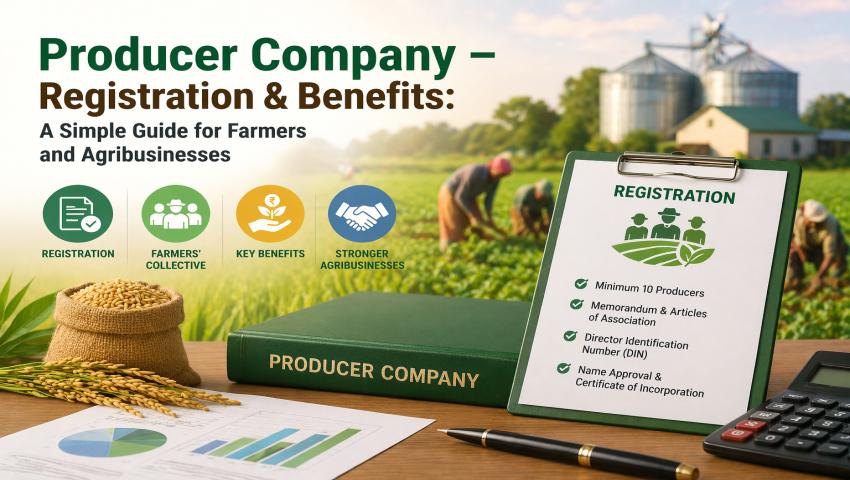
Producer Company – Registration & Benefits: A Simple Guide for Farmers and Agribusinesses
India has a large number of people working in agriculture. However, many farmers face problems like low bargaining power, poor market access, and lack of financial support. To solve these issues, the concept of a Producer Company was introduced under the Companies Act.
Understanding how a Producer Company works, how to register a Producer Company, and its benefits can help farmers and agricultural groups build a strong and organized business. My Finance Gyan provides simple and practical guidance to help you understand the complete process.
A Producer Company combines the teamwork of a cooperative with the professional structure of a company, making it an ideal model for modern agribusiness growth.
What Is a Producer Company?
A Producer Company is a special type of company formed by people involved in primary production activities such as:
- Farmers
- Dairy producers
- Fishermen
- Artisans and weavers
It is registered under the Companies Act, 2013 and is designed to protect the interests of producers.
The main goal is to help members:
- Sell their products together
- Increase income
- Get better access to markets, technology, and finance
Legal Framework in India:
Producer Companies were first introduced in the Companies Act, 1956 and are now covered under Chapter XXIA of the Companies Act, 2013.
They combine:
- The professional management of a company
- The cooperative idea of mutual help
Unlike cooperative societies, Producer Companies are regulated by the Ministry of Corporate Affairs (MCA), which ensures better transparency and accountability.
Who Can Form a Producer Company?
Only people involved in primary production can form or join a Producer Company.
Eligible Members:
- Farmers (agriculture or horticulture)
- Dairy and livestock producers
- Fishermen
- Artisans and handloom workers
- Any person involved in primary production
Minimum Requirements:
- At least 10 individual producers, or
- At least 2 producer institutions, or
- A combination of both
This ensures group participation and fair decision-making.
Registration Process of a Producer Company:
The registration process is simple if all documents are ready.
Step-by-Step Process:
- Step: Get Digital Signature (DSC): All directors must have a digital signature for online filing.
- Step: Apply for DIN: Director Identification Number is required for all directors.
- Step: Name Approval: The name must end with “Producer Company Limited” and match the business activity.
- Step: Prepare MOA and AOA: These documents explain the company’s objectives, rules, and member rights.
- Step: File Registration Forms: Submit forms to the Registrar of Companies with required documents.
- Step: Get Certificate of Incorporation: Once approved, the company is officially registered.
Documents Required:
You will need:
- Identity and address proof of members and directors
- Proof of agricultural or production activity
- Address proof of registered office
- Consent and declarations from directors
Having proper documents helps avoid delays.
Capital Requirement:
There is no minimum capital requirement for a Producer Company.
Members can contribute capital based on their ability. Shares cannot be freely transferred, which helps maintain control within the group.
Benefits of a Producer Company:
- Limited Liability
- Tax Benefits
- Separate Legal Identity
The company can:
- Own property
- Sign contracts
- Take legal action
This improves trust and credibility.
- Better Market Access
By working together, members can:
- Sell in bulk
- Get better prices
- Reduce dependency on middlemen
- Access to Loans and Government Schemes
Producer Companies can easily get:
- Bank loans
- Government subsidies
- Agricultural schemes
Banks prefer structured organizations.
- Professional Management with Equal Rights
The company is managed by directors, but:
- Each member has one vote
This ensures fairness and democracy.
Compliance Requirements:
Even though there are benefits, some rules must be followed:
- Conduct Annual General Meeting (AGM)
- File annual returns and financial statements
- Maintain company records
- Appoint an auditor
Following these rules ensures smooth functioning.
Producer Company vs Cooperative Society:
Producer Companies generally offer better efficiency and governance.
When Should You Choose a Producer Company?
A Producer Company is a good choice when:
- You want to grow your business
- You need better market access
- Transparency is important
- You are planning for long-term growth
It helps solve many common problems faced by farmers.
Conclusion:
A Producer Company is a powerful way for farmers and producers to work together, grow their income, and run a professional business.
It combines the benefits of teamwork and corporate structure, offering limited liability, better market opportunities, and access to finance.
With proper planning and compliance, a Producer Company can play a big role in improving rural economy and supporting sustainable growth.
Disclaimer:
The views expressed in this article are personal and for educational purposes only. This content is meant to create awareness and does not provide any professional or legal advice.