- 28/04/2026
- Govind S. Jethani
- 329 Views
- 2 Likes
- Company Law
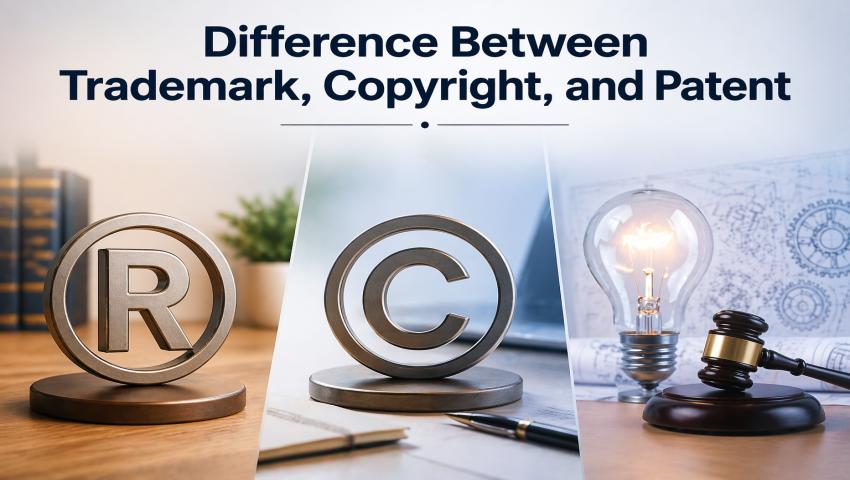
Difference Between Trademark, Copyright, and Patent in India (Simple 2026 Guide)
In today’s fast-paced business world, your ideas, brand identity, and unique creations are among your most valuable assets. However, many entrepreneurs and creators often get confused between the different types of legal protections available. At My Finance Gyan, we understand that securing your work is crucial for long-term success.
Many people get confused between:
- Trademark
- Copyright
- Patent
But all three are different and used for different purposes.
In this simple 2026 guide, My Finance Gyan breaks down the essential differences between Trademark, Copyright, and Patent in India, helping you choose the right legal protection to safeguard your brand, content, and innovations.
What is Intellectual Property (IP)?
Intellectual Property means creations of the mind, such as:
- Brand names
- Logos
- Content
- Inventions
In India, different laws protect different types of IP.
What is a Trademark?
A trademark protects your brand identity.
It can be:
- Brand name
- Logo
- Tagline
- Symbol
It is governed by the Trade Marks Act, 1999.
Purpose:
- Protect your brand
- Stop others from copying your name/logo
- Build customer trust
Example:
- Business name like Tata or Reliance
- Logo like Nike
What is Copyright?
It covers:
- Books, blogs, articles
- Music and videos
- Software code
- Artwork
Purpose:
- Protect original content
- Prevent copying
- Give creator full rights
What is a Patent?
A patent protects inventions and innovations. It is governed by the Patents Act, 1970.
It covers:
- New machines
- New processes
- Technical inventions
- Innovative products
Purpose:
- Protect innovation
- Give exclusive rights to use and sell
Key Difference (Simple Table):
Easy Understanding with Examples:
Example 1: Clothing Brand
- Brand name → Trademark
- Logo design → Trademark + Copyright
- Special fabric technology → Patent
Example 2: Mobile App
- App name → Trademark
- Source code → Copyright
- Unique feature/algorithm → Patent (if eligible)
Main Differences Explained:
1. What They Protect?
- Trademark: Your brand identity
- Copyright: Your creative content
- Patent: Your invention
2. Purpose:
- Trademark → Helps customers recognize you
- Copyright → Protects your creativity
- Patent → Rewards innovation
3. Registration:
- Trademark → Not compulsory but strongly advised
- Copyright → Automatic, but registration helps
- Patent → Must be registered
4. Duration:
- Trademark → 10 years (renewable forever)
- Copyright → Lifetime + 60 years
- Patent → 20 years only
5. Rights You Get:
Trademark:
- Use brand name/logo
- Stop others from copying
Copyright:
- Copy, publish, share, adapt work
Patent:
- Make, use, sell invention
- License it to others
Cost & Complexity:
- Trademark → Moderate cost, simple
- Copyright → Low cost, easy
- Patent → Expensive and complex
Why This Difference Matters?
If you choose the wrong protection:
- You may lose your rights
- Others may copy your work
- You may face legal issues
👉 Example: Copyrighting a logo alone does NOT protect your brand name—you need a trademark.
Can You Use All Three?
👉 Yes, and in many cases you should.
Example: Tech Startup
- Brand name → Trademark
- Software → Copyright
- Innovation → Patent
Common Mistakes:
- Confusing trademark with copyright
- Delaying your trademark registration
- Thinking copyright protects ideas (it doesn’t)
- Delaying patent filing
Practical Tips:
- Register your brand name early
- Keep proof of your creative work
- File patents before sharing your idea publicly
- Use agreements for ownership
Which One Do You Need?
- Starting a business → Trademark
- Creating content → Copyright
- Inventing something → Patent
Conclusion:
Each type of IP has a different role:
- Trademark → Protects your brand
- Copyright → Protects your content
- Patent → Protects your invention
These are governed by:
- Trade Marks Act, 1999
- Copyright Act, 1957
- Patents Act, 1970
Final Advice:
- In 2026, protecting your ideas is not optional—it’s essential.
- Choose the right protection
- Act early
- Secure your brand, content, and innovation
Note:
This content is for awareness and educational purposes only.
FAQs:
Yes, for protection
No, only their expression or implementation