- 24/04/2026
- Govind S. Jethani
- 545 Views
- 4 Likes
- Company Law
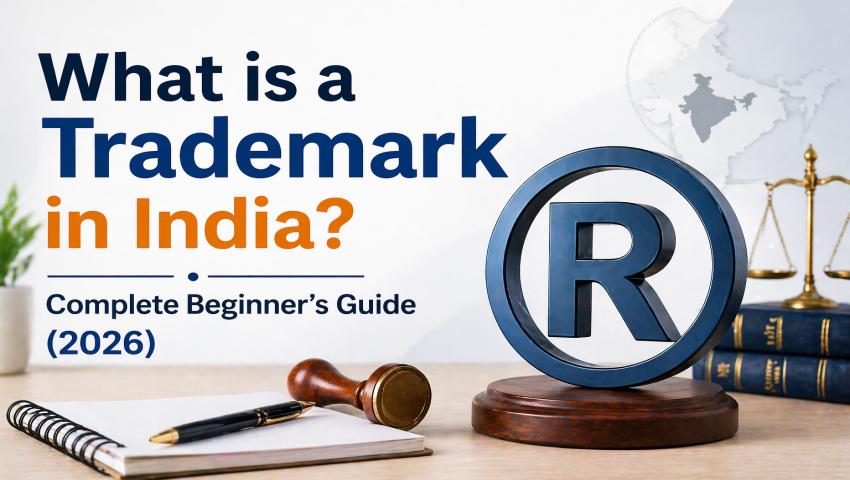
What is a Trademark in India? Complete Beginner’s Guide (2026)
In today’s fast-growing business world in India, especially with startups and online businesses increasing rapidly, protecting your brand is very important. Whether you are starting a new business or growing an existing one, trademark registration should be one of your first steps.
A trademark is not just a name or logo—it represents your brand’s identity, trust, and value.
My Finance Gyan provides practical guidance to help you understand everything about trademarks in India in simple terms.
What is a Trademark?
A trademark is a unique sign, word, logo, design, or symbol that helps people identify your business and differentiate it from others.
In India, trademarks are governed by the Trade Marks Act, 1999, which gives legal protection to brand owners.
Simple Meaning:
A trademark helps customers recognize your brand and connect it with your quality and services.
Examples:
- Brand Names: Tata, Reliance
- Logos: Apple logo, Nike swoosh
- Taglines: “Just Do It”
- Even sounds (like jingles) can be trademarks
Why is Trademark Important?
Many business owners delay trademark registration, but that can create problems later.
Benefits of Trademark Registration:
- Exclusive Rights: You get full rights to use your trademark in your business category.
- Brand Recognition: Customers can easily identify your brand.
- Legal Protection: You can take action against anyone copying your brand.
- Valuable Asset: A trademark can be sold, licensed, or franchised.
- Helps in Growth & Funding: Investors prefer businesses with registered trademarks.
- Useful for Online Selling: Platforms like Amazon give extra benefits to registered brands.
Types of Trademarks in India:
- Word Mark – Protects the name (e.g., Infosys)
- Logo Mark – Protects the design/logo
- Device Mark – Name + logo together
- Service Mark – For service businesses
- Collective Mark – Used by groups/associations
- Certification Mark – Shows quality (like ISI)
- Sound Mark – Unique brand sound
Who Can Apply?
Anyone can apply for a trademark:
- Individuals
- Business owners
- Startups
- Companies
- NGOs
Even if your business has not started yet, you can still apply.
What Can Be Registered?
You can register:
- Brand name
- Logo
- Tagline
- Product name
- Domain name (sometimes)
- Packaging design
You cannot register:
- Common words (like “Sugar” for sugar)
- Very simple or descriptive names
- Already registered or similar trademarks
- Offensive words
Trademark Classes in India:
Trademarks are divided into 45 categories:
- Classes 1–34: Goods
- Classes 35–45: Services
Examples:
- Class 25: Clothing
- Class 35: Advertising & business
- Class 42: IT services
Choosing the correct class is very important.
Trademark Registration Process (Step-by-Step):
- Step: Search- Check if your trademark is already taken.
- Step: Apply- Submit application with your details and trademark.
- Step: Examination- Government checks your application.
- Step: Objection (if any)- You may need to reply if there are issues.
- Step: Publication- Trademark is published for public review.
- Step: Opposition- Others can object within 4 months.
- Step: Registration- If no issues, your trademark is registered.
Fees (2026):
- Individuals / Startups / MSMEs: ₹4,500 per class
- Others: ₹9,000 per class
(Extra professional fees may apply)
How Long Does It Take?
- 6–12 months (if no issues)
- 12–24 months (if objections/opposition)
You can start using ™ after applying.
Trademark Symbols:
- ™ (TM) – After applying
- ® (R) – After registration
Don’t use ® without registration—it’s illegal.
Common Reasons for Rejection:
- Similar to existing trademark
- Not unique
- Too generic or descriptive
- Wrong class selection
- Incorrect details
Objection vs Opposition:
- Objection: Raised by examiner
- Opposition: Raised by third party
Both need proper reply.
Validity & Renewal:
- Valid for 10 years
- Can be renewed every 10 years
Can You Use a Trademark Without Registration?
Yes, but it’s risky.
Without registration:
- Hard to take legal action
- Weak protection
With registration:
- Strong legal rights
- Better protection
Importance for Startups & Online Businesses:
Trademark is very important for:
- D2C brands
- Amazon/Flipkart sellers
- Tech startups
- Influencers
- Franchise businesses
Without it, your brand can be copied easily.
Practical Tips:
- Choose a unique name
- Always check availability
- Select correct class
- Apply early
- Avoid copying others
- Take expert help if needed
Real-Life Example:
Imagine you build a successful brand, and later someone else registers a similar name.
Without trademark:
- You may have to change your brand
- Lose customers
- Face legal problems
With trademark:
- Your brand is safe
- You have legal support
- You build long-term value
FAQs:
Q1. Is trademark mandatory?
Ans- No, but highly recommended.
Q2. Can two businesses have same name?
Ans– Yes, if in different categories.
Q3. Can I apply myself?
Ans- Yes, but expert help is better.
Q4. What if someone copies my brand?
Ans- You can take legal action.
Q5. Can I register name and logo together?
Ans- Yes, or separately.
Conclusion:
A trademark is not just a legal formality—it is a valuable business asset.
In today’s competitive and digital world, protecting your brand is very important.
Registering your trademark early helps you:
- Secure your brand
- Get legal protection
- Grow your business
Note:
The views in this article are personal and meant for awareness and educational purposes only. It does not provide professional or legal advice.