- 30/07/2026
- Govind S. Jethani
- 285 Views
- 4 Likes
- GST
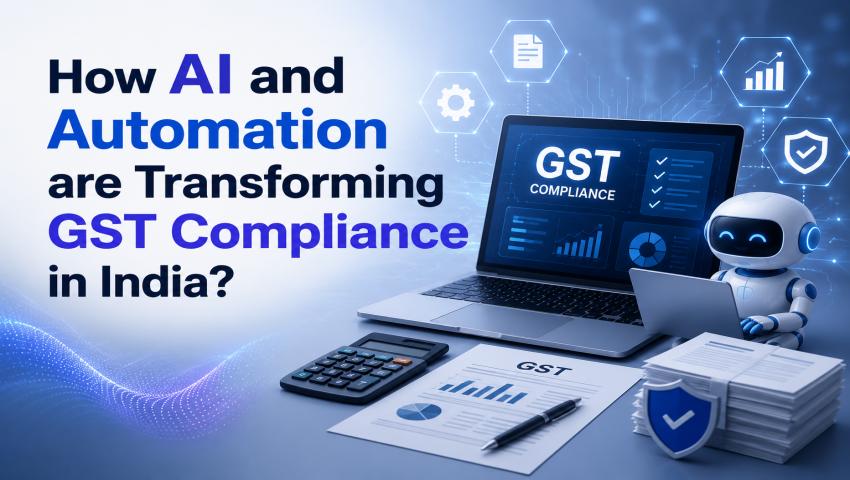
How AI and Automation are Transforming GST Compliance in India?
GST in India has completed nine years. In this time, the focus has moved from simply digitising tax filing to something bigger — using AI in GST compliance and automation tools to make the entire process faster, more accurate and less stressful. If you have searched for terms like GST compliance automation, AI for GST filing, or GST automation tools India.
In this article by My Finance Gyan, we explain how AI and automation are changing the way businesses handle GST compliance in India, and what this shift means for taxpayers, accountants and CA firms. This guide will help you understand what is actually happening on the ground in 2026.
Why GST Needed Technology in the First Place?
GST compliance in India is, by nature, heavy on data and process. Businesses deal with thousands of invoices, tight filing deadlines, and rules that keep changing through notifications and circulars. This creates common problems for taxpayers and accountants:
- Mismatched invoices between purchase records and GSTR-2B
- Manual data entry errors
- Delayed reconciliations
- Last-minute rush before filing deadlines
- Difficulty tracking constant regulatory updates
These problems are exactly why the government and private software companies have started using AI and automation for GST compliance — to reduce manual work and human error at scale.
Automation vs AI: What's the Difference?
Before going further, it helps to understand two different things that often get mixed up — automation and Artificial Intelligence (AI).
– Automation: means using software to do repetitive, rule-based tasks the same way every time. For example, a script that matches your purchase register with GSTR-2B and creates a mismatch report is automation. It gives the same result for the same input, every single time. This predictability is important in compliance work, where mistakes can have real legal consequences.
– Generative AI, on the other hand, includes tools like large language models that can understand context, draft content, and assist with research or advisory work. This is more useful for interpretation-heavy tasks — like understanding a new circular or drafting a reply to a notice — rather than for core, rule-based filing work.
In short: use automation where you need consistency and accuracy, and use AI where you need judgment, drafting help, or faster research.
Where AI and Automation Are Already Being Used in GST?
Here are the areas where this shift is visible right now.
- E-Invoicing and API-Based Data Flow: E-invoicing systems now connect directly with GSTN and IRP (Invoice Registration Portal) APIs. Once your accounting software is integrated, invoice and tax data moves automatically from your ERP to government systems, powering your invoicing, returns and audit trail without repeated manual entry.
- Automated Return Filing: Software tools now auto-populate returns like GSTR-1 and GSTR-3B directly from your accounting data. This reduces the time spent on manual entry and cuts down on filing errors.
- AI-Powered Reconciliation: This is one of the biggest wins. AI tools compare your purchase register against GSTR-2B and GSTR-3B in real time, and instantly flag mismatches. This means errors can be corrected before filing, instead of being discovered later during scrutiny — turning detection into prevention.
- Invoice Management System (IMS) Support: With the GST Invoice Management System handling higher volumes of invoice-level data, AI tools help businesses manage this load. Instead of becoming an extra burden, IMS becomes a proper control system when supported by automation.
- Exception-Based Review: Instead of manually checking every single invoice, AI tools now highlight only the exceptions — the transactions that genuinely need human attention. This saves significant review time for both businesses and CA firms.
- AI-Based OCR for Data Entry: Optical Character Recognition (OCR) powered by AI can read scanned invoices and bank statements, and automatically post entries into your accounting ledgers. This alone can cut manual accounting workload significantly.
A Real-World Example:
Consider a CA firm handling multiple clients’ GST filings. By using AI-powered reconciliation software, the firm can compare each client’s invoice data against GSTR-2B and GSTR-3B automatically. Any mismatch is flagged instantly, giving the team time to correct it before the return is filed — rather than dealing with GST notices and penalties after the fact. This is a good example of how automation shifts compliance from reactive to preventive.
What the Government Side Looks Like?
It’s not just businesses adopting these tools — tax authorities are also expanding their use of AI, machine learning and data analytics to improve compliance monitoring, speed up refunds, and identify tax evasion risks. The government is also working on integrating GST, customs and income tax data to strengthen risk assessment, which should mean faster refunds and simplified processes for compliant businesses.
There’s also growing industry demand for the next phase of GST technology. A large share of businesses have said they want AI-powered reconciliation and automated compliance features built directly into a future upgraded GSTN platform, along with features like pre-filled returns and intelligent matching of transaction data.
Benefits of AI and Automation for GST Compliance:
- Less manual work — repetitive tasks like data entry and matching are automated
- Fewer errors — reduces the chances of mismatches and late filing penalties
- Real-time visibility — businesses can see compliance status instantly, not just at filing time
- Scalability — works well even as transaction volumes grow
- Predictive compliance — problems are caught before they become penalties, not after
Things to Watch Out For:
While the benefits are real, there are a few things businesses and professionals should keep in mind:
- Data confidentiality — GST data is sensitive, so tools must be evaluated for data handling and privacy practices, including compliance with India’s DPDP Act.
- Risk of errors in AI outputs — Generative AI tools can occasionally give inaccurate answers, so they should not be used blindly for final compliance decisions.
- Human review is still needed — AI can draft, suggest, and flag issues, but a professional should always review and sign off on compliance-critical work.
- Tool evaluation — check vendor terms of service, data storage location, and support before adopting any GST automation tool.
What This Means for the Future?
The direction is clear — GST compliance in India is moving from manual and reactive to automated and predictive. This doesn’t mean the role of tax professionals is going away. Instead, their role is shifting from typing and data entry towards reviewing exceptions, applying judgment on interpretation-heavy issues, and advising clients on more strategic matters.
For businesses, the practical takeaway is simple: start evaluating where automation and AI can reduce risk and manual effort in your current GST process — whether that’s e-invoicing integration, reconciliation, or GST return filing.
Frequently Asked Questions:
No. AI and automation handle repetitive, data-heavy tasks, but professional judgment, interpretation of rules, and final sign-off still need a qualified professional.
It can be, as long as you choose tools with proper data security practices and keep a human reviewing compliance-critical outputs before filing.
Automation follows fixed rules and gives the same result every time (like reconciliation scripts). AI, especially Generative AI, is better suited for tasks that need understanding, drafting, or judgment.
It is moving in that direction, with growing demand for AI-powered reconciliation and pre-filled returns, but full automation will likely still involve human oversight for accuracy and compliance.
Conclusion:
AI and automation are not just buzzwords in GST compliance anymore — they are becoming part of everyday practice for businesses and CA firms across India. The goal is not to remove professionals from the process, but to let them focus on the work that actually needs human judgment, while software handles the repetitive and rule-based tasks.
If you need help evaluating or setting up GST automation tools or GST registration in pune for your business, you can contact Startup Portal for consultation.