
- 26/09/2026
- Govind S. Jethani
- 47 Views
- 1 Likes
- Investment
SEP IRA Explained: A Retirement Plan for Self-Employed Americans and Small-Business Owners
Traditional workplace retirement plans are not the only way Americans can save for retirement.
Freelancers, consultants, sole proprietors, independent contractors, and small-business owners may also have retirement-plan options designed for people with self-employment or business income.
One option is a SEP IRA, or Simplified Employee Pension Individual Retirement Arrangement. A SEP IRA can provide relatively simple administration along with potentially higher contribution limits than a traditional or Roth IRA.
What Is a SEP IRA?
A SEP is a retirement plan that allows an employer to make contributions to traditional SEP-IRAs established for eligible employees. Self-employed people can also establish a SEP for themselves.
SEP plans are often used by:
- Sole proprietors
- Independent contractors
- Freelancers
- Consultants
- Partnerships
- Small-business owners
Unlike many traditional employer retirement plans, a SEP can be relatively straightforward to establish and operate.
Who Makes SEP IRA Contributions?
In a traditional SEP arrangement, contributions are generally made by the employer. Standard SEP plans do not allow employee elective salary deferrals in the way that a 401(k) does.
If you are self-employed, you effectively make the employer contribution for yourself.
The contribution calculation for a self-employed individual is more complicated than simply multiplying business profit by a contribution percentage because adjustments for self-employment tax and the SEP contribution itself can apply.
What Is the SEP IRA Contribution Limit for 2026?
For 2026, employer SEP contributions for an employee generally cannot exceed the lesser of:
- 25% of eligible compensation, or
- $72,000
The compensation limit used in calculating contributions is $360,000 for 2026.
For self-employed individuals, special calculations apply, and the effective maximum contribution percentage is generally lower because of how net earnings are calculated.
IRS Publication 560 provides worksheets for determining the deductible amount.
Why Can a SEP IRA Be Attractive?
The potentially higher contribution ceiling is one of the biggest advantages.
The regular IRA contribution limit for 2026 is $7,500, or $8,600 for someone age 50 or older. A SEP can potentially allow a substantially larger employer contribution when business income supports it.
This may make it attractive to established freelancers and profitable small businesses looking to save more for retirement.
Do You Have to Contribute Every Year?
No.
One advantage of a SEP is contribution flexibility. An employer generally is not required to make a contribution every year. This can be useful for businesses with income that changes significantly from one year to another.
For example, a business may make a larger contribution during a strong year and choose not to contribute during a difficult year.
However, if the employer contributes, SEP rules generally require eligible participating employees to receive contributions under the plan’s allocation formula.
What If You Have Employees?
This is an important issue.
A business owner generally cannot simply contribute a large percentage to their own SEP IRA while ignoring eligible employees.
With many SEP arrangements, eligible employees generally must receive the same contribution percentage of compensation as the owner.
For example, if the employer contributes 10% of eligible compensation for themselves, eligible employees generally must also receive a contribution based on the same percentage under a standard SEP allocation formula.
This can make a SEP more expensive for business owners with several employees.
Are SEP Contributions Tax Deductible?
Employer SEP contributions are generally deductible subject to applicable IRS limits. Self-employed individuals may also generally deduct eligible contributions made for themselves.
The exact calculation can become complicated, particularly for sole proprietors and partners. A tax professional can help determine the correct deductible contribution.
Can You Have a SEP IRA and a Regular IRA?
Yes.
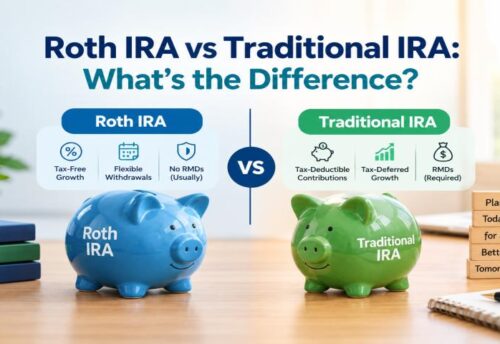
Having a SEP does not automatically prevent someone from contributing to a traditional or Roth IRA.
However, normal IRA contribution limits, income restrictions, and deductibility rules continue to apply.
SEP plan participation can also affect whether a traditional IRA contribution is deductible because the individual may be considered covered by a retirement plan at work.
SEP IRA vs Solo 401(k):
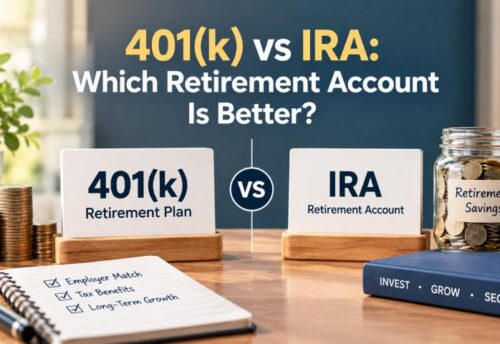
Both can be useful for self-employed people. A SEP IRA generally relies on employer contributions. A Solo 401(k) may allow someone with no common-law employees other than a spouse to contribute in both employee and employer capacities, subject to applicable rules.
This means a Solo 401(k) may sometimes allow a larger contribution at certain income levels.
However, administrative requirements can differ.
The better option depends on business income, age, employee situation, desired contribution level, and administrative preferences.
When Is a SEP IRA Particularly Useful?
A SEP may be worth considering when:
- You are self-employed
- Your income is relatively high
- You want the ability to contribute more than a regular IRA limit
- You have few or no employees
- Your business income varies from year to year
- You want a relatively straightforward employer retirement plan
Common SEP IRA Mistakes:
Watch for mistakes such as:
- Using the wrong self-employed contribution calculation
- Exceeding contribution limits
- Failing to include eligible employees
- Using different contribution percentages improperly
- Missing contribution deadlines
- Confusing SEP employer contributions with regular IRA contributions
Correct contribution calculations are especially important for self-employed taxpayers.
Frequently Asked Questions:
Generally, the employer contribution cannot exceed the lesser of 25% of eligible employee compensation or $72,000. Special calculations apply to self-employed individuals.
Yes. Eligible self-employed individuals can establish SEP plans.
Generally, no. SEP employer contributions can vary from year to year.
Yes, but eligible employees generally must be covered according to the plan’s contribution rules.
Final Thoughts:
A SEP IRA can be a useful retirement-planning tool for self-employed Americans and small-business owners. Its high potential contribution limit, flexibility, and relatively straightforward structure make it particularly attractive to profitable solo businesses.
However, contribution calculations and employee requirements must be handled carefully.
Compare a SEP with alternatives such as a Solo 401(k), SIMPLE IRA, and regular IRA before deciding which structure fits your business.