- 23/09/2026
- Govind S. Jethani
- 55 Views
- 1 Likes
- Finance
Debt Snowball vs Debt Avalanche: Which Debt Payoff Method Should You Use?
Paying off multiple debts can feel difficult, especially when you have several credit cards, personal loans, or other balances. Two popular debt-repayment strategies are the debt snowball method and the debt avalanche method.
Both approaches require you to continue making required payments on all debts while putting extra money toward one priority debt. The difference is how that priority is chosen.
What Is the Debt Snowball Method?
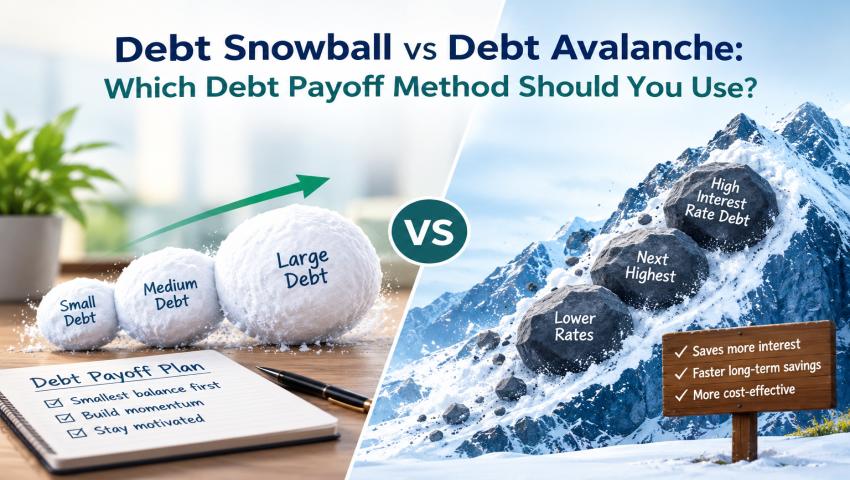
The debt snowball method focuses on the smallest balance first, regardless of the interest rate. You make required payments on every debt and direct extra money toward your smallest balance.
Once that debt is paid off, you move to the next-smallest balance.
The amount previously used for the first debt is added to the payment for the second debt. As debts disappear, your available payment gets larger, creating a “snowball.”
Debt Snowball Example:
Suppose you have:
- Credit Card A: $1,000 at 18%
- Credit Card B: $4,000 at 24%
- Personal Loan: $8,000 at 10%
With the snowball method, you would generally focus on Credit Card A first because it has the smallest balance.
After paying it off, you would move to Credit Card B and then the personal loan. The main benefit is motivation. Eliminating a small debt quickly can provide a visible sense of progress.
What Is the Debt Avalanche Method?
The debt avalanche method focuses on the highest interest rate first. You continue making required payments on every debt but direct extra money toward the most expensive debt.
Using the same example:
- Credit Card A: 18%
- Credit Card B: 24%
- Personal Loan: 10%
The avalanche method would generally target Credit Card B first because it has the highest rate. After paying it off, you would move to Credit Card A and then the personal loan.
Snowball vs Avalanche: Main Difference
The main difference is simple.
- Snowball: smallest balance first.
- Avalanche: highest interest rate first.
The snowball method focuses more on motivation. The avalanche method focuses more on minimizing interest costs.
Which Method Saves More Money?
The debt avalanche method generally has the advantage mathematically. By paying the highest-interest debt first, you can reduce the amount of expensive interest accumulating over time.
However, the best strategy is also one you can realistically follow.
If the snowball method keeps you motivated and helps you remain consistent, it may work better for you in practice. A mathematically perfect plan is not useful if you stop following it.
Why Some People Prefer the Snowball Method?
Debt repayment can be emotional as well as financial. Seeing one account reach a zero balance can create motivation.
Someone with several debts may feel encouraged after eliminating the first small balance.
That feeling of progress can make it easier to continue. The disadvantage is that you may pay more total interest if larger, high-interest balances remain unpaid for longer.
Why Some People Prefer the Avalanche Method?
The avalanche method focuses on reducing borrowing costs. A credit card charging 25% interest is usually more expensive to carry than a loan charging 8%.
By targeting the highest rate first, you reduce your most expensive debt. The disadvantage is that the highest-interest account may also have a large balance.
It might take months before you eliminate your first debt completely. Some people find that lack of visible progress discouraging.
Which Method Pays Debt Off Faster?
It depends on:
- Debt balances
- Interest rates
- Monthly payments
- Additional contributions
- Whether you stay consistent
The avalanche method may reduce interest more efficiently.
However, increasing the amount you pay every month can often make a bigger difference than worrying about which method is perfect.
List Every Debt Before Starting:
Before choosing a strategy, write down:
- Current balance
- Interest rate
- Minimum payment
- Due date
- Whether the rate is fixed or variable
Having a complete list makes it easier to decide which debt should receive your extra payment.
Continue Making Required Payments:
Both methods assume you continue making required payments on every debt. Do not stop paying one account simply because you are focusing on another.
Missing payments may result in:
- Late fees
- Additional interest
- Collection activity
- Credit-score damage
Your priority debt receives the extra payment. Other debts still receive at least the required amount.
What If You Cannot Make Minimum Payments?
If you are struggling to make required payments, contact the lender or credit-card issuer as soon as possible.
Some creditors may offer hardship programs, temporary payment arrangements, or other options.
Waiting until the account becomes severely delinquent can make the situation more difficult. If necessary, consider speaking with a reputable nonprofit credit counselor.
What About Debt Consolidation?
Debt consolidation combines multiple debts into one loan or payment. It may simplify repayment and sometimes reduce the interest rate.
However, a lower monthly payment does not always mean lower overall cost.
A longer repayment term could cause you to pay more interest.
Always compare:
- Interest rate
- Fees
- Loan term
- Monthly payment
- Total repayment cost
Debt consolidation also will not solve the problem if new debt continues accumulating.
Can You Combine Both Methods?
Yes. You do not have to follow one system perfectly.
For example, you could pay off one very small balance first for motivation and then switch to the avalanche strategy.
A hybrid approach can combine psychological progress with interest savings. The best system is one you understand and can maintain.
How to Find Extra Money for Debt Repayment?
Look for areas where spending can be temporarily reduced.
Examples include:
- Unused subscriptions
- Frequent dining out
- Entertainment expenses
- Expensive service plans
- Impulse purchases
You can also consider using extra income such as a bonus, tax refund, or proceeds from selling unused items. Avoid making your repayment plan so restrictive that it becomes impossible to maintain.
Should You Save or Pay Debt First?
You may not need to choose only one. Keeping some emergency savings can prevent unexpected expenses from going back onto a credit card.
At the same time, extremely high-interest debt can be expensive.
The balance depends on your income stability, emergency fund, interest rates, and personal responsibilities.
Avoid Debt-Relief Scams:
Be cautious of companies promising to eliminate debt quickly or guarantee major reductions.
Watch for companies that:
- Demand large upfront payments
- Tell you to stop communicating with creditors
- Guarantee specific results
- Promise to erase debt immediately
Research any debt-relief provider carefully before sharing financial information or making payments.
Frequently Asked Questions:
The avalanche method may save more interest, while the snowball method may provide stronger motivation.
Yes. It prioritizes the smallest balance first.
Not necessarily. Snowball focuses on the smallest balance, while avalanche focuses on the highest interest rate.
No. Continue making required payments on all accounts.
Yes. You can change strategies or use a combination.
Final Thoughts:
Both the debt snowball and debt avalanche methods can help create structure for paying off debt. The snowball method focuses on quick wins and motivation.
The avalanche method focuses on reducing interest costs. Choose the approach you are most likely to follow consistently.
More importantly, avoid adding unnecessary new debt, make required payments on time, and direct extra money toward your repayment goal whenever possible. A clear plan can make a large debt balance feel more manageable.