
- 26/05/2026
- Govind S. Jethani
- 763 Views
- 3 Likes
- Company Law
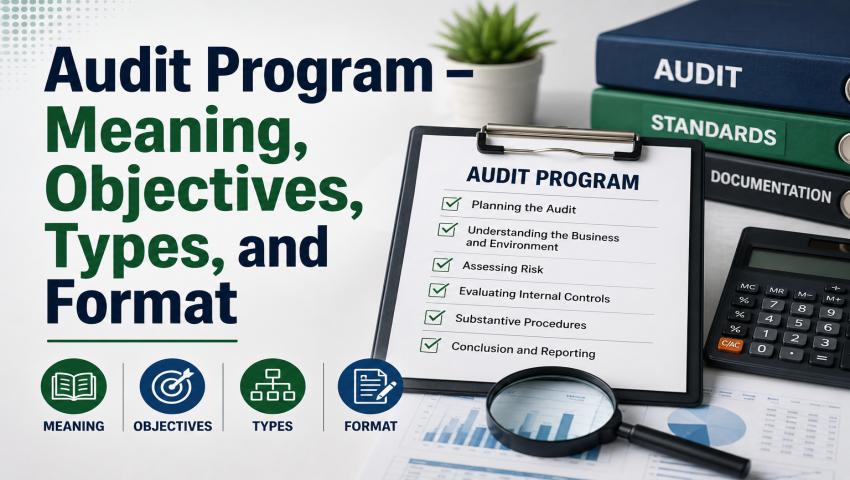
Audit Program – Meaning, Objectives, Types, and Format
In the field of auditing, proper planning is as important as the actual audit process. A well-structured audit not only ensures compliance with professional standards but also improves the overall efficiency and quality of the audit. One of the most important tools used for this purpose is the audit program.
An audit program acts as a systematic guide for auditors by outlining the procedures, responsibilities, and steps involved in conducting an audit. It helps auditors perform their work in an organised and controlled manner while ensuring that all important areas are properly examined.
This article by My Finance Gyan explains the meaning of an audit program, its objectives, importance, types, advantages, limitations, and the standard format used in practice.
Meaning of Audit Program:
An audit program is a detailed written plan that specifies the audit procedures and steps to be followed during an audit engagement. It clearly describes the nature of work to be performed, the method of performing it, and the person responsible for carrying out the task.
In simple terms, an audit program serves as a checklist of audit activities prepared to:
- Collect sufficient and appropriate audit evidence
- Ensure compliance with auditing standards
- Conduct the audit efficiently and systematically
- Achieve the objectives of the audit effectively
It acts as a roadmap that guides auditors throughout the audit process.
Definition of Audit Program:
An audit program may be defined as:
“A comprehensive plan of action that specifies the audit procedures to be followed for verifying the accuracy and fairness of financial statements.”
This definition highlights the role of an audit program as both a planning tool and a control mechanism in auditing.
Objectives of an Audit Program:
The main objectives of preparing an audit program are:
- To ensure systematic and organised audit work
- To avoid duplication or omission of audit procedures
- To provide clear guidance and instructions to the audit team
- To facilitate supervision and review of audit work
- To ensure compliance with auditing standards and legal requirements
- To improve audit efficiency and effectiveness
An audit program also helps auditors focus more attention on high-risk areas while maintaining overall audit coverage.
Importance of an Audit Program:
Proper Audit Planning
It helps auditors plan the audit in advance and reduces confusion during execution.
Uniformity in Audit Work
A standard audit program ensures consistency in audit procedures across different engagements.
Effective Supervision
Senior auditors can supervise and review the work of junior staff more efficiently through the audit program.
Evidence of Professional Care
The audit program serves as documentary evidence that the audit was conducted with due professional care and diligence.
Time and Cost Efficiency
Clearly defined procedures and responsibilities help complete the audit within the planned timeline and budget.
Types of Audit Programs:
1. Fixed Audit Program
A fixed audit program is a standardised program that is applied uniformly to all audit assignments regardless of the client’s industry or business size.
Advantages:
- Ensures consistency in audit procedures
- Useful for training junior audit staff
- Easy to implement and monitor
Disadvantages:
- Lacks flexibility
- May ignore unique business risks and operational differences
2. Flexible Audit Program
A flexible audit program allows changes and modifications according to:
- Nature of the business
- Internal control systems
- Risk assessment results
- Industry-specific requirements
This type of audit program is more practical and widely used in modern auditing practices.
Audit Program Format:
There is no fixed statutory format prescribed for preparing an audit program. However, a standard audit program generally contains the following elements:
1. Heading:
The heading usually includes:
- Name of the client
- Financial year or audit period
- Type of audit
2. Audit Area:
This section identifies the specific area to be audited, such as:
- Cash and bank
- Purchases and expenses
- Sales and debtors
- Fixed assets
- Inventory
3. Audit Objectives:
It specifies the purpose of the audit procedures, such as verifying:
- Accuracy
- Completeness
- Existence
- Valuation
- Compliance
4. Audit Procedures:
This section contains detailed audit steps and procedures, including:
- Verification of vouchers and invoices
- Reconciliation of balances
- Examination of supporting documents
- Physical verification of assets
5. Responsibility:
The audit program should clearly mention the person responsible for performing each procedure, such as:
- Audit assistant
- Senior auditor
- Audit manager
6. Time Schedule:
It includes the estimated time required to complete each audit activity.
7. Remarks or Observations:
This section is used to record audit findings, issues identified, and observations made during the audit.
Illustrative Audit Program Format:
A typical audit program may include the following details:
- Client Name
- Financial Year
- Audit Area
- Audit Objectives
- Audit Procedures
- Prepared By
- Reviewed By
- Date
This structured format helps maintain clarity, accountability, and proper documentation.
Advantages of an Audit Program:
An audit program offers several practical benefits, including:
- Provides clear guidance to audit staff
- Serves as a training tool for junior auditors
- Improves the quality of audit documentation
- Helps identify weaknesses in internal controls
- Reduces audit risk and errors
- Ensures better coordination within the audit team
Limitations of an Audit Program:
Despite its advantages, an audit program also has certain limitations:
- Excessive dependence on the program may reduce professional judgement
- Rigid audit programs may fail to address unique risks
- Frequent updates may be required due to regulatory and business changes
- Mechanical implementation may affect audit effectiveness
These limitations can be minimised by adopting a flexible and risk-based approach.
Role of Audit Program in Risk-Based Auditing:
Modern auditing follows a risk-based approach, where audit procedures are designed according to the level of risk involved.
Audit programs in risk-based auditing focus on:
- Inherent risk
- Control risk
- Detection risk
This approach ensures that high-risk areas receive greater audit attention and resources.
Audit Program in Statutory Audits:
In statutory audits, audit programs are essential for ensuring:
- Compliance with auditing standards
- Adherence to legal and regulatory requirements
- Proper audit documentation and evidence
- Readiness for regulatory inspections and peer reviews
Regulatory authorities often examine audit programs to evaluate the quality and effectiveness of audit work.
Conclusion:
An audit program is one of the most important tools in the auditing process as it connects audit planning with audit execution. By clearly defining procedures, responsibilities, and timelines, it helps auditors conduct audits in a systematic, efficient, and professional manner.
A well-designed and flexible audit program not only improves audit quality but also enhances professional credibility, accountability, and client confidence. Therefore, understanding the meaning, objectives, and format of an audit program is essential for students, audit professionals, and audit firms alike.
Disclaimer: This article is intended for educational and informational purposes only and should not be considered professional auditing or legal advice.