- 08/07/2026
- Govind S. Jethani
- 606 Views
- 3 Likes
- Finance
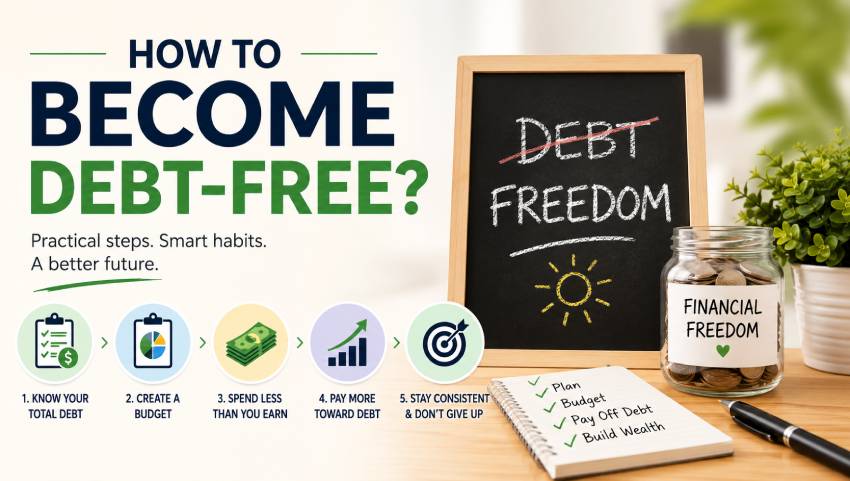
How to Become Debt-Free?
Being in debt can feel stressful.
At first, one loan or one credit card may seem easy to manage. But over time, you may have multiple EMIs, credit card bills, and other payments. Before the month even begins, a large part of your salary is already spent.
The good news is that becoming debt-free is possible.
You don’t need to earn a huge income. You need a clear plan, discipline, and patience.
In this My Finance Gyan guide, we will break down the exact steps you need to take to clear your liabilities. Let’s understand how to become debt-free step by step..
Know Your Total Debt:
The first step is to understand exactly how much you owe.
Write down every debt you have, including:
- Credit card dues
- Personal loans
- Home loan
- Car loan
- Education loan
- Gold loan
- Money borrowed from family or friends
- Any unpaid bills
For each loan, note down:
- Total loan amount
- Outstanding balance
- EMI amount
- Interest rate
- Due date
- Any late payment charges
Many people avoid checking their total debt because it feels uncomfortable.
But knowing the exact amount is the first step towards becoming debt-free.
Stop Taking New Debt:
If you want to clear your existing debt, stop adding new debt.
This is one of the biggest mistakes people make.
They continue shopping with credit cards, buy gadgets on EMI, or take personal loans while trying to repay old loans.
As a result, debt never reduces.
Before buying anything, ask yourself:
“Can I afford this without borrowing money?”
If the answer is no, wait until you can.
Prepare a Monthly Budget:
A monthly budget helps you understand where your money goes.
Write down:
- Monthly income
- Essential expenses
- Non-essential expenses
Essential expenses include:
- House rent
- Groceries
- Electricity bills
- School fees
- Insurance
- Medicines
- Transport
Non-essential expenses may include:
- Eating out frequently
- Online shopping
- Unused subscriptions
- Expensive entertainment
- Luxury purchases
Reducing unnecessary expenses can free up extra money for loan repayment.
Even saving ₹5,000 every month means ₹60,000 in one year that can be used to reduce debt.
Pay More Than the Minimum Amount:
If you have credit card debt, always try to pay more than the minimum amount due.
Paying only the minimum amount keeps your account active, but the remaining balance continues to attract high interest.
For example:
If your minimum payment is ₹3,000 but you can pay ₹8,000, pay ₹8,000.
The faster you reduce your credit card balance, the less interest you will pay.
Credit card debt should always be your priority because it usually carries very high interest rates.
Choose a Debt Repayment Strategy:
There are two popular ways to repay debt.
Debt Snowball Method:
- In this method, you first pay off the smallest loan.
- Once it is cleared, you move to the next smallest loan.
This gives you confidence because you keep closing loans one by one.
Debt Avalanche Method:
- In this method, you first repay the loan with the highest interest rate.
- This helps you save more money on interest.
Both methods work well.
Choose the one that suits your financial situation and keeps you motivated.
Talk to Your Lender If You're Facing Problems:
If you are unable to pay your EMI, don’t ignore phone calls or notices from your lender.
Speak with them as early as possible.
Depending on your situation, the lender may offer:
- EMI restructuring
- Longer repayment period
- Lower monthly EMI
- Other repayment options
Ignoring the problem usually makes it worse through additional interest, penalties, and damage to your CIBIL score.
Use Extra Income to Repay Debt:
Whenever you receive extra money, use it wisely.
This may include:
- Annual bonus
- Tax refund
- Freelance income
- Incentives
- Commission
- Money from selling unused items
Instead of spending the entire amount, use a large portion to repay your loans.
For example, if you receive ₹50,000 as a bonus, you can use ₹35,000 to reduce your debt and keep the remaining amount for savings or personal needs.
This helps you become debt-free faster.
Build an Emergency Fund:
Many people wonder whether they should save money or repay debt first.
The best approach is to keep a small emergency fund while continuing your debt repayment.
If an unexpected expense like a medical emergency or car repair occurs, you won’t have to borrow again.
Try to save at least one month’s essential expenses first.
Gradually increase it to three to six months.
This emergency fund protects you from falling back into debt.
Increase Your Income:
Reducing expenses is helpful, but increasing your income can speed up your debt repayment.
You can earn extra money by:
- Freelancing
- Part-time work
- Online services
- Tutoring
- Consulting
- Weekend jobs
- Selling products online
Even an extra ₹10,000 per month can make a big difference.
Over one year, that’s ₹1,20,000 that can be used to repay loans.
Avoid Lifestyle Pressure:
Many people fall into debt because they try to match the lifestyle of others.
- Someone buys a new phone.
- Someone buys a car.
- Someone goes on an expensive holiday.
- You don’t have to copy them.
- Your financial situation is different.
- Never borrow money just to impress others.
Living within your means today can save you from years of financial stress.
Track Your Progress Every Month:
Keep checking your debt regularly.
For example:
- January: ₹4,50,000
- February: ₹4,20,000
- March: ₹3,90,000
Seeing your debt reduce every month keeps you motivated.
Celebrate small milestones, but avoid unnecessary spending after paying off a loan.
Think Before Closing Credit Cards:
Many people close all their credit cards immediately after becoming debt-free.
This may not always be necessary.
If your credit card has no annual fee and you use it responsibly, keeping it active can help maintain your credit history.
However, if you struggle to control your spending, closing the card may be the better option.
The goal is not just to remove debt.
The goal is to develop healthy financial habits.
Common Mistakes to Avoid:
Avoid these common mistakes:
- Paying only the minimum credit card amount
- Taking new loans while repaying old ones
- Ignoring high-interest debt
- Spending without a budget
- Depending only on future income
- Borrowing from one lender to repay another
The sooner you take control, the easier it becomes to get out of debt.
Final Thoughts:
- Becoming debt-free doesn’t happen overnight.
- It happens through small, consistent financial decisions.
- Start by understanding your total debt.
- Stop borrowing unnecessarily.
- Prepare a budget.
- Reduce unnecessary expenses.
- Pay more than the minimum amount on your loans.
- Focus on clearing high-interest debt first.
- Build a small emergency fund and look for opportunities to increase your income.
- Every EMI you pay and every loan you close brings you one step closer to financial freedom.
- A debt-free life gives you peace of mind.
You can save more, invest for your future, and use your income for your own goals instead of paying interest every month.
Start today.
Even one extra payment can bring you closer to a debt-free future.
Disclaimer:
The information shared in this article is for educational and awareness purposes only. It should not be considered financial, legal, or investment advice, nor should it be treated as a recommendation for any financial product.