- 27/05/2026
- Govind S. Jethani
- 601 Views
- 3 Likes
- Finance
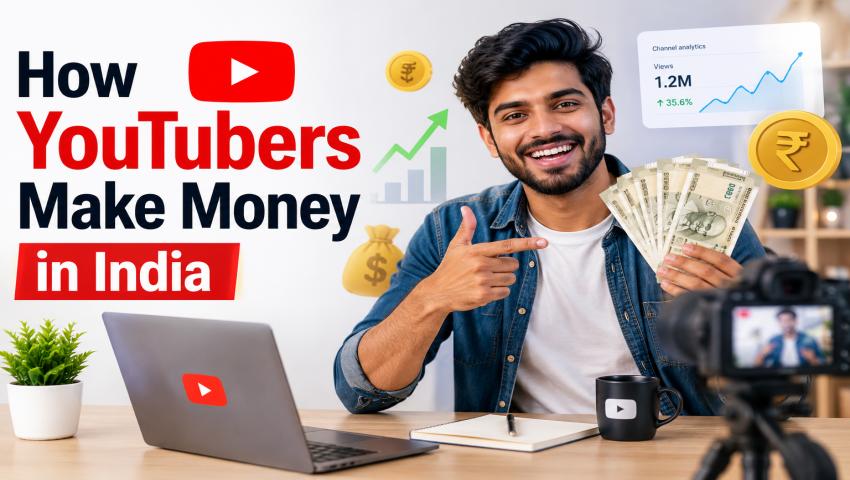
How YouTubers Make Money in India?
YouTube is no longer just a platform for entertainment, songs, funny videos, or casual vlogs. In India, many people now treat YouTube as a serious career option, business model, or income source. Some creators earn side income, while others build full-time careers, agencies, studios, brands, courses, and even companies around their YouTube channels.
In this guide by My Finance Gyan, we break down exactly how this ecosystem works.
However, one thing is important to understand clearly:
YouTubers do not earn money only from views.
Views help increase reach and audience, but real YouTube income usually comes from multiple revenue sources.
1. YouTube Ad Revenue:
The most common income source for YouTubers is ad revenue.
When advertisements appear on a creator’s videos, YouTube shares a portion of the advertising revenue with the creator through the YouTube Partner Program (YPP).
However, channels do not start earning from the first uploaded video. A creator must first meet YouTube’s monetisation eligibility requirements.
Generally, monetisation requirements include:
- Minimum subscriber requirements
- Watch hour or Shorts view requirements
- Compliance with YouTube policies
- No active Community Guidelines strikes
Ad revenue depends on several factors such as:
- Video niche
- Audience location
- Advertiser demand
- Watch time
- Viewer engagement
- Seasonality
High-paying niches often include:
- Finance
- Business
- Technology
- Education
- Software
- Digital marketing
Lower CPM niches may include:
- Meme content
- General entertainment
- Viral repost-style content
This is why two channels with similar views may earn very different income.
2. Earnings Through YouTube Shorts:
YouTube Shorts can also generate income, although Shorts earnings usually differ from long-form video monetisation.
Shorts are powerful for:
- Rapid audience growth
- Increasing visibility
- Gaining subscribers
- Expanding reach
A small creator can sometimes go viral through Shorts even with a new channel.
However, many Indian creators mainly use Shorts as:
- A growth strategy
- A funnel toward long-form content
- A way to promote products, courses, or services
While Shorts monetisation exists, many creators earn more indirectly by converting Shorts viewers into loyal subscribers and customers.
3. Sponsorships and Brand Collaborations:
For many creators, sponsorships can become a larger income source than YouTube ads.
In sponsorship deals:
- Brands pay creators to promote products or services
- Promotions may appear as dedicated videos, reviews, mentions, or integrations
For example:
- A tech creator may promote smartphones or gadgets
- A finance creator may collaborate with fintech apps
- A beauty creator may promote skincare products
- A gaming creator may partner with gaming brands
Sponsorship income depends on:
- Audience trust
- Engagement quality
- Niche relevance
- Average video views
- Brand positioning
Interestingly, smaller niche channels with loyal audiences sometimes earn better sponsorship opportunities than larger channels with weak engagement.
However, creators must be careful while choosing brand deals. Promoting poor-quality products may damage audience trust permanently.
4. Affiliate Marketing:
Affiliate marketing is another major revenue stream for YouTubers in India.
In affiliate marketing:
- Creators share product links
- They earn commission when viewers purchase through those links
For example:
A YouTuber reviewing a laptop or camera may include purchase links in the video description. If viewers buy through those links, the creator earns affiliate income.
Affiliate marketing works especially well in categories such as:
- Technology
- Fashion
- Beauty
- Home products
- Fitness
- Lifestyle
- Gadgets
Today, several platforms and marketplaces offer affiliate programs for Indian creators.
5. Channel Memberships:
YouTube also allows creators to earn through Channel Memberships.
In this model, viewers pay a monthly subscription fee to support the creator and receive exclusive benefits such as:
- Members-only videos
- Exclusive live chats
- Custom emojis and badges
- Early content access
- Private community posts
Memberships work best for creators with:
- Strong audience loyalty
- Active communities
- Consistent content
Popular categories for memberships include:
- Gaming
- Education
- Finance
- Spiritual content
- Podcasts
- Comedy
However, creators must continuously provide value to paying members to maintain retention.
6. Super Chat, Super Stickers, and Super Thanks:
YouTube also offers fan support features.
Super Chat and Super Stickers:
These are mainly used during live streams where viewers pay to highlight their messages.
Super Thanks:
This feature allows viewers to financially support creators on both long-form videos and Shorts.
These features are commonly used in:
- Gaming streams
- Live educational sessions
- Devotional channels
- Music channels
- Astrology content
- Community-driven creators
For creators with loyal audiences, fan funding can become a meaningful recurring income source.
7. Selling Courses and Digital Products:
Many Indian YouTubers earn substantial income through their own digital products.
These may include:
- Online courses
- E-books
- Workshops
- Paid webinars
- Templates
- Study notes
- Fitness plans
- Business guides
- Design resources
Examples:
- A video editor may sell editing courses
- A finance educator may sell stock market classes
- A CA may offer tax filing guides
- A teacher may sell exam preparation material
This business model can often generate significantly higher profits than ad revenue because creators control pricing and margins.
However, quality matters greatly. Poor products can damage credibility and reputation.
8. Consulting and Professional Services:
Many professionals use YouTube primarily to attract clients rather than relying only on ads.
This works especially well for:
- Chartered Accountants (CA)
- Lawyers
- Consultants
- Coaches
- Digital marketers
- Architects
- Fitness trainers
- Career mentors
- Interior designers
For example:
- Someone may watch a GST-related video and hire the creator for consultancy
- A business owner may contact a web designer after watching tutorial content
In this model, YouTube functions as a powerful marketing platform.
This is one of the strongest monetisation strategies for skilled professionals in India.
9. Merchandise and Personal Brands:
Some creators build their own brands and products around their audience.
Examples include:
- T-shirts
- Books
- Mugs
- Fitness products
- Skincare products
- Digital tools
- Stationery
- Food products
This works best when creators have:
- Strong personal branding
- Loyal followers
- Unique identity
For example:
- Comedy creators may sell dialogue-based merchandise
- Fitness creators may launch supplements
- Educational creators may sell planners or books
However, running a product business involves:
- Inventory management
- Customer support
- Logistics
- Refund handling
- GST compliance
- Product quality control
So it requires much more operational work than content creation alone.
10. Licensing, Events, and Media Opportunities:
Successful YouTubers often receive additional opportunities such as:
- Podcast deals
- Event appearances
- Speaking engagements
- TV or OTT collaborations
- Brand ambassadorships
- Music licensing
- Paid interviews
- Live performances
Examples:
- Food creators may get invited to food festivals
- Finance creators may speak at seminars
- Comedians may perform live shows
- Travel creators may collaborate with tourism brands
In many cases, YouTube becomes the foundation for building a larger public brand.
Taxation for YouTubers in India:
YouTube income is taxable in India.
This includes:
- Ad revenue
- Sponsorship income
- Affiliate commissions
- Course sales
- Consulting fees
- Fan funding income
- Brand collaborations
Depending on turnover and business structure, GST may also apply in certain situations.
YouTubers should maintain proper financial records such as:
- Invoices
- Bank statements
- Sponsorship agreements
- Expense bills
- Equipment invoices
- Editing software subscriptions
- Internet bills
- Travel expenses
Creators may also claim legitimate business expenses related to content creation, including:
- Cameras
- Microphones
- Laptops
- Studio rent
- Editing software
- Internet expenses
- Lighting setup
- Team salaries
- Travel costs
Maintaining proper records helps during tax filing and compliance.
Final Thoughts:
YouTubers in India earn money through multiple sources — not only through views or ad revenue.
Successful creators usually build several income streams such as:
- Ad revenue
- Sponsorships
- Affiliate marketing
- Memberships
- Fan funding
- Courses
- Consulting services
- Merchandise
- Brand partnerships
But the real foundation of YouTube success is trust.
If viewers trust the creator, income opportunities naturally grow over time. If creators focus only on quick money and promote anything for sponsorships, long-term audience trust may decline.
The best way to build sustainable YouTube income is simple:
- Create useful content
- Build audience trust
- Follow platform rules
- Maintain clean tax records
- Treat the channel like a real business
Disclaimer:
The views expressed in this article/blog are personal and intended solely for educational and awareness purposes. The content does not constitute financial, legal, tax, or business advice and is not intended to recommend any specific product or service.