- 13/07/2026
- Govind S. Jethani
- 364 Views
- 2 Likes
- Finance
How Credit Cards Affect Your CIBIL Score?
Credit cards are very useful when you use them wisely.
Many people think a credit card is simply a way to buy now and pay later. While that’s true, every time you use your credit card, your financial behaviour is also being recorded.
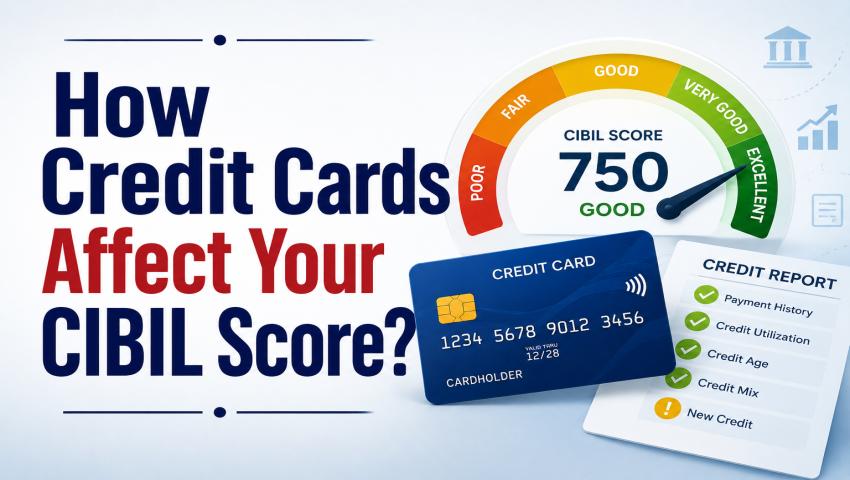
Your payment history, credit usage, outstanding balance, and repayment habits all affect your CIBIL score.
If you use your credit card responsibly, it can improve your credit score. But if you misuse it, your score can fall, making it harder to get loans in the future.
In this My Finance Gyan guide, let’s understand how credit cards affect your CIBIL score in simple words so you can keep your financial health on track.
What Is a CIBIL Score?
A CIBIL score is a three-digit number that shows how well you manage credit. It usually ranges from 300 to 900.
A higher score tells banks that you are a responsible borrower, while a lower score may make it difficult to get loans or credit cards.
Banks usually check your CIBIL score before approving:
- Home loans
- Personal loans
- Car loans
- Business loans
- Credit cards
Your score is based on your repayment history, credit card usage, outstanding loans, and overall credit behaviour.
1. Paying Your Credit Card Bill on Time Improves Your CIBIL Score:
One of the biggest factors affecting your CIBIL score is your payment history. If you pay your credit card bill on or before the due date every month, it creates a good repayment record.
For example, if your bill is due on 10th July and you pay the full amount before that date, it has a positive impact on your credit score.
If you often forget payment dates, set reminders or enable auto-pay. Paying your bills on time is one of the easiest ways to maintain a healthy CIBIL score.
2. Late Payments Can Reduce Your Score:
Missing your credit card payment can negatively affect your CIBIL score. Apart from late payment charges and interest, the delay may also be reported to the credit bureau.
One late payment may not cause major damage, but repeated delays can lower your score and reduce your chances of getting loans in the future. Always try to pay the full bill before the due date.
3. High Credit Card Usage Can Affect Your Score:
Your credit utilisation ratio is another important factor. It means how much of your available credit limit you are using.
For example:
- Credit Limit: ₹1,00,000
- Spending: ₹80,000
- Credit Utilisation: 80%
This is considered high.
If you spend only ₹20,000, your utilisation is 20%, which looks much better.
As a general rule, try to keep your credit card usage below 30% of your total limit whenever possible.
Lower credit utilisation shows that you manage your finances responsibly.
4. Paying Only the Minimum Amount Is Not a Good Habit:
Every credit card statement shows:
- Total Amount Due
- Minimum Amount Due
Many people pay only the minimum amount and think they have cleared the bill. This is a mistake. The remaining balance continues to attract high interest charges.
Over time, your outstanding amount can become difficult to repay. To avoid unnecessary interest and maintain a healthy credit profile, try to pay the full outstanding amount every month.
5. Credit Cards Help Build Your Credit History:
Credit cards are not bad. In fact, they help you build a strong credit history when used correctly. If you have never taken a loan before, using a credit card for regular expenses like:
- Fuel
- Groceries
- Utility bills
- Online shopping
and paying the full bill on time every month helps create a positive credit history. This becomes useful when you apply for a home loan, car loan, or personal loan in the future.
6. Applying for Too Many Credit Cards Can Lower Your Score:
Whenever you apply for a new credit card, the bank checks your credit report. This is called a hard enquiry. One or two enquiries are usually not a problem.
However, applying for several credit cards within a short period can reduce your CIBIL score.
Banks may think you urgently need money or are under financial pressure. Apply for a credit card only when you genuinely need one.
7. Closing Old Credit Cards Can Affect Your Credit History:
Many people close old credit cards without thinking. If your old card has no major annual fee and has a good repayment history, keeping it active can be beneficial.
Older credit cards increase your credit history length, which may positively impact your CIBIL score. You can simply use the card occasionally for small purchases and pay the bill in full.
8. Using Your Entire Credit Limit Is Risky:
Regularly using almost your entire credit limit is not a good sign.
For example, if your limit is ₹50,000 and you spend ₹48,000 every month, lenders may think you depend heavily on borrowed money.
If this happens regularly, review your monthly expenses. A credit card should help you manage payments, not become your primary source of spending.
9. Credit Card Settlement Can Harm Your Credit Score:
Sometimes people cannot repay their entire credit card balance and settle the account by paying a smaller amount. This is called settlement. A settled account is different from a closed account.
- Closed Account: Full payment has been made.
- Settled Account: Only part of the payment has been made.
Banks usually view settled accounts negatively. If possible, always repay the full amount and close your credit card properly.
10. Be Careful with Add-On Credit Cards:
Many banks offer add-on credit cards for family members. Remember that the primary cardholder is responsible for all payments.
If the add-on card bill is not paid on time, your CIBIL score may also be affected. Only give an add-on card to someone who will use it responsibly.
Tips to Maintain a Good CIBIL Score:
Follow these simple habits:
- Pay your credit card bill on time.
- Pay the full outstanding amount whenever possible.
- Keep credit usage below 30% of your limit.
- Avoid applying for multiple credit cards together.
- Keep old credit cards active if they have low charges.
- Avoid withdrawing cash using your credit card.
- Check your CIBIL report regularly.
- Do not ignore even small outstanding balances.
- Use your credit card only for planned expenses.
These simple habits can help you maintain a strong credit profile. If you are already dealing with credit card balances and want to clear them completely, read our step-by-step guide on how to become debt-free.
Final Thoughts:
Credit cards can either improve or damage your CIBIL score. If you pay your bills on time, keep your credit usage low, and manage your card responsibly, your credit score can improve over time.
However, late payments, high credit utilisation, paying only the minimum amount, or applying for too many credit cards can reduce your score.
The best approach is simple. Treat your credit card as a convenient payment method—not as extra income. Spend only what you can comfortably repay. Pay your bills on time and avoid unnecessary debt.
When used wisely, a credit card becomes a powerful financial tool that helps build a strong credit history and improves your chances of getting loans in the future.
Disclaimer:
The views expressed in this article are for educational and awareness purposes only. They should not be considered financial, legal, or credit advice, nor should they be treated as a recommendation for any financial product.