- 11/07/2026
- Govind S. Jethani
- 422 Views
- 3 Likes
- Investment
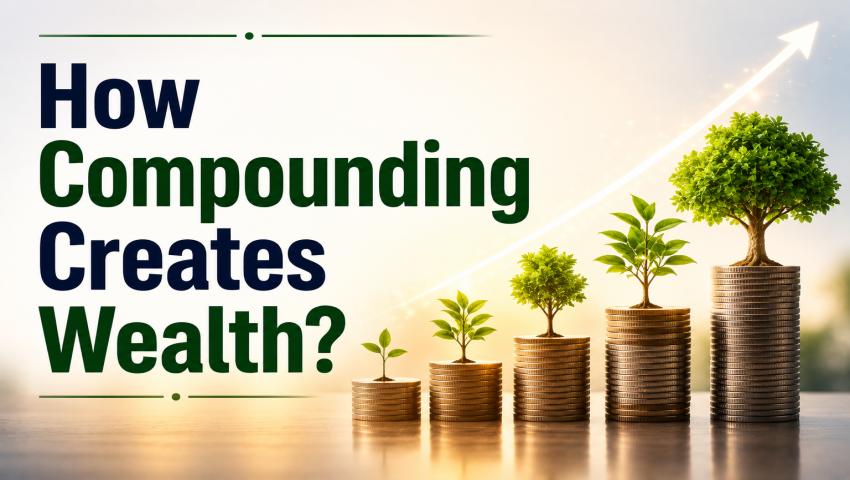
How Compounding Creates Wealth?
Everyone wants to become financially secure and build wealth. However, many people believe they need a very high salary or a risky investment to become rich.
The truth is different.
Most wealth is created slowly by saving regularly, investing wisely, and giving your money enough time to grow. This is where compounding plays an important role.
Compounding is one of the most powerful concepts in investing. It may not look impressive in the beginning, but over time it can help you build significant wealth.
In this My Finance Gyan guide, let’s understand how compounding creates wealth in simple words so you can start growing your wealth effectively.
What Is Compounding?
Compounding means earning returns not only on your original investment but also on the returns you have already earned. Simply put, your money starts making more money.
For example, suppose you invest ₹1,00,000 and earn a 10% return in the first year. Your investment becomes ₹1,10,000.
If you earn another 10% in the second year, the return is calculated on ₹1,10,000, not on the original ₹1,00,000.
Your investment becomes ₹1,21,000.
This is the power of compounding. Your returns also begin to earn returns.
Why Does Compounding Feel Slow at First?
Many people stop investing because they don’t see quick results. In the first few years, your investment grows slowly because the amount invested is still small.
For example, you may invest ₹60,000 in a year but earn only ₹5,000 or ₹8,000 as returns.
After many years, your investments become much larger. At that stage, your portfolio may earn ₹1 lakh or even ₹2 lakh in a year without you investing that much extra money.
This is when compounding starts showing its real power. Unfortunately, many people stop investing before reaching this stage.
Time Is More Important Than the Amount:
Time is the biggest advantage in compounding. The earlier you start investing, the longer your money gets to grow.
For example:
- Person A starts investing ₹5,000 per month at the age of 25.
- Person B starts investing ₹10,000 per month at the age of 35.
Although Person B invests double the amount, Person A has a 10-year head start. Because of those extra years, Person A may create more wealth in the long run. This is why starting early is more important than starting with a large amount.
How SIP Uses Compounding?
A Systematic Investment Plan (SIP) is one of the easiest ways to benefit from compounding. In a SIP, you invest a fixed amount every month in a mutual fund.
For example, if you invest ₹5,000 every month for 20 years, your total investment will be ₹12,00,000.
If your investment earns an average annual return of around 12%, the final value can become much higher because your money keeps growing year after year.
This makes SIP a great option for goals like:
- Retirement planning
- Children’s education
- Buying a house
- Long-term wealth creation
However, SIP works best when you stay invested for many years.
Compounding Needs Patience:
- Compounding rewards patient investors.
- The stock market will not go up every day.
- Some months will give good returns.
- Some months may show losses.
This is normal.
People who stay invested during both good and bad market conditions usually benefit the most from compounding. Withdrawing money too early breaks the compounding process.
For example, if you withdraw your retirement savings after just a few years for unnecessary expenses, your long-term wealth will reduce.
Time and patience are the biggest strengths of compounding.
Reinvest Your Returns:
Compounding works best when your returns are reinvested. If you spend every interest payment, dividend, or profit, your money grows more slowly.
But if you reinvest those returns, your investment becomes larger and future returns also increase.
For example:
- Growth Mutual Funds automatically reinvest profits.
- Cumulative Fixed Deposits add interest to the principal amount.
- Companies that reinvest profits can increase shareholder value over time.
The simple rule is:
Let your money continue working for you.
Small Investments Can Create Big Wealth?
Many people delay investing because they think they need a large amount.
This is not true.
Even investing ₹1,000, ₹2,000, or ₹5,000 every month can create good wealth over the long term.
In the beginning, consistency is more important than investing a huge amount. As your income increases, you can increase your SIP every year. This is known as Step-Up SIP. Increasing your investment by even 5% or 10% every year can make a big difference over time.
Avoid High-Interest Debt:
Compounding helps your money grow, High-interest debt does the opposite.
For example, if your investment earns 12% annually but your credit card charges 36% interest, your financial progress will suffer.
Before investing aggressively, try to clear expensive loans like:
- Credit card debt
- Personal loans
Managing debt wisely helps compounding work in your favour.
Don't Leave All Your Money Idle:
Keeping some money in your savings account for emergencies is important. However, keeping all your money idle for years is not a good idea. Inflation keeps increasing the cost of living.
Education, healthcare, property, travel, and daily expenses become more expensive over time. If your money is not growing, its purchasing power keeps falling.
That’s why long-term money should be invested according to your financial goals and risk capacity.
Where Can Compounding Work?
Compounding works in many investment options, including:
- Mutual Fund SIPs
- Stocks
- Public Provident Fund (PPF)
- Fixed Deposits with cumulative interest
- National Pension System (NPS)
- Recurring Deposits (RD)
- Bonds
- Retirement Funds
Every investment option has different levels of risk and return. Choose investments according to your goals, investment period, and risk tolerance.
Biggest Enemy of Compounding:
The biggest enemy of compounding is interrupting the investment journey.
Many investors:
- Stop SIPs when markets fall.
- Withdraw money too early.
- Keep changing investment plans.
- Delay investing.
- Panic during market corrections.
All these mistakes reduce the benefits of compounding.
The best approach is simple:
- Start early.
- Invest regularly.
- Increase investments gradually.
- Avoid unnecessary withdrawals.
- Stay invested for the long term.
A Simple Example:
Let’s compare two investors.
-Rahul starts investing ₹5,000 every month at the age of 25.
-Amit starts investing ₹5,000 every month at the age of 35.
-Both invest until they turn 60 and earn similar returns.
-Rahul gets 35 years for his money to grow.
-Amit gets only 25 years.
Those extra 10 years of compounding can create a huge difference in their final wealth.
This shows why starting early is so important.
Final Thoughts:
Compounding is one of the easiest and most effective ways to build long-term wealth. It allows your money to grow not only through your investments but also through the returns those investments generate.
You do not need a large amount of money to benefit from compounding. Start with whatever you can afford. Invest regularly. Increase your investments as your income grows.
Stay invested for the long term and avoid making emotional decisions during market ups and downs. Remember, wealth is not built overnight.
It is created through small, consistent investments made over many years. Compounding simply rewards those who stay patient and give their money enough time to grow.
Disclaimer:
The views expressed in this article are for educational and awareness purposes only. They should not be considered financial or investment advice or a recommendation to invest in any specific product.