- 16/07/2026
- Govind S. Jethani
- 348 Views
- 2 Likes
- Finance
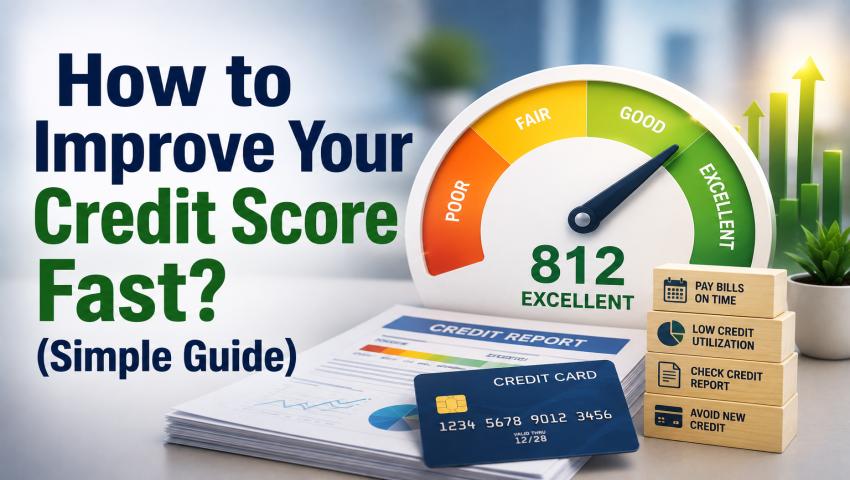
How to Improve Your Credit Score Fast?
A good credit score makes it easier to get a home loan, car loan, personal loan, business loan, or a credit card. If your score is low, banks may charge a higher interest rate or even reject your application.
The good news is that you can improve your credit score by following some simple steps. According to My Finance Gyan, while it may not become perfect overnight, you can start seeing a noticeable improvement within just a few weeks or months by following this guide ” How to improve your credit score fast?” .
What is a Credit Score?
A credit score is a number that shows how well you manage borrowed money. In India, many people call it a CIBIL score. A score of 750 or above is generally considered good.
A high score tells lenders that you pay your EMIs and credit card bills on time. A low score tells them that lending money to you may be risky.
Why is it Important?
A good credit score can help you:
- Get loans approved faster
- Get lower interest rates
- Save money over time
- Get better credit card offers
For example, a small reduction in the interest rate on a home loan can save thousands or even lakhs of rupees over the loan period.
1. Check Your Credit Report:
Before trying to improve your score, download your credit report and read it carefully.
Look for mistakes such as:
- A closed loan showing as active
- Wrong overdue amounts
- Duplicate loan entries
- Incorrect personal details
If you find an error, report it to the credit bureau or bank. Correcting mistakes can improve your score quickly.
2. Pay EMIs and Credit Card Bills on Time:
This is the most important step. Even one late payment can reduce your credit score.
To avoid delays:
- Set payment reminders
- Use auto-debit if possible
- Keep enough balance in your bank account
If you have missed a payment, pay it immediately.
3. Use Less of Your Credit Card Limit:
Try to use less than 30% of your credit card limit.
Example:
- Credit Limit :₹1,00,000
- Ideal Usage : Below ₹30,000
- High Usage : ₹80,000–₹90,000
High usage makes lenders think you depend heavily on credit.
4. Clear Overdue Amounts Immediately:
If your report shows any overdue amount, pay it as soon as possible.
Even a small unpaid amount from an old credit card can hurt your score.
After payment, ask the lender to update the status with the credit bureau.
5. Don't Apply for Too Many Loans:
Every loan or credit card application creates a hard enquiry on your report.
One or two enquiries are normal. Many enquiries in a short time can reduce your score and make you look desperate for credit.
Apply only when you are reasonably sure of approval.
6. Keep Old Credit Cards Active:
Old credit history is valuable. If you have an old card with a good payment record and low fees, keep it active. Use it occasionally and pay the bill on time.
7. Maintain a Good Credit Mix:
Your profile looks stronger when you have a mix of:
- Secured loans
- (home loan, car loan)
- Unsecured loans
- (personal loan, credit card)
This does not mean you should take a new loan unnecessarily. Just manage your existing loans properly.
8. Avoid Loan Settlement if Possible:
When a loan is marked as settled, it means the lender accepted less than the full amount due. This can negatively affect your credit score. If possible, pay the full amount and close the loan properly.
9. Increase Credit Limit Carefully:
If you regularly use a large part of your credit limit, requesting a limit increase can help.
Example:
Before
- Limit: ₹50,000
- Usage: ₹25,000 (50%)
After
- Limit: ₹1,00,000
- Usage: ₹25,000 (25%)
Lower usage can improve your score, but only if you avoid increasing your spending.
10. Stay Consistent for 3–6 Months:
Credit score improvement takes time.
If you:
- Pay all bills on time
- Reduce credit card usage
- Clear overdue amounts
- Avoid unnecessary applications
you may start seeing changes within 30–45 days, with bigger improvement in 3–6 months.
Common Mistakes That Lower Your Score:
- Paying bills after the due date
- Paying only the minimum amount due
- Using the full credit card limit
- Applying for many loans at once
- Ignoring old overdue amounts
- Closing old credit cards without checking the impact
- Settling loans instead of paying them fully
- Not checking the credit report for errors
If you want to know more about how your credit card usage impacts your history, you can read our simple guide on How Credit Cards Affect Your CIBIL Score?
Final Thoughts:
Improving your credit score is not difficult if you follow the basics consistently. Start by checking your credit report, paying all dues on time, keeping credit card usage low, and avoiding unnecessary loan applications.
A good credit score can help you get loans faster, enjoy lower interest rates, and build trust with lenders. Start today. Small financial habits can make a big difference in the future.