- 31/08/2026
- Govind S. Jethani
- 288 Views
- 2 Likes
- Company Law
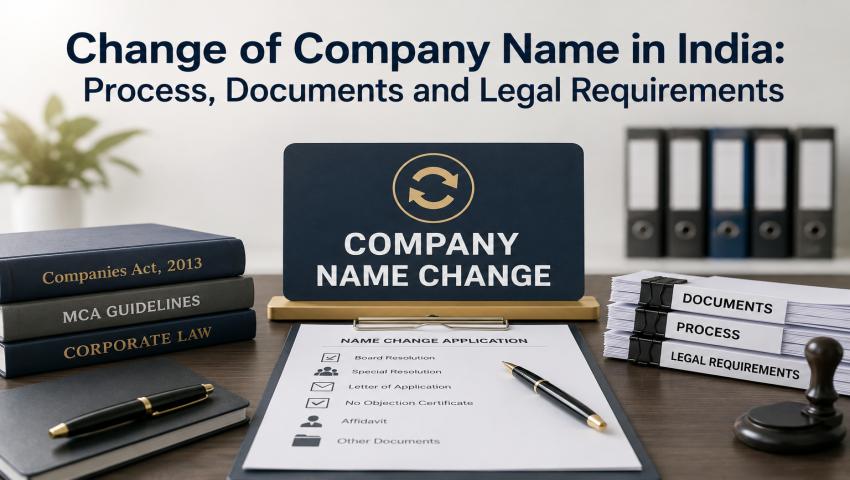
Change of Company Name in India: Process, Documents and Legal Requirements
A company’s name is an important part of its legal and business identity. However, as a business grows or changes direction, the existing name may no longer represent its brand, activities or future plans. A company may decide to change its name because of a rebranding exercise, change in business activities, merger, restructuring, or other business reasons.
However, changing the name of a Private Limited Company is not as simple as changing the name of a shop or business. The company’s legal name is recorded in its Memorandum of Association (MOA), Certificate of Incorporation and records maintained by the Registrar of Companies (ROC). Therefore, the change of company name must be completed in accordance with Section 13 of the Companies Act, 2013 and the Companies (Incorporation) Rules, 2014.
Importantly, changing the company’s name does not create a new company—the same legal entity continues to exist along with its existing assets, liabilities, contracts, employees and legal obligations. In this guide, My Finance Gyan explains the step-by-step process, eligibility criteria, and key legal requirements for changing a company name in India.
Why Would a Company Change Its Name?
A company may consider changing its name for several business or legal reasons, including:
- Adopting a new brand identity
- Changing the company’s primary business activity
- Merger or corporate restructuring
- Removing an outdated reference from the existing name
- Direction from the Central Government
- Conversion from a Private Company to a Public Company or vice versa
- Addressing an objection raised by a trademark owner
A voluntary change of name generally requires members’ approval through a special resolution and the necessary approval under Section 13.
Conditions to Check Before Changing the Company Name:
Before starting the application process, the company should check whether it satisfies the applicable requirements.
Under Rule 29, a company generally cannot change its name if it has failed to file its overdue annual returns or financial statements with the Registrar.
The company should also clear defaults relating to:
- Matured deposits
- Debentures
- Interest payable on deposits or debentures
Therefore, before applying, the company should verify:
- Are all annual returns filed?
- Are all financial statements up to date?
- Are any matured deposits unpaid?
- Are any debentures or related interest payments outstanding?
- Does the proposed name conflict with an existing company?
- Does it conflict with a registered trademark?
- Does the proposed name involve a regulated activity requiring approval?
Resolving these issues before starting the process can reduce the chances of rejection or resubmission.
Step-by-Step Process for Changing a Company Name:
Step 1: Select the Proposed New Name
The first step is to decide on one or more suitable names for the company.
The proposed name should comply with the requirements of the Companies Act and should not be:
- Identical to an existing company’s name
- Too similar to another company’s name
- Undesirable
- Misleading
- Likely to create an impression of government patronage without the required approval
A trademark search should also be conducted before submitting the name application. MCA approval does not automatically eliminate the possibility of a trademark dispute. If the proposed name contains a registered trademark, consent or a no-objection letter from the trademark owner may be required.
The proposed name should also be consistent with the company’s business activities.
For example, names containing terms associated with banking, insurance, finance, stock exchanges or other regulated activities may require approval from the relevant regulatory authority.
Step 2: Hold a Board Meeting
Once the proposed name has been identified, the company should convene a Board Meeting in accordance with the Companies Act and applicable Secretarial Standards.
The Board may consider and approve:
- The reason for changing the company name
- One or more proposed names
- Authorisation for a director or Company Secretary to make the necessary applications
- Alteration of the MOA and AOA
- Draft notice for the general meeting
- Authorisation for required ROC filings
The Board resolution may also be required as a supporting document for the name-reservation application.
Step 3: Reserve the New Name Through RUN
After obtaining Board approval, the company can apply for reservation of its proposed name through the RUN (Reserve Unique Name) service on the MCA portal. The application should clearly explain the reason for selecting the proposed name.
Depending on the circumstances, supporting documents may include:
- Certified copy of the Board resolution
- Trademark owner’s consent, where applicable
- Regulatory approval, where required
- Documents connecting the proposed name with the company’s business objects
- Other documents explaining the significance of the proposed name
The Registrar may:
- Approve the proposed name
- Reject the application
- Allow resubmission or seek clarification
For an existing company changing its name, an approved name is generally reserved for 60 days. The remaining name-change process should therefore be completed within the applicable validity period.
Step 4: Issue Notice for the General Meeting
Once the proposed name is approved, the company should call a general meeting of its members.
The notice should include the proposed special resolution along with an explanatory statement.
The explanatory statement should generally provide details such as:
- Existing company name
- Proposed new name
- Reason for the name change
- RUN approval details
- Proposed changes to the MOA and AOA
- Effect of the proposed name change on the company
The meeting may be an Annual General Meeting (AGM) or Extraordinary General Meeting (EGM).
Where permitted, the meeting may also be called at shorter notice after obtaining the required consent.
Step 5: Pass the Special Resolution
The members must approve the proposed name change through a special resolution. A special resolution is passed when the votes cast in favour are at least three times the votes cast against the resolution by members entitled to vote.
The resolution should approve:
- Change from the existing company name to the proposed name
- Alteration of the name clause in the MOA
- Consequential changes to the AOA
- Authorisation to complete the required applications and ROC filings
It is important to remember that passing the special resolution does not itself make the new name legally effective.
The company’s legal name remains unchanged until the Registrar issues the fresh Certificate of Incorporation.
Step 6: File Form MGT-14
After the special resolution is passed, the company must file Form MGT-14 with the Registrar within 30 days from the date of passing the resolution.
Common attachments include:
- Certified copy of the special resolution
- Notice of the general meeting
- Explanatory statement
- Altered MOA
- Altered AOA
- Consent for shorter notice, where applicable
Failure to file within the prescribed period may result in additional fees and penalties.
Step 7: File Form INC-24
After filing MGT-14, the company must submit Form INC-24 for approval of the name change.
The application should generally contain details such as:
- Existing company name
- Approved new name
- Date of Board Meeting
- Date of general meeting
- SRN of Form MGT-14
- Reason for changing the name
- Voting details
- Changes in business objects, where applicable
Supporting documents may include:
- RUN name approval
- General meeting notice
- Explanatory statement
- Certified special resolution
- General meeting minutes
- Altered MOA and AOA
- Declaration regarding filing and repayment defaults
- Regulatory approvals, where applicable
The Registrar may request additional information or documents before approving the application.
Step 8: Receive the Fresh Certificate of Incorporation
Once the name-change application is approved, the Registrar enters the new name in the Register of Companies and issues a fresh Certificate of Incorporation. This is the point at which the name change becomes legally effective.
Until the fresh Certificate of Incorporation is issued, the company should continue using its existing registered name. The company generally continues with the same CIN, because changing the name does not create a new legal entity.
Does Changing the Company Name Create a New Company?
No. A change in name does not result in the incorporation of a new company.
The same legal entity continues to exist with its:
- Assets
- Liabilities
- Contracts
- Employees
- Legal proceedings
- Statutory obligations
- Existing CIN
Existing agreements do not normally become invalid simply because the company has changed its name.
However, customers, vendors, lenders, government authorities and other stakeholders should be informed about the change so that their records can be updated.
What Needs to Be Updated After the Name Change?
Once the fresh Certificate of Incorporation has been received, the company should update its new name across its registrations, records and business documents.
Depending on the company’s activities, this may include:
- PAN and TAN
- GST registration
- Bank accounts and cheque books
- Import Export Code (IEC)
- Shops and Establishment registration
- Udyam registration
- Professional Tax registration
- PF and ESIC records
- Licences and regulatory registrations
- Contracts and purchase orders
- Invoices and letterheads
- Website
- Email signatures
- Share certificates
- Statutory registers
- Registered-office signboard
- Intellectual-property registrations
Updating these records promptly helps avoid confusion with customers, banks, government authorities and business partners.
Is the Old Company Name Required to Be Displayed?
Yes. Where applicable, Section 12 requires the company to display its former name along with its new name for the prescribed period, including on specified signboards, business letters and official publications.
For a company that has changed its name, this requirement generally applies for two years.
The company should therefore update its branding while continuing to comply with the applicable disclosure requirements.
Documents Required for Changing a Company Name:
The exact documentation can vary depending on the company and the proposed name.
Common documents include:
- Board resolution
- RUN name approval
- Trademark consent, where applicable
- General meeting notice
- Explanatory statement
- Special resolution
- General meeting minutes
- Altered Memorandum of Association
- Altered Articles of Association
- Declaration regarding filing and repayment defaults
- Regulatory approval, where applicable
- Digital Signature Certificate of the authorised person
The Registrar may request additional documents depending on the proposed name, business objects and compliance history of the company.
Frequently Asked Questions:
Yes. A voluntary change of company name generally requires approval from the members through a special resolution.
The usual process involves:
- RUN – For reservation of the proposed name
- MGT-14 – For filing the special resolution
- INC-24 – For approval of the company name change
For an existing company changing its name, the approved name is generally reserved for 60 days.
Generally, the company must first complete its overdue annual returns and financial statement filings before proceeding with the name change.
Normally, no. The company remains the same legal entity and continues with its existing CIN.
The new legal name should be used after the Registrar issues the fresh Certificate of Incorporation confirming the name change.
Yes. The former name generally needs to be displayed along with the new name for the prescribed period and in the prescribed manner.
Conclusion:
Changing the name of a Private Limited Company involves much more than selecting a new brand name. The company must first check its compliance status, select an eligible name, obtain Board approval, reserve the name through RUN, obtain members’ approval through a special resolution and complete the required MCA filings.
The key forms involved are generally RUN, MGT-14 and INC-24. Most importantly, the name change becomes legally effective only after the Registrar issues the fresh Certificate of Incorporation.
After approval, the company should update its name across its tax registrations, bank accounts, licences, contracts, invoices, statutory records and other business documents.
A properly planned name-change process helps ensure that the company’s new identity is legally recognised while its existing rights, obligations and business continuity remain intact.