- 30/06/2026
- Govind S. Jethani
- 668 Views
- 2 Likes
- Company Law, Startup Funding
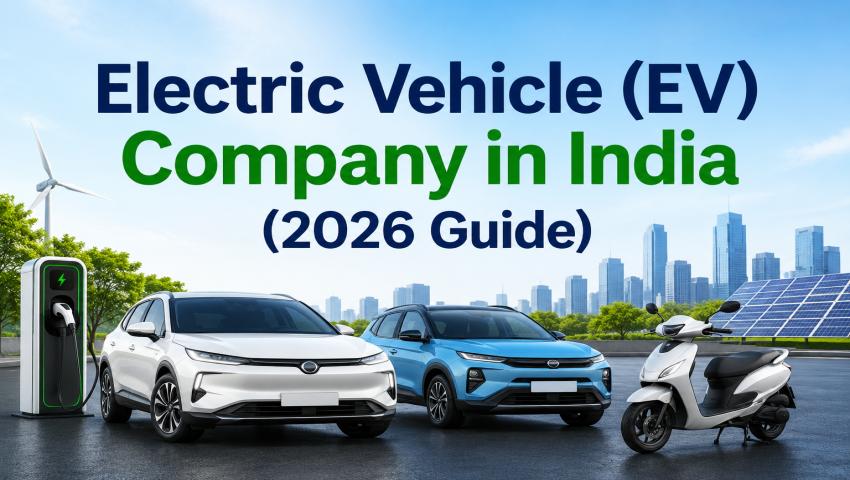
Electric Vehicle (EV) Company in India (2026 Guide)
Electric vehicles (EVs) are becoming one of the fastest-growing industries in India. A few years ago, many people were unsure about EVs because of concerns like battery life, charging stations, high prices, and maintenance. Today, things have changed.
Electric scooters, cars, buses, and charging stations are becoming more common across the country. As fuel prices continue to rise and people become more aware of eco-friendly transportation, the demand for EVs is increasing.
This growth has created many business opportunities.
If you are planning to start an Electric Vehicle (EV) company in India, this guide by My Finance Gyan will help you understand the different business options, registrations, investment, and key points to consider.
What is an EV Company?
An EV company is a business involved in electric vehicles or products and services related to them.
An EV business may deal with:
- Electric scooters and bikes
- Electric three-wheelers
- Electric cars
- Electric buses
- EV batteries
- Battery swapping services
- EV charging stations
- EV spare parts
- EV repair and servicing
- Fleet management
- EV software
- Charging equipment
- Battery recycling
You don’t have to manufacture electric vehicles to enter this industry.
Many successful businesses work as dealers, charging station operators, battery suppliers, service centres, or fleet operators.
Why is the EV Industry Growing in India?
India has one of the world’s largest automobile markets. Every day, millions of people travel using two-wheelers, cars, buses, and commercial vehicles. One of the biggest reasons for the growth of EVs is their lower running cost.
For example, charging an electric scooter usually costs much less than filling a petrol scooter with fuel.
Other reasons for the growth of EVs include:
- Rising fuel prices
- Government support
- Lower GST on electric vehicles
- Better charging infrastructure
- Growing environmental awareness
- Improved battery technology
As more people switch to electric vehicles, the demand for EV-related businesses is also increasing.
Types of EV Businesses in India:
There are many ways to enter the EV industry.
1. EV Manufacturing:
This is the largest and most capital-intensive business model. An EV manufacturer designs and produces electric vehicles such as:
- Scooters
- Bikes
- Cars
- Buses
- Commercial vehicles
This business requires:
- Factory setup
- Machinery
- Engineering team
- Testing facilities
- Supply chain
- Government approvals
- Quality control
It is suitable for companies with strong financial and technical resources.
2. EV Dealership:
Starting an EV dealership is much easier than manufacturing. In this model, you become an authorized dealer for an EV brand and sell vehicles in your area.
You will generally need:
- A showroom
- Sales staff
- Basic service support
- Marketing
Before taking a dealership, check:
- Company reputation
- Battery warranty
- Spare parts availability
- Customer reviews
- Service network
Don’t choose a dealership based only on profit margins.
3. EV Charging Station Business:
Charging stations are becoming an essential part of the EV ecosystem.
Charging stations can be installed at:
- Shopping malls
- Offices
- Apartment complexes
- Hotels
- Highways
- Parking areas
- Fleet hubs
This business requires:
- Suitable location
- Electricity connection
- Charging equipment
- Software
- Safety systems
- Regular maintenance
A good location plays a major role in the success of this business.
4. EV Battery Business:
The battery is one of the most important parts of an electric vehicle.
Battery-related businesses include:
- Battery manufacturing
- Battery assembly
- Battery distribution
- Battery repair
- Battery testing
- Battery swapping
- Battery recycling
Since batteries involve technical and safety requirements, proper knowledge and compliance are essential.
5. EV Repair and Service Centre:
As the number of electric vehicles increases, so does the demand for trained service centres.
EV servicing includes:
- Battery inspection
- Motor repair
- Controller diagnostics
- Charging system repair
- Software updates
- Electrical maintenance
This business is a good opportunity in cities where EV adoption is increasing.
6. EV Fleet Business:
Many logistics and delivery companies are shifting to electric vehicles.
An EV fleet business provides electric vehicles for:
- Delivery services
- Employee transportation
- Rental services
- Goods transportation
- Last-mile delivery
This business requires:
- Vehicle purchase
- Driver management
- Charging planning
- Maintenance
- Insurance
If managed properly, fleet operations can reduce operating costs.
Business Registration for an EV Company:
Before starting your EV business, choose the right business structure.
Common options include:
- Sole Proprietorship
- Partnership Firm
- LLP (Limited Liability Partnership)
- Private Limited Company
- Public Limited Company
Many startups prefer a Private Limited Company because it offers:
- Limited liability
- Better business credibility
- Easy fundraising
- Structured ownership
An LLP may also be suitable for service-based businesses and partnerships.
Registrations Required:
Depending on your business model, you may require:
- Company or LLP Registration
- PAN and TAN
- GST Registration
- Udyam (MSME) Registration
- Shop and Establishment Registration
- Trademark Registration
- Import Export Code (if importing products)
- Factory Licence (for manufacturing)
- Pollution Control approvals (where applicable)
- Fire Safety approvals
- Labour registrations (if employees are hired)
Manufacturing businesses generally require more approvals than trading or service businesses.
GST for EV Businesses:
Electric vehicles currently enjoy concessional GST rates compared to many conventional vehicles.
However, GST treatment may differ for:
- Electric vehicles
- Batteries
- Chargers
- Spare parts
- Installation services
- Repair services
Businesses should classify products and services correctly before billing customers.
Compliance for EV Manufacturing:
If you manufacture electric vehicles, compliance is extremely important.
You may need:
- Vehicle testing
- Type approval
- Battery safety certification
- Factory compliance
- Product labelling
- Warranty documentation
- Consumer protection compliance
Following legal requirements helps build customer trust and avoids future disputes.
Investment Required:
1. EV Dealership
Investment may include:
- Showroom
- Security deposit
- Staff
- Marketing
- Demo vehicles
2. Charging Station
Investment may include:
- Land or rental space
- Charging equipment
- Electrical installation
- Software
- Safety systems
3. Service Centre
Investment may include:
- Workshop
- Tools
- Diagnostic equipment
- Technicians
- Spare parts
4. Manufacturing
- Factory
- Machinery
- Research
- Testing
- Working capital
- Employees
Prepare a proper business plan before investing.
Challenges in the EV Business:
Although the EV industry offers huge opportunities, there are also challenges.
Some common challenges include:
- High initial investment
- Battery safety concerns
- Limited charging infrastructure in some areas
- Spare parts availability
- Shortage of trained technicians
- Competition
- Rapid technology changes
- Customer concerns about battery life and range
Planning carefully can help reduce these risks.
How to Start an EV Company in India?
- Step 1: Choose your business model.
- Step 2: Study the market and understand customer demand.
- Step 3: Prepare a detailed business plan.
- Step 4: Register your business.
- Step 5: Obtain GST and other required registrations.
- Step 6: Arrange suppliers, staff, and technical support.
- Step 7: Complete all required licences and approvals.
- Step 8: Start marketing your business and provide excellent customer service. Remember, EV buyers often ask questions about:
- Battery life
- Vehicle range
- Charging time
- Warranty
- Maintenance cost
Future of EV Companies in India:
The future of the EV industry in India looks promising.
Demand is expected to grow because of:
- Rising fuel prices
- Government initiatives
- Better charging infrastructure
- Environmental awareness
- Improvements in battery technology
However, long-term success will depend on:
- Product quality
- Customer service
- Reliable warranty support
- Technical expertise
- Legal compliance
Businesses that focus on customer satisfaction and quality are more likely to succeed.
Leading Electric Vehicle (EV) Companies in India:
India’s electric vehicle industry is supported by a wide ecosystem of companies involved in vehicle manufacturing, battery technology, charging infrastructure, auto components, and EV software. While some companies manufacture electric vehicles, others play a crucial role by supplying batteries, charging solutions, and advanced technologies that drive the industry’s growth.
Below are some of the leading publicly listed companies contributing to India’s expanding EV ecosystem.
Major EV Manufacturers (OEMs):
These companies design, manufacture, and sell electric passenger vehicles, two-wheelers, commercial vehicles, and buses.
- Tata Motors – One of India’s leading passenger electric vehicle manufacturers with a strong presence in the EV market. The company is also supported by its charging infrastructure ecosystem through Tata Power.
- Mahindra & Mahindra – Offers a growing range of electric SUVs and electric three-wheelers, making it a significant player in India’s EV industry.
- Bajaj Auto – Manufactures electric scooters and electric auto-rickshaws with a strong nationwide dealer network.
- TVS Motor Company – Known for its electric scooter lineup and continuous investment in expanding EV production.
- Maruti Suzuki India – India’s largest passenger vehicle manufacturer, steadily expanding its presence in the electric mobility segment.
- Hero MotoCorp – The world’s largest two-wheeler manufacturer with an increasing focus on electric scooters and sustainable mobility.
- Hyundai Motor India – Offers electric SUV models in India and continues to invest in local EV manufacturing.
- Olectra Greentech – Specializes in manufacturing electric buses for public transportation.
- JBM Auto – Focuses on electric buses, commercial electric vehicles, and EV mobility solutions.
Battery Manufacturers & Charging Infrastructure Providers:
Battery technology and charging infrastructure are essential for the long-term growth of electric mobility in India. These companies are helping strengthen the country’s EV ecosystem.
- Exide Industries – Investing in lithium-ion battery manufacturing and advanced energy storage technologies.
- Amara Raja Energy & Mobility – Expanding its portfolio from conventional batteries to advanced EV battery solutions.
- Tata Power – Operates one of India’s largest public EV charging networks and continues to expand charging infrastructure nationwide.
Auto Components & EV Technology Companies:
Several companies support EV manufacturers by supplying specialized components, software, electronics, and drivetrain technologies.
- Samvardhana Motherson International – Manufactures wiring harnesses, electronic modules, and other components used in electric vehicles.
- Bharat Forge – Supplies precision-engineered components for electric drivetrains and automotive applications.
- Bosch – Develops automotive electronics, braking systems, and EV technologies for vehicle manufacturers.
- Sona BLW Precision Forgings – Specializes in EV drivetrain components, traction motors, and precision engineering solutions.
- KPIT Technologies – Provides software engineering and mobility technology solutions for electric and connected vehicles.
Final Thoughts:
Starting an Electric Vehicle (EV) company in India can be a great business opportunity if you plan carefully. You do not have to manufacture electric vehicles to enter this industry.
You can start with:
- EV dealership
- Charging stations
- Service centres
- Battery business
- Fleet operations
Choose a business model that matches your budget, experience, and long-term goals. With proper planning, quality service, and compliance with legal requirements, an EV business can become a successful and sustainable venture.
Disclaimer:
The views expressed in this article are personal to the author and are shared only for educational and awareness purposes. This content is not intended to provide business, financial, or investment advice or recommend any specific company or product. Readers should conduct their own research and seek professional advice before making business decisions.