- 24/06/2026
- Govind S. Jethani
- 399 Views
- 3 Likes
- Company Law
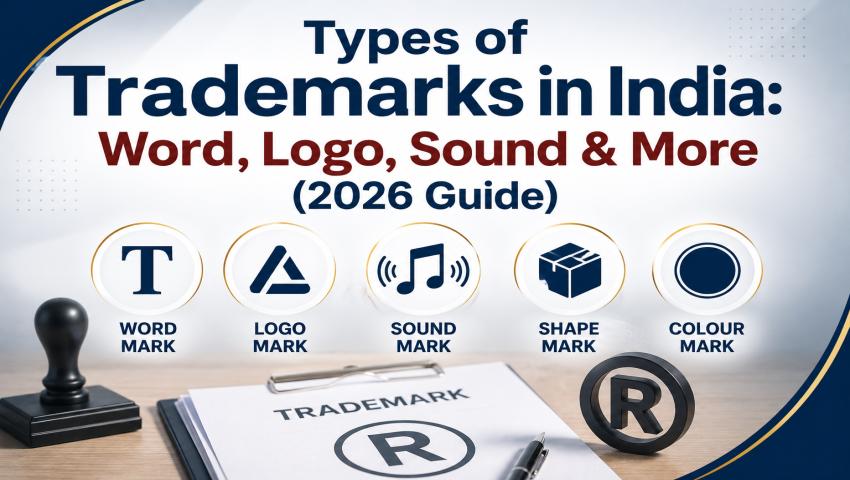
Types of Trademarks in India: Word, Logo, Sound & More
When launching or growing a business in India, your brand identity is one of your most valuable assets. However, many business owners make a common mistake: they think a trademark is limited to just a name or a logo.
According to the My Finance Gyan guide, under the Trade Marks Act, 1999, a trademark can protect a wide range of brand identifiers—including sounds, shapes, colors, and packaging styles. Choosing the right type of trademark ensures your business gets the strongest legal protection possible. Let My Finance Gyan help you navigate the process to secure your intellectual property effectively.
Major Types of Trademarks in India:
1. Word Mark (The Most Powerful Trademark):
A word mark protects the text or letters of your brand name, regardless of how it looks. It does not matter what font, color, or size you use; the name itself is protected.
- Examples: Google, Zomato, Infosys.
- Why it matters: It gives the widest protection. It stops competitors from using your brand name in any design format.
- Best Practice: Always prioritize registering a word mark first.
2. Logo Mark (Device Mark):
A logo mark protects the exact graphic design, symbol, or visual look of your brand.
- Examples: The Nike swoosh, the Apple logo, the McDonald’s golden arches.
- Limitation: Protection is strictly limited to that specific design. If someone uses your name but in a completely different font or style, a logo mark alone might not fully stop them.
3. Combination Mark:
This is a mix of both text and design elements registered together.
- Use Case: A brand name written in a specific, highly stylized font paired with a unique symbol.
- Tip: Registering both a separate Word Mark and a Combination Mark gives your brand maximum security.
4. Service Mark:
A service mark works exactly like a trademark, but it is used to protect services rather than physical goods.
- Examples: IT companies, consulting firms, hotels, or software brands.
- Classes: These are filed under service-related categories (Classes 35 to 45).
Advanced and Emerging Trademark Types:
- Sound Mark: Protects unique audio elements or tunes linked to a brand. For example, the ICICI Bank jingle is a registered sound mark in India. The sound must be instantly recognizable and distinctive.
- Shape Mark (3D): Protects the unique physical shape of a product or its packaging. Classic examples include the Coca-Cola bottle or the Toblerone chocolate triangle. The shape cannot be purely functional; it must be purely stylistic.
- Color Mark: Protects a specific color or a unique combination of colors strongly associated with a brand (e.g., Cadbury Purple). These are highly scrutinized and harder to register unless the brand is globally established.
- Trade Dress: Protects the overall visual appearance, look, feel, and packaging style of a product or a retail store design.
Which Trademark Type Should You Choose?
Common Mistakes to Avoid:
- Registering Only the Logo: If you only register your logo, your actual brand name remains legally unprotected and vulnerable.
- Choosing Generic Names: Common words like “Best Coffee” or “Fast Delivery” will be rejected by the registry. Choose creative, unique words.
- Ignoring Classes: India categorizes goods and services into 45 distinct classes (1–34 for goods, 35–45 for services). Filing your trademark in the wrong class leaves you unprotected where it matters.
Quick FAQs:
Yes, because it protects the name itself across all designs, formats, and fonts.
Yes, and it is highly recommended for complete protection.
Yes, provided you can submit the musical notations or audio files proving its distinctiveness.
Conclusion:
Don’t leave your brand elements unprotected. The smartest roadmap for any business in 2026 is simple:
- Lock down your Word Mark
- Register your Logo or Combination Mark as you launch your marketing materials.
- Expand to advanced marks (like sounds, shapes, or trade dress) as your brand grows.
Disclaimer: This guide is intended for educational and awareness purposes and does not substitute for professional legal advice.