- 19/06/2026
- Govind S. Jethani
- 555 Views
- 2 Likes
- Company Law
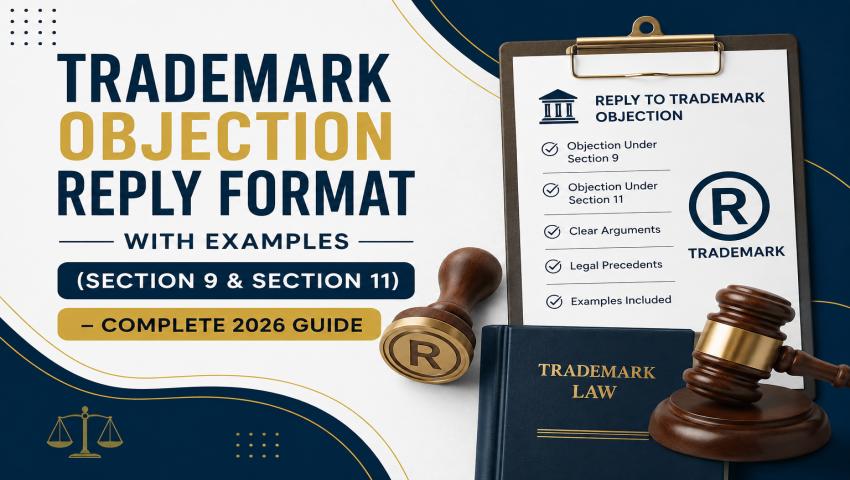
Trademark Objection Reply Format with Examples (Section 9 & Section 11) – Complete 2026 Guide
Receiving a trademark objection can be concerning, especially for startups, entrepreneurs, and first-time applicants. However, it is important to understand that a trademark objection is not the same as a trademark rejection. An objection simply means that the Trademark Examiner requires additional clarification or justification before allowing the application to proceed.
The success of a trademark application often depends on the quality of the response submitted. A weak or generic reply may result in refusal, whereas a properly drafted and legally supported response can significantly improve the chances of registration.
This comprehensive guide by My Finance Gyan explains the trademark objection reply format, provides practical examples for objections under Section 9 and Section 11 of the Trade Marks Act, 1999, and highlights best practices, supporting documents, and common mistakes to avoid.
What is a Trademark Objection?
A trademark objection is an official concern raised by the Trademark Examiner during the examination stage of a trademark application. The objection is communicated through an Examination Report, which outlines the legal grounds on which the Examiner believes the mark may not qualify for registration.
It is important to remember:
- A trademark objection is not a rejection.
- The applicant has the legal right to respond and defend the trademark.
- A satisfactory reply may result in acceptance of the application.
The purpose of the objection process is to ensure that only distinctive and legally registrable trademarks are granted protection.
Common Grounds for Trademark Objections:
Section 9 – Absolute Grounds for Refusal
Section 9 objections generally arise when the trademark itself lacks the essential characteristics required for registration.
Common reasons include:
- Lack of distinctiveness
- Descriptive marks
- Generic or commonly used terms
- Marks that directly indicate the quality, nature, or characteristics of goods or services
Section 11 – Relative Grounds for Refusal
Section 11 objections arise when the proposed trademark conflicts with an existing registered or pending trademark.
Common reasons include:
- Similarity with an earlier trademark
- Phonetic resemblance
- Visual similarity
- Likelihood of confusion among consumers
- Association with an existing brand
Time Limit for Filing a Trademark Objection Reply:
Applicants must submit a response to the Examination Report within 30 days from the date of issuance of the report.
Failure to file a reply within the prescribed period may result in:
- Abandonment of the trademark application
- Loss of filing priority
- Requirement to file a fresh application
Therefore, timely action is crucial.
Standard Trademark Objection Reply Format:
A professionally drafted trademark objection reply should follow a structured format to ensure clarity and effectiveness.
1. Heading
Include the following details:
- Trademark Application Number
- Applicant Name
- Trademark Name
- Trademark Class
2. Introduction:
Briefly introduce:
- The applicant
- Nature of business
- Purpose of the trademark application
3. Point-Wise Reply to Objections:
Address each objection individually and explain why the objection should be waived.
4. Legal Arguments:
Support the response with:
- Relevant provisions of the Trade Marks Act, 1999
- Judicial precedents, where applicable
- Established trademark principles
5. Supporting Evidence:
Attach documentary proof demonstrating use and recognition of the trademark.
6. Conclusion and Prayer:
Conclude by requesting the Registrar to withdraw the objection and allow the application to proceed for advertisement and registration.
Sample Trademark Objection Reply Format:
To
The Registrar of Trademarks
Subject: Reply to Examination Report
Application Number: XXXXX
Applicant Name: XXXXX
Trademark: XXXXX
Respected Sir/Madam,
With reference to the Examination Report dated [Date], the Applicant respectfully submits the following reply to the objections raised under the Trade Marks Act, 1999.
Reply to Objection Under Section 9:
Example 1: Lack of Distinctiveness
Objection: The applied trademark lacks distinctiveness.
Sample Reply: “The Applicant respectfully submits that the applied mark is inherently distinctive and capable of distinguishing the Applicant’s goods and services from those of other traders. The mark is neither descriptive nor generic and creates a unique commercial identity in the minds of consumers.
The Applicant has been continuously using the mark in commerce and has invested significant resources in promoting the same. Supporting evidence, including invoices, advertisements, promotional materials, and website screenshots, is attached. Consequently, the mark has acquired distinctiveness and secondary meaning through extensive use.”
Example 2: Descriptive Trademark
Objection: The trademark is descriptive of the goods or services.
Sample Reply: “The Applicant submits that the applied mark is suggestive rather than descriptive. The mark does not directly describe the nature, quality, characteristics, or purpose of the goods or services. Instead, it requires imagination and interpretation on the part of consumers to establish any connection with the products or services offered.
Without prejudice, the Applicant further submits that the mark has acquired distinctiveness through long-standing and continuous commercial use, supported by the annexed evidence.”
Reply to Objection Under Section 11:
Example 3: Similarity with Existing Trademark
Objection: The applied mark is similar to an existing trademark.
Sample Reply:
“The Applicant respectfully submits that the cited trademark and the applied mark are visually, structurally, conceptually, and phonetically distinct.
The marks differ significantly in:
- Overall appearance
- Spelling and composition
- Pronunciation
- Commercial impression
Furthermore, the goods and services offered under the respective marks cater to different consumer groups and trade channels, eliminating any likelihood of confusion or deception.”
Example 4: Phonetic Similarity
Objection: The trademark is phonetically similar to an earlier mark.
Sample Reply: “The Applicant submits that although there may be a minor phonetic resemblance, the overall visual presentation, conceptual meaning, and commercial identity of the marks are substantially different. Trademark law requires consideration of the overall impression created by competing marks rather than isolated similarities. In the present case, the marks are sufficiently distinguishable to coexist without causing consumer confusion.”
Documents Commonly Attached with a Trademark Objection Reply:
Supporting evidence plays a vital role in strengthening the applicant’s case.
Common documents include:
- Sales invoices
- GST records
- Advertising and marketing materials
- Product packaging samples
- Website screenshots
- Social media pages
- Customer testimonials
- Media coverage
- Trade catalogues and brochures
The stronger the evidence of commercial use and recognition, the greater the chances of overcoming the objection.
Best Practices for Drafting a Strong Reply:
- Use Clear and Professional Language: Avoid unnecessary legal jargon and focus on clear, persuasive arguments.
- Address Every Objection Separately: Respond to each objection point raised in the Examination Report rather than providing a generic explanation.
- Support Every Claim with Evidence: Documentary proof significantly enhances the credibility of the reply.
- Customize the Response: Each trademark application is unique. Avoid using copied or template-based replies without proper modifications.
- Maintain a Respectful Tone: Professional and courteous language creates a stronger impression before the Registrar.
Common Mistakes to Avoid:
Many applications face difficulties due to avoidable drafting errors.
Common mistakes include:
- Ignoring specific objections raised by the Examiner
- Submitting generic or weak arguments
- Failing to attach supporting evidence
- Missing the filing deadline
- Using overly complicated or irrelevant legal language
A carefully prepared response can prevent unnecessary hearings and delays.
What Happens After Filing the Reply?
After reviewing the response, the Examiner may take one of the following actions:
- Acceptance: If satisfied, the Examiner accepts the trademark application and publishes it in the Trademark Journal.
- Hearing Notice: If additional clarification is required, a trademark hearing may be scheduled.
- Refusal: If the Examiner remains unconvinced, the application may be refused.
When is a Trademark Hearing Required?
A hearing may be scheduled when the Examiner believes that the written reply alone is insufficient.
Applicants should be prepared to present:
- Detailed legal arguments
- Evidence of use and reputation
- Relevant case law and precedents
- Supporting documentation
A well-prepared hearing can often result in the acceptance of the application.
Tips to Minimize Trademark Objections:
While objections cannot always be avoided, the following precautions can significantly reduce the risk:
- Choose a unique and distinctive trademark
- Conduct a comprehensive trademark search before filing
- Avoid generic or descriptive words
- Select the correct trademark class
- Obtain professional legal advice when necessary
Practical Example:
Case Study:
Trademark Applied: Smart Solutions
Objection Raised: Section 9 – Descriptive Mark
Response Submitted:
- Demonstrated long-term commercial use
- Provided invoices and promotional materials
- Established acquired distinctiveness through market recognition
Outcome:
The trademark was accepted after a hearing and subsequently proceeded toward registration.
Frequently Asked Questions:
Yes. However, because trademark law involves legal interpretation and procedural requirements, professional assistance is often beneficial.
No. An objection merely provides an opportunity to explain and justify the registrability of your trademark.
Yes. Many objections are overcome through properly drafted replies supported by relevant evidence.
Failure to submit a reply within the prescribed period may result in abandonment of the application.
Conclusion:
Trademark objections are a common and manageable part of the trademark registration process. Receiving an objection does not mean the end of your application; rather, it is an opportunity to demonstrate that your trademark satisfies the legal requirements for registration.
A well-structured reply that follows the correct format, addresses each objection individually, and includes strong supporting evidence can substantially improve the likelihood of success. Whether the objection is raised under Section 9 or Section 11 of the Trade Marks Act, 1999, a strategic and timely response is essential.
Final Takeaway:
If you receive a trademark objection:
✔ Understand the exact reason for the objection
✔ Follow a professional reply format
✔ Present strong legal and factual arguments
✔ Submit relevant supporting documents
✔ Respond within the prescribed timeline
A carefully drafted trademark objection reply can transform an objection into a successful trademark registration.
Disclaimer: The views expressed in this article are intended solely for educational and awareness purposes. They do not constitute legal advice, professional opinion, or recommendations regarding any specific trademark application or legal matter.