- 17/06/2026
- Govind S. Jethani
- 397 Views
- 2 Likes
- Company Law
Employment Agreement Key Clauses: A Complete Guide for Employers and Employees
An employment agreement is far more than a routine HR document. It serves as the foundation of a professional relationship between an employer and an employee by clearly defining rights, responsibilities, expectations, and obligations. Whether you are a startup hiring your first team member, a growing business expanding its workforce, or an individual accepting a new job, understanding the key clauses in an employment agreement is essential.
A well-drafted employment agreement helps prevent misunderstandings, minimizes legal risks, and creates transparency from the very beginning of the employment relationship. This guide by My Finance Gyan explores the most important clauses typically included in employment agreements, their significance, and how they protect the interests of both employers and employees.
What is an Employment Agreement?
An employment agreement is a legally binding contract between an employer and an employee that outlines the terms and conditions governing employment. It establishes the framework for the working relationship and provides clarity on various aspects such as compensation, job responsibilities, workplace policies, confidentiality obligations, and termination procedures.
In India, employment agreements are generally governed by:
- The Indian Contract Act, 1872
- Applicable labour and employment laws
- Company policies, service rules, and internal regulations
A properly drafted employment agreement promotes compliance, accountability, and workplace harmony while reducing the likelihood of future disputes.
Why Employment Agreement key Clauses Are Important?
Clearly defined employment agreement clauses benefit both employers and employees by creating certainty and minimizing ambiguity. These provisions help:
- Prevent workplace disputes and misunderstandings
- Define roles, responsibilities, and performance expectations
- Protect confidential and proprietary business information
- Ensure compliance with applicable labour laws
- Establish remedies in the event of a breach of contract
For employers, a comprehensive agreement safeguards business interests and operational stability. For employees, it provides transparency, job security, and a clear understanding of employment terms.
Essential Employment Agreement Clauses:
Although employment agreements may vary depending on the industry, job role, and level of seniority, certain clauses are considered fundamental in most employment contracts.
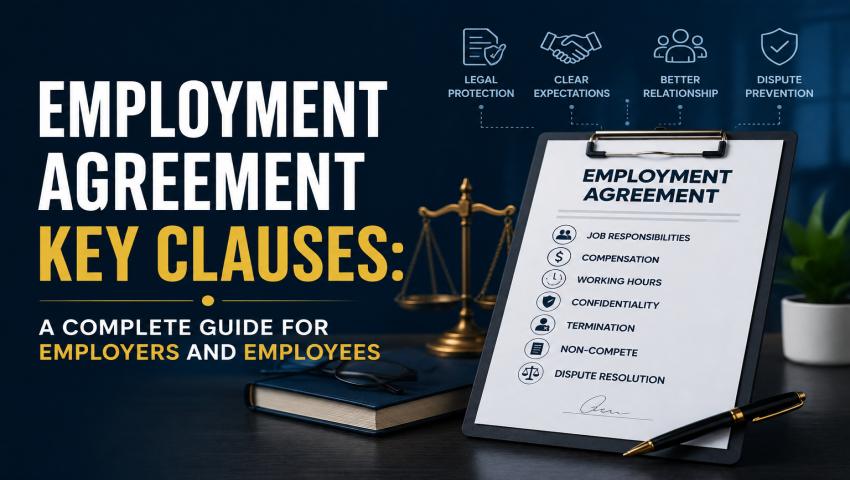
1. Job Title and Scope of Work:
This clause clearly defines the employee’s position within the organization and outlines their primary responsibilities.
Typically, it includes:
- Job designation
- Department and reporting structure
- Duties, responsibilities, and performance expectations
A clearly defined scope of work helps eliminate confusion and ensures accountability from the outset.
2. Employment Term and Nature of Employment:
This provision specifies the type and duration of employment.
It generally covers:
- Whether the employment is permanent, contractual, temporary, or fixed-term
- Date of commencement
- Probation period and confirmation criteria
- Conditions for renewal, if applicable
This clause provides clarity regarding job stability and employment expectations.
3. Compensation and Employee Benefits:
Compensation is one of the most important aspects of any employment agreement.
This clause typically outlines:
- Salary and wage structure
- Payment schedule and mode of payment
- Performance bonuses, incentives, or commissions
- Statutory benefits such as Provident Fund (PF), gratuity, insurance, and other employee welfare schemes
Clearly defining compensation terms helps prevent payroll disputes and promotes trust between the parties.
4. Working Hours and Leave Entitlements:
This clause establishes expectations regarding attendance, work schedules, and employee leave.
It generally includes:
- Daily and weekly working hours
- Weekly holidays and rest periods
- Overtime eligibility and compensation, where applicable
- Annual leave, sick leave, casual leave, and other leave benefits
A well-defined leave policy supports operational planning while promoting employee well-being.
5. Confidentiality and Non-Disclosure Obligations:
Protecting confidential information is a critical concern for most organizations.
This clause ensures that employees:
- Maintain the confidentiality of business information
- Protect trade secrets and proprietary data
- Safeguard customer and client information
- Continue confidentiality obligations even after employment ends
Such provisions are particularly important for employees who have access to sensitive business information.
6. Intellectual Property Rights:
Organizations that rely on innovation, creativity, or proprietary processes often include intellectual property provisions in employment agreements.
This clause generally states that:
- Any work, invention, design, software, content, or innovation created during employment belongs to the employer
- Intellectual property rights are assigned to the company
This ensures that valuable business assets remain protected and legally owned by the organization.
7. Non-Compete and Non-Solicitation Clauses:
Restrictive covenants are designed to protect legitimate business interests.
These clauses may include:
- Restrictions on soliciting clients, customers, or employees
- Limitations on engaging in competing activities during employment
- Protection against unfair competition
Under Indian law, post-employment non-compete clauses may face enforceability challenges and should therefore be drafted carefully with professional legal guidance.
8. Code of Conduct and Workplace Policies:
Every organization expects employees to adhere to professional standards and company policies.
This clause typically addresses:
- Ethical conduct and workplace behavior
- Compliance with organizational policies
- Anti-harassment and anti-discrimination requirements
- Disciplinary procedures and consequences for misconduct
Clearly documented standards help maintain a respectful and productive work environment.
9. Termination and Notice Period:
Termination provisions are among the most scrutinized sections of an employment agreement.
This clause generally specifies:
- Notice period requirements for resignation and termination
- Grounds for termination
- Circumstances permitting immediate termination
- Final settlement procedures
Clearly defined termination terms reduce uncertainty and help avoid legal disputes during employee exits.
10. Grievance Redressal and Dispute Resolution:
Even in well-managed workplaces, disagreements can arise.
This clause establishes mechanisms for resolving disputes, including:
- Internal grievance procedures
- Escalation processes
- Mediation or arbitration provisions
- Jurisdiction and governing law
An effective dispute resolution framework helps address concerns efficiently and professionally.
Compliance with Labour Laws:
Employment agreements must comply with applicable labour and employment regulations. Depending on the nature of the business and workforce, relevant laws may include:
- Minimum Wages Act
- Payment of Wages Act
- Shops and Establishments Acts of respective states
- Industrial Disputes Act, where applicable
- Social security and employee benefit regulations
Any contractual provision that conflicts with statutory protections may be unenforceable and could expose the employer to legal liability.
Common Mistakes to Avoid:
Many employment disputes arise due to poorly drafted agreements. Common mistakes include:
- Using generic templates without customization
- Including vague or ambiguous language
- Drafting excessively restrictive non-compete provisions
- Overlooking statutory benefits and legal obligations
- Failing to update agreements in line with changing laws
Seeking professional legal review can help ensure that employment agreements remain effective and compliant.
Benefits of a Well-Drafted Employment Agreement:
A comprehensive employment agreement offers significant advantages to both employers and employees, including:
- Reduced legal and operational risks
- Greater transparency and trust
- Improved employee confidence and retention
- Consistent workplace standards and expectations
- Smoother onboarding, performance management, and exit processes
By clearly documenting the rights and obligations of both parties, the agreement serves as a valuable reference throughout the employment lifecycle.
Conclusion:
Understanding the key clauses of an employment agreement is essential for creating a transparent, compliant, and productive workplace. A carefully drafted agreement not only protects business interests but also fosters trust, accountability, and long-term employee engagement.
Whether you are hiring your first employee, scaling your organization, or accepting a new role, investing in a comprehensive employment agreement is a practical step that can prevent future disputes and support a successful professional relationship.