- 06/06/2026
- Govind S. Jethani
- 371 Views
- 5 Likes
- Company Law
Trademark Class Selection in India: Complete NIC/Class Guide (2026)
Choosing the right trademark class is one of the most critical steps in the trademark registration process. Yet, it’s also one of the most misunderstood. Many applicants focus only on their brand name or logo and treat class selection as a formality—until they face objections, weak protection, or the need to refile.
If you’re planning to register a trademark in India, this guide by My Finance Gyan will walk you through everything you need to know about trademark class selection, including how classes work, how to choose the correct class, common mistakes, real-world examples, and a practical NIC (Nice Classification) overview.
What is Trademark Class?
A trademark class is a category used to classify goods and services for trademark registration. Each class represents a specific type of business activity.
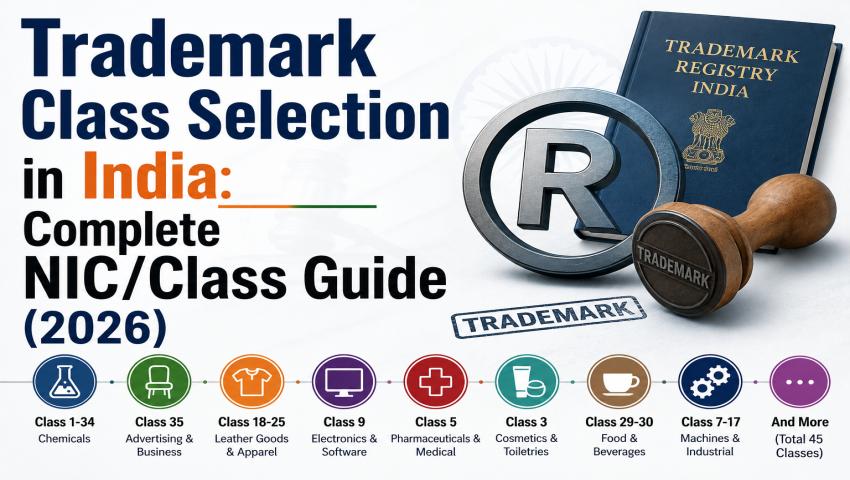
India follows the internationally recognized Nice Classification (NIC) system, which divides trademarks into:
- Classes 1 to 34 → Goods
- Classes 35 to 45 → Services
Your trademark protection is limited to the class(es) you choose. If you choose the wrong class, your brand may remain legally vulnerable—even after registration.
Legal Basis of Trademark Classification:
Trademark classification in India is governed under the Trade Marks Act, 1999, which allows registration of trademarks for specific goods or services. The classification system helps:
- Identify the scope of protection
- Avoid conflicts with similar marks in unrelated industries
Streamline examination and registration
Why Trademark Class Selection is Important?
Choosing the correct Trademark class determines:
- Scope of Legal Protection: Your trademark is protected only for the goods/services mentioned in the selected class.
- Risk of Objection: Wrong class selection increases chances of objection or rejection.
- Business Expansion: Incorrect class can limit future expansion.
- Cost of Registration: Each class requires separate government fees.
Structure of Trademark Classes in India:
Goods (Classes 1–34)
- Chemicals
- Machinery
- Clothing
- Food products
- Pharmaceuticals
Services (Classes 35–45)
- Advertising
- Education
- IT services
- Legal services
- Hospitality
Complete NIC Class Overview (Simplified):
Let’s break this down into practical segments.
Classes 1–5: Chemicals & Pharmaceuticals
- Class 1 – Industrial chemicals
- Class 2 – Paints and coatings
- Class 3 – Cosmetics and cleaning products
- Class 4 – Oils and fuels
- Class 5 – Pharmaceuticals and medical products
Classes 6–10: Machinery & Medical
- Class 6 – Metal goods
- Class 7 – Machines and equipment
- Class 8 – Hand tools
- Class 9 – Electronics, software
- Class 10 – Medical instruments
Classes 11–15: Equipment & Musical
- Class 11 – Electrical appliances
- Class 12 – Vehicles
- Class 13 – Firearms
- Class 14 – Jewelry
- Class 15 – Musical instruments
Classes 16–20: Paper, Furniture, Household
- Class 16 – Paper goods
- Class 17 – Rubber products
- Class 18 – Leather goods
- Class 19 – Building materials
- Class 20 – Furniture
Classes 21–25: Household to Clothing
- Class 21 – Kitchen utensils
- Class 22 – Ropes, tents
- Class 23 – Yarn and threads
- Class 24 – Fabrics
- Class 25 – Clothing
Classes 26–30: Accessories & Food
- Class 26 – Clothing accessories
- Class 27 – Carpets
- Class 28 – Toys
- Class 29 – Processed food
- Class 30 – Staple food items
Classes 31–34: Agriculture & Tobacco
- Class 31 – Agricultural products
- Class 32 – Beverages
- Class 33 – Alcoholic drinks
- Class 34 – Tobacco products
Classes 35–45: Services
- Class 35 – Business & Advertising: Marketing, retail, e-commerce
- Class 36 – Financial Services: Banking, insurance
- Class 37 – Construction: Repair and installation
- Class 38 – Telecommunications
- Class 39 – Transport & Logistics
- Class 40 – Manufacturing services
- Class 41 – Education & Entertainment
- Class 42 – IT & Software
- Class 43 – Food & Hospitality
- Class 44 – Medical & Beauty
- Class 45 – Legal & Security
How to Choose the Correct Trademark Class?
This is where most applicants make mistakes.
Step 1
Identify Core Business Activity:
Ask yourself:
- What do I sell?
- What service do I provide?
Step 2
Match with Class Description:
Find the class that best fits your activity.
Step 3
Consider Future Expansion:
If you plan to expand:
- Include additional relevant classes
Step 4
Avoid Over-Filing:
Filing in unnecessary classes:
- Increases cost
- Complicates process
Step 5
Take Professional Advice:
Experts can:
- Identify correct class
- Avoid rejection
Practical Examples:
Example 1: Clothing Brand
- Class 25 → Clothing
- Class 35 → Online retail
Example 2: IT Company
- Class 42 → Software services
- Class 9 → Software products
Example 3: Restaurant
- Class 43 → Food services
- Class 30 → Packaged food
Multi-Class Trademark Filing:
You can file:
- Single class application
- Multi-class application
Important:
- Fees apply per class
- Each class adds cost
Common Mistakes in Class Selection:
- Choosing Only One Class: Limits protection
- Wrong Class Selection: Leads to rejection
- Ignoring Future Expansion: Requires re-filing
- Copying Competitor Class: Not always accurate
- Filing in Too Many Classes: Increases cost unnecessarily
Trademark Class vs Business Activity:
Your class must reflect:
- Actual use
- Intended use
Mismatch can lead to:
- Trademark Objection
- Trademark Cancellation
How Class Selection Affects Trademark Search?
Trademark Search must be done:
- In selected class
- In related classes
Class Selection and Legal Protection:
Under the Trade Marks Act, 1999:
- Protection is class-specific
- Rights apply only within selected classes
Can Same Trademark Exist in Different Classes?
Yes.
Example:
- “Lotus” for cosmetics
- “Lotus” for education
When You Need Multiple Classes?
You need multiple classes if:
- You sell products AND services
- You operate in multiple industries
- You plan expansion
Trademark Class Selection Strategy:
- Start with Core Class: Primary business activity
- Add Supporting Classes: Retail, services
- Avoid Overlap: Don’t duplicate
- Think Long-Term: Future expansion
FAQs:
Unlimited (with fees per class)
No, you must file new application
Depends on business
Weak protection
Conclusion:
Trademark class selection is not just a technical step—it is the foundation of your brand protection.
Choosing the correct class ensures:
- Strong legal rights
- Better approval chances
- Long-term business protection
Under the Trade Marks Act, 1999, trademarks are protected only within selected classes—making this decision critical.
Final Takeaway:
Before filing your trademark:
- Understand your business activity
- Choose correct class
- Consider future expansion
- Avoid common mistakes
- A well-selected class today ensures complete protection tomorrow.
Please note: The views in the article/blog are personal and that of the author. The idea is to create awareness and for educational purpose and not intended to provide any product recommendations.