- 13/06/2026
- Govind S. Jethani
- 785 Views
- 3 Likes
- Company Law
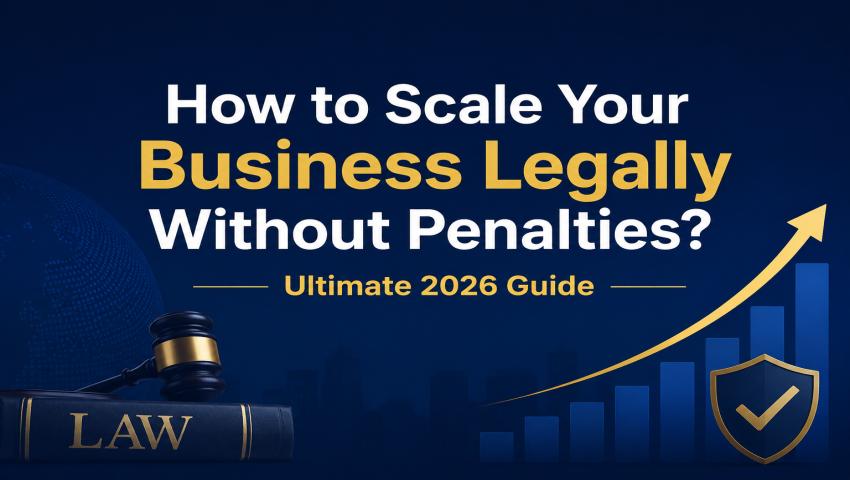
How to Scale Your Business Legally Without Penalties? Ultimate 2026 Guide
Scaling your business is a super exciting phase. Your sales are going up, your team is growing, and you are finally seeing your big dream come true. But let’s be honest—fast growth also brings big risks. Many Indian startups and SMEs get so busy chasing sales that they completely forget about legal compliance.
Suddenly, a random GST notice or a labour law penalty lands on their desk, putting a sudden brake on their growth. At My Finance Gyan, we regularly see brilliant businesses suffer just because they ignored the legal side of expansion. If you want to grow smoothly without getting stuck in legal court cases or paying heavy government fines, you need a compliance-first mindset.
Let’s look at how you can scale your business safely, sustainably, and legally in India.
What Does “Scaling a Business Legally” Mean?
1. Understanding Business Scaling:
There is a big difference between growing a business and scaling a business. Growth means you add new resources (like buying more machines or hiring more people) to increase your revenue. Scaling means you increase your revenue significantly without adding a lot of extra costs.
For example, an Indian software company or an e-commerce brand scales when it creates a digital product once but sells it to lakhs of customers across Mumbai, Delhi, and Bangalore without doubling its office space.
2. Why Legal Compliance Matters During Expansion:
When you are small, the government might not notice minor delays. But the moment your turnover crosses certain limits, you enter the radar of tax departments. Ignoring compliance leads to:
- Heavy Financial Penalties: Interest and late fees accumulate daily.
- GST and Tax Notices: Frozen bank accounts and endless visits to tax offices.
- Loss of Credibility: Customers and vendors will stop trusting you if your business gets blacklisted.
- Funding and Investor Concerns: No venture capital (VC) or angel investor will give you a single rupee if your legal books are messy.
Best Legal Structures for Scaling Businesses in India:
Choosing the right business format is like laying a strong foundation for a skyscraper. Here are your best options:
- Private Limited Company (Pvt Ltd): This is the gold standard for startups aiming for big scalability. It offers limited liability, has an independent legal identity, and is highly trusted by banks and investors. If you plan to raise equity funding from VCs, a Pvt Ltd company is mandatory.
- LLP (Limited Liability Partnership): An LLP gives you the benefits of limited liability like a company but has fewer compliance headaches and lower management costs. It is perfect for service-based businesses, consultancies, and lifestyle brands that do not need immediate VC funding.
- One Person Company (OPC): If you are a solo founder who wants full control but desires the legal status of a corporate entity, an OPC is an excellent choice. It is much better than a sole proprietorship because it protects your personal assets.
Comparing Business Structures:
Common Legal Mistakes Businesses Make While Scaling:
- Ignoring GST Compliance:Many founders make silly errors like uploading wrong invoices, delaying monthly GST returns, or completely forgetting about e-invoicing (which is mandatory if your turnover crosses the government threshold).
- Hiring Employees Without Proper Documentation: As your team grows from 5 people to 50, you cannot rely on verbal promises. Scaling without proper employment contracts, or ignoring Provident Fund (PF) and Employee State Insurance (ESIC) rules once you cross the employee threshold, can lead to serious legal action from the Labour Department.
- Using Improper Business Structures: Running a multi-crore business as a simple sole proprietorship is highly risky. In a proprietorship, your personal assets (like your house or car) can be seized to pay off business debts. To scale safely, you need a corporate structure.
- Trademark and Intellectual Property Issues: Imagine spending lakhs on marketing your brand, only to receive a legal notice saying someone else already owns that brand name. If you don’t register your trademark early, competitors can easily copy your name and steal your hard-earned market reputation.
- Poor Accounting and Tax Management: Mixing personal and business bank accounts, not keeping clean bills, and missing tax deadlines will totally ruin your cash flow when you are trying to expand.
Legal Compliance Checklist for Growing Businesses:
Bookmark this basic checklist to keep your business safe from government notices:
1. GST Compliance:
- File GSTR-1 and GSTR-3B on time every single month.
- Generate E-way bills for transporting goods worth more than the state-specified limits.
- Follow strict Input Tax Credit (ITC) reconciliation to ensure your vendors are filing their taxes correctly.
2. Income Tax Compliance:
- Pay Advance Tax in four installments throughout the financial year if your tax liability exceeds ₹10,000.
- Deduct and deposit TDS (Tax Deducted at Source) on payments like rent, professional fees, and contractor charges, and file quarterly TDS returns.
- File accurate business income tax returns before the annual deadline.
3. Labour Law Compliance:
- Register for PF once your team hits 20 employees.
- Register for ESIC if you have more than 10 or 20 employees (depending on the state) drawing salaries below the threshold.
- Obtain a Shops and Establishment License (Shop Act) for every commercial office or warehouse you open.
4. ROC Compliance for Companies:
- File annual financial forms (AOC-4 and MGT-7) with the Registrar of Companies.
- Conduct mandatory Board Meetings and Annual General Meetings (AGM).
- Maintain proper statutory registers and minutes of all meetings.
5. Contract and Agreement Management:
Never do business on a handshake. Draft robust, legally binding documents for:
- Vendor Agreements: To fix prices, delivery dates, and penalties for bad service.
- Client Contracts: To ensure you get paid on time and clarify the scope of work.
- Non-Disclosure Agreements (NDAs): To protect your business secrets, source code, or client data from leaking.
Protecting Your Brand While Scaling:
1. Trademark Registration Importance:
Your brand name, logo, and slogan are your biggest assets. Registering your trademark gives you exclusive legal rights to use them across India. If someone copies your name, you can legally sue them and claim damages.
2. Copyright and Patent Protection:
If you are building a tech startup, make sure your software code, user interface, and website content are protected by Copyright. If you invent a completely new technology or a unique manufacturing process, file for a Patent immediately before launching it in the market.
3. Preventing Brand Misuse Online:
- Buy all major domain extensions (like .in, .com, .co.in) for your brand name so online scammers cannot mimic your website.
- Secure your official social media handles on Instagram, LinkedIn, YouTube, and X (Twitter) early on, even if you don’t plan to use them right away.
Financial and Tax Planning to Avoid Penalties:
Maintaining Proper Books of Accounts:
Gone are the days of keeping bills in a physical shoe box. Use modern, cloud-based accounting software to track every rupee coming in and going out. Accurate bookkeeping helps you calculate your true profit margins and keeps you ready for any sudden government inspection.
2. Avoiding GST and Income Tax Notices:
Tax departments now use advanced AI systems to catch tax evaders. Common triggers for getting a tax notice include:
- Huge mismatches between your GSTR-1 and GSTR-3B filings.
- Claiming wrongful Input Tax Credit (ITC) that doesn’t match your vendor’s data in GSTR-2B.
Drastic drops in net profit while your total sales are jumping significantly.
3. Importance of Professional Audits:
Do not view audits as a boring legal chore; look at them as a health checkup for your business. An Internal Audit catches bookkeeping mistakes early, while a statutory Tax Audit by a Chartered Accountant ensures your business fully obeys the Income Tax Act.
Government Registrations and Licenses Required During Scaling:
When Should You Hire Legal and Tax Professionals?
1. Signs Your Business Needs Expert Help:
You are an entrepreneur, not a lawyer or a CA. You should stop managing compliance yourself when:
- You are spending more time tracking tax deadlines than closing sales.
- You are expanding to multiple states or planning to raise external investor funds.
Your business transactions become complex, involving international clients or multi-vendor payouts.
2. Benefits of Professional Compliance Management:
Outsourcing your legal and tax worries to Startup Portal Business Services professionals saves you hours of stressful work, ensures you never pay a late fee penalty, and gives you total peace of mind to focus entirely on scaling company operations.
Tips to Scale Your Business Safely and Sustainably:
- Automate Compliance Tracking: Use digital compliance calendars and tools to set automatic alerts for GST, TDS, and ROC due dates.
- Maintain Proper Documentation: Save every single contract, vendor invoice, tax receipt, and board resolution on a secure cloud drive.
- Conduct Regular Legal Reviews: Sit down with your legal advisor once every six months to review your active contracts and licenses.
- Stay Updated with Changing Laws: Indian corporate and tax laws change frequently. Ensure your business adapts to new amendments quickly.
- Build a Compliance-First Culture: Train your HR, accounting, and sales teams to treat compliance as a non-negotiable rule rather than an afterthought.
Conclusion:
Scaling your business successfully is not just about increasing your sales charts; it is about building an asset that lasts for decades. History is full of fast-growing startups that shut down overnight simply because they broke the law or ignored government compliance.
Taking care of your legal structures, taxes, and trademarks early on saves you from disastrous penalties and legal trouble down the road. Proactive legal planning might look like an extra expense today, but it is actually the cheapest insurance policy your business can buy.
Plan smartly, stay compliant, and scale your business to new heights with confidence!