- 14/04/2026
- Govind S. Jethani
- 815 Views
- 5 Likes
- ETF
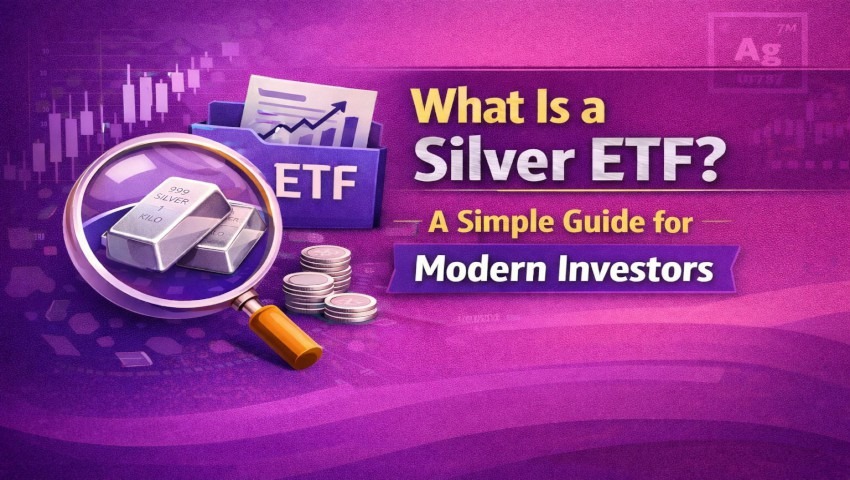
What Is a Silver ETF? A Simple Guide for Modern Investors
Silver has long been valued as both a precious metal and an industrial asset. From ancient coins to its modern use in electronics and solar panels, silver continues to play a vital role in the global economy. Traditionally, investing in silver meant buying physical forms like coins, bars, or jewelry—often involving concerns around storage, safety, and purity.
Today, Silver ETFs (Exchange Traded Funds) offer a smarter and more convenient way to invest in silver—without physically holding it.
In this guide, we explain what a Silver ETF is, how it works, its benefits and risks, and how it is taxed in India.
What Is a Silver ETF?
A Silver ETF (Exchange Traded Fund) is a market-traded investment instrument that tracks the price of silver. These funds are listed on stock exchanges and can be bought or sold just like shares through a trading account.
Each unit of a Silver ETF is backed by physical silver of high purity (typically 99.9% or more), securely stored by the fund.
Simply put, a Silver ETF allows you to invest in silver digitally, without worrying about storage, theft, or quality issues.
How Does a Silver ETF Work?
Silver ETFs are passively managed funds that closely mirror the movement of silver prices.
Here’s how they function:
- The fund house purchases and stores physical silver
- ETF units are issued to investors against this holding
- The Net Asset Value (NAV) changes based on silver price movements
Key Features:
- Tracks domestic silver prices closely
- Can be traded anytime during market hours
- No storage or purity concerns
- Physical silver is securely stored and regularly audited
This structure makes Silver ETFs behave like physical silver—but in a much more efficient format.
Why Invest in Silver ETFs?
Silver ETFs have become popular among modern investors for several reasons:
- Convenience: No need to store or insure physical silver—everything is held digitally.
- High Liquidity: You can buy or sell units easily on the stock exchange during market hours.
- Portfolio Diversification: Silver often behaves differently from stocks and bonds, helping balance overall risk.
- Cost Efficiency:Unlike physical silver, there are no making charges, storage costs, or wastage concerns.
Silver ETF vs Physical Silver:
For most investors, ease and liquidity make Silver ETFs a more practical choice.
Silver ETF vs Silver Mutual Fund:
While both provide exposure to silver, they differ in structure:
- Silver ETF: Traded on stock exchanges; requires a Demat account; real-time pricing
- Silver Mutual Fund: Invests in Silver ETFs; can be bought without a Demat account
Silver ETFs generally have lower costs, while mutual funds offer ease for beginners without Demat accounts.
Taxation of Silver ETF in India:
Short-Term Capital Gains (STCG):
- Applicable if held for 12 months or less
- Taxed as per your income tax slab
Long-Term Capital Gains (LTCG):
- Applicable if held for more than 12 months
- Taxed at 5% (plus surcharge and cess)
- No indexation benefit available
Unlike equity investments, Silver ETFs do not enjoy LTCG exemption limits.
How to Invest in Silver ETF in India?
Investing in Silver ETFs is simple:
- Open a Demat & Trading Account
- Search for Silver ETFs on your broker platform
- Place Buy/Sell Orders during market hours
- Track Your Investment in your Demat account
You can start with small amounts and invest as per your financial goals.
What Affects Silver ETF Prices?
Silver ETF prices are influenced by multiple global and domestic factors:
- Global Silver Prices: Driven by supply-demand dynamics in international markets.
- Industrial Demand: Used widely in electronics, solar energy, and medical sectors.
- Inflation & Currency Movement: Silver acts as an inflation hedge, and INR-USD fluctuations impact prices.
Who Should Invest in Silver ETFs?
Silver ETFs may be suitable for:
- Investors seeking diversification
- Those looking to hedge against inflation
- Long-term investors (1+ year horizon)
- Individuals wanting commodity exposure without physical hassle
However, they are best suited for investors with moderate risk tolerance.
Risks of Investing in Silver ETFs:
Like any investment, Silver ETFs come with risks:
- Price Volatility: Silver prices can fluctuate significantly.
- Market Risk: Prices may move with overall market sentiment.
- Currency Risk: Global silver pricing in USD affects returns due to exchange rate changes.
Being aware of these risks helps in better decision-making.
Best Practices for Investing in Silver ETFs:
To make the most of your investment:
- Invest with a long-term perspective
- Avoid over-allocation to a single asset
- Track global and economic trends
- Stay updated on taxation and regulations
Consistency and discipline are key to better outcomes.
Common Myths About Silver ETFs:
"Silver ETFs are speculative"
No—they are regulated by SEBI and traded transparently.
"You don't actually own silver"
You own units backed by physical silver held securely.
"Taxation is same as equity ETFs"
Incorrect—Silver ETFs follow non-equity taxation rules.
Final Thoughts:
A Silver ETF is a modern, efficient, and secure way to invest in silver without the challenges of physical ownership. It offers liquidity, transparency, and ease of access, making it ideal for today’s investors.
Whether you are looking to diversify your portfolio, hedge against inflation, or gain exposure to commodities, Silver ETFs can be a valuable addition—provided they align with your financial goals and risk profile.
Disclaimer:
The views expressed in this article are personal and intended for educational and awareness purposes only. This content does not constitute financial or investment advice.