- 05/06/2026
- Govind S. Jethani
- 455 Views
- 3 Likes
- Company Law
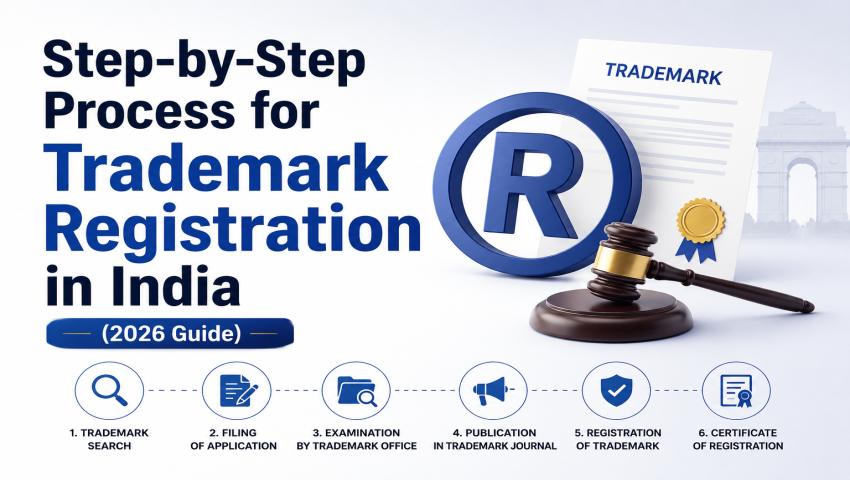
Step-by-Step Process for Trademark Registration in India (2026 Guide)
If you are starting a business, launching a new product, building a D2C brand, or creating a long-term professional identity, one of the smartest legal steps you can take is securing your brand through trademark registration in India.
A registered trademark helps protect your:
- Brand name
- Logo
- Tagline
- Symbol
- Packaging identity
- Distinctive business elements
from misuse, imitation, and future legal disputes.
Under Indian trademark law, a trademark can include:
- Words
- Logos
- Symbols
- Shapes
- Colour combinations
- Labels
- Sounds
provided the mark is distinctive and capable of distinguishing your goods or services from others.
This detailed guide by My Finance gyan explains the complete step-by-step process for trademark registration in India in 2026 in simple and practical language for entrepreneurs, startups, professionals, MSMEs, and growing businesses.
What is a Trademark?
A trademark is a legally protected sign or identity that distinguishes the goods or services of one business from another.
A trademark may include:
- Brand names
- Logos
- Letters or numerals
- Labels
- Shapes
- Packaging designs
- Sound marks
- Colour combinations
In simple terms, a trademark is the legal identity of your brand.
It is what customers:
- Remember
- Search for
- Trust
- Recommend
A registered trademark gives exclusive legal rights to use the mark for specified goods or services.
Why Trademark Registration is Important?
Many businesses begin using a brand name without registration. However, this creates significant risk.
If another party registers a similar mark earlier, you may face:
- Legal objections
- Opposition proceedings
- Brand disputes
- Forced rebranding
- Financial loss
Trademark registration provides:
- Legal protection
- Exclusive ownership rights
- Brand security
- Market credibility
- Protection against infringement
- Long-term brand value
👉 A trademark is not just a legal formality; it is a valuable business asset.
Who Can Apply for Trademark Registration in India?
Trademark applications can be filed by:
- Individuals
- Sole proprietors
- Startups
- Partnership firms
- LLPs
- Private Limited Companies
- MSMEs
- Trusts and societies
- Foreign applicants
Applications can be filed personally or through a trademark attorney or registered agent.
👉 You do not need a company to apply for a trademark.
Step-by-Step Process for Trademark Registration in India:
Step 1
Identify What You Want to Trademark:
Before filing, decide exactly what you want to protect.
You may register:
- A word mark (brand name)
- A logo or device mark
- A slogan or tagline
- A shape mark
- A colour combination
- A sound mark
Word Mark vs Logo Mark:
Word Mark: Protects the brand name itself.
Example: “Zenvora”
This is usually the strongest form of protection.
Logo/Device Mark: Protects a specific logo or stylised design.
Example: Brand logo with unique font and artwork
Many businesses first register the word mark and later register the logo separately.
Step 2
Check Whether the Mark is Registrable:
Not every business name qualifies for trademark registration.
A trademark must be:
- Distinctive
- Unique
- Non-generic
- Non-deceptive
Marks Commonly Rejected:
❌ Generic words
❌ Purely descriptive names
❌ Offensive marks
❌ Deceptively similar marks
❌ Common industry terms
Example: Strong Trademark
✔️ “Zenvora” for skincare
Weak Trademark: “Pure Herbal Skin Cream”
The second example is descriptive and difficult to protect legally.
👉 Distinctive and invented names usually have better approval chances.
Step 3
Conduct Trademark Search:
Before filing, conduct a trademark availability search.
This helps identify:
- Existing identical marks
- Similar sounding marks
- Similar spellings
- Related class conflicts
Skipping this step is one of the biggest mistakes applicants make.
What Should Be Checked?
A proper search should examine:
- Exact matches
- Phonetic similarity
- Visual similarity
- Similar industry classes
- Related goods/services
Official Trademark Portal: Trademark searches can be conducted through the official IP India Trademark Portal.
👉 A proper search reduces the risk of objections and opposition.
Step 4
Select the Correct Trademark Class:
Trademark registration in India follows the Nice Classification system.
- Classes 1–34 cover goods
- Classes 35–45 cover services
Selecting the Correct Trademark class is extremely important.
Common Examples:
If your business operates in multiple areas, you may require multiple classes.
👉 Trademark protection is class-specific.
Step 5
Prepare Documents and Filing Details:
Once the class is finalised, prepare the required information carefully.
Document Required for Trademark:
- Applicant name
- Applicant type
- Address
- Brand/logo details
- Trademark class
- Goods/services description
- Usage status
- Date of first use (if applicable)
- User affidavit (if prior use claimed)
- Authorisation documents (if filed through agent)
Important Practical Point: The ownership name should be selected carefully.
For example: If the brand belongs to a company, the company should ideally file the application directly.
Incorrect ownership creates future transfer complications.
Step 6
File Form TM-A:
Trademark applications are filed through Form TM-A.
This is the primary application form for trademark registration in India.
Government Filing Fees (2026):
For Individuals / Startups / Small Enterprises:
- ₹4,500 (e-filing)
- ₹5,000 (physical filing)
For Other Applicants:
- ₹9,000 (e-filing)
- ₹10,000 (physical filing)
👉 Fees are charged per class and per mark.
Most applicants prefer e-filing because it is faster and more economical.
Applications are filed through the official IP India e-Filing Portal.
Step 7
Receive Application Number:
After filing:
- An application number is generated
- Trademark status tracking becomes available
You can track the status online through the official portal.
Use of ™ Symbol: After filing, businesses generally begin using the ™ symbol.
However:
- ™ = Trademark applied
- ® = Trademark registered
👉 The ® symbol can only be used after successful registration.
Step 8
Examination by Trademark Registry:
The Trademark Registry examines the application to determine:
- Distinctiveness
- Legal validity
- Similarity with existing marks
Common Grounds for Objection:
- Lack of distinctiveness
- Similarity to earlier marks
- Descriptive nature
- Deceptive wording
- Prohibited content
If no objection is raised, the mark moves toward acceptance and publication.
Step 9
Reply to Examination Report:
If objections are raised, the applicant must file a detailed reply.
This is a common stage in trademark registration.
Process:
- Review examination report
- Prepare objection reply
- Submit supporting arguments/documents
- Await registry decision
If the reply is satisfactory: The mark proceeds further
If not: A show-cause hearing may be scheduled
👉 Professional drafting is important at this stage.
Step 10
Attend Show-Cause Hearing (If Required):
If the registry is not satisfied with the reply: A hearing may be conducted
During the hearing: The applicant or attorney presents arguments supporting registration.
After hearing:
- The application may be accepted
- Or refused
Step 11
Publication in Trademark Journal:
Once accepted, the trademark is published in the Trademark Journal.
This publication acts as:
- Public notice
- Opportunity for third parties to object
The official journal is available on the IP India Website.
Step 12
Opposition Period:
- After publication: A 4-month opposition window applies
- During this period: Third parties may oppose the trademark.
- If no opposition is filed: The application becomes eligible for registration.
Step 13
Opposition Proceedings (If Any):
If opposition is filed:
- Legal proceedings begin
- Both parties get hearing opportunities
Possible outcomes:
- Opposition dismissed → Registration proceeds
- Opposition accepted → Application refused
Trademark Opposition matters can become technical and document-intensive.
Step 14
Registration Certificate:
If:
- No opposition is filed, or
- Opposition is decided in your favour
the trademark proceeds to registration. A Registration Certificate is then issued by the registry.
👉 Only after this stage can the ® symbol legally be used.
Step 15
Trademark Validity and Renewal:
Trademark registration remains valid for: 10 years from the application date.
It can be renewed indefinitely every 10 years.
Renewal Fees: Renewal is generally filed through Form TM-R.
Failure to renew may result in:
- Removal from trademark register
- Loss of legal rights
Expedited Trademark Processing:
Applicants seeking faster processing may opt for expedited examination.
Expedited Fees (2026):
Individuals / Startups / Small Enterprises:
- ₹20,000 per class
Other Applicants:
- ₹40,000 per class
Expedited processing speeds up examination but does not guarantee approval.
Common Mistakes to Avoid:
❌ Choosing descriptive brand names
❌ Filing under wrong trademark class
❌ Skipping trademark search
❌ Claiming false prior use
❌ Filing under incorrect owner name
❌ Assuming filing equals registration
Practical Trademark Strategy for Beginners:
For most businesses, the ideal approach is:
- Finalise a distinctive brand name
- Conduct trademark search
- Select correct class
- File word mark first
- Add logo mark later if needed
- Use correct ownership details
- Monitor application status regularly
- Respond to objections promptly
👉 A strong filing strategy significantly improves registration success.
Conclusion:
The step-by-step process for trademark registration in Pune India is more than a simple filing procedure. It is a structured legal process that protects your brand identity and strengthens your business in the long run.
A trademark helps businesses:
- Build brand value
- Prevent misuse
- Gain customer trust
- Create long-term intellectual property assets
For 2026, the key points remain clear:
- Form TM-A continues as the primary application form
- Trademark registration remains class-specific
- Opposition period remains 4 months
- Registered trademarks remain valid for 10 years with renewal option
Choosing a distinctive mark, filing under the correct class, and handling objections properly are critical to successful trademark registration.
Disclaimer: This article is for educational and informational purposes only and does not constitute legal, professional, or trademark advisory services.