

Mutual Fund Exit Load Explained: What Every Investor Should Know?
Mutual funds have become one of the most preferred investment options in India, thanks to their flexibility, professional management, and potential for long-term wealth creation. However, many investors overlook one important factor before investing—the exit load.

Best Investment Options in India (2026)
Choosing the right investment is one of the most important financial decisions you’ll make. With numerous options available in India—from mutual funds and stocks to fixed deposits and government-backed schemes—it can be difficult to decide where to invest.

Common Money Mistakes People Make in Their 20s
Your 20s are one of the most exciting phases of life. It's often the time when you start earning your first salary, become financially independent, and make important life decisions. However, it's also the stage where many people unknowingly develop poor financial habits that can impact their future.

TDS on Professional Fees (Latest Income Tax Act 2025)
Whenever a business pays fees to a professional such as a CA, CS, lawyer, doctor, engineer, architect, consultant or advisor, it may have to deduct TDS (Tax Deducted at Source).
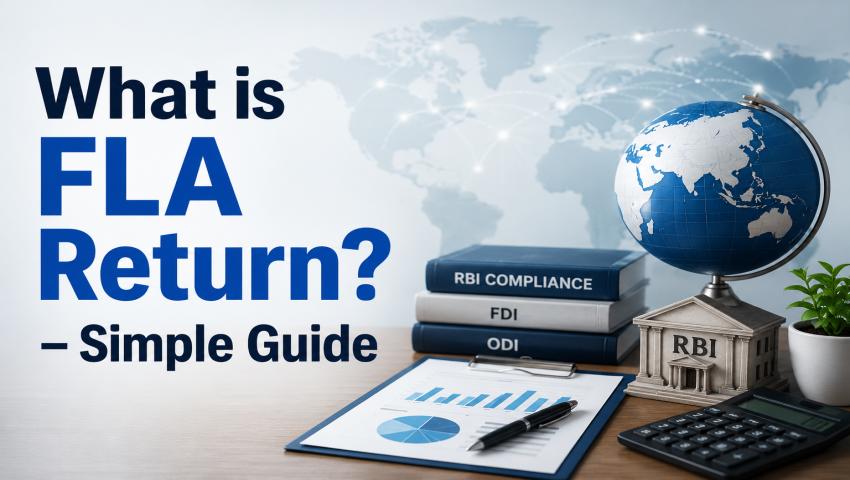
What is FLA Return?
FLA Return stands for Foreign Liabilities and Assets Return. It is an annual return filed with the Reserve Bank of India (RBI) by Indian entities that have received foreign investment or have made investments outside India.

Tax on Global ETF Investment from India
Global ETFs are becoming popular among Indian investors. They allow you to invest in foreign markets such as the US, global technology companies, healthcare companies, semiconductor companies, and international stock indices.

How to Improve Your Credit Score Fast?
A credit score is a number that shows how well you manage borrowed money. In India, many people call it a CIBIL score. A score of 750 or above is generally considered good.
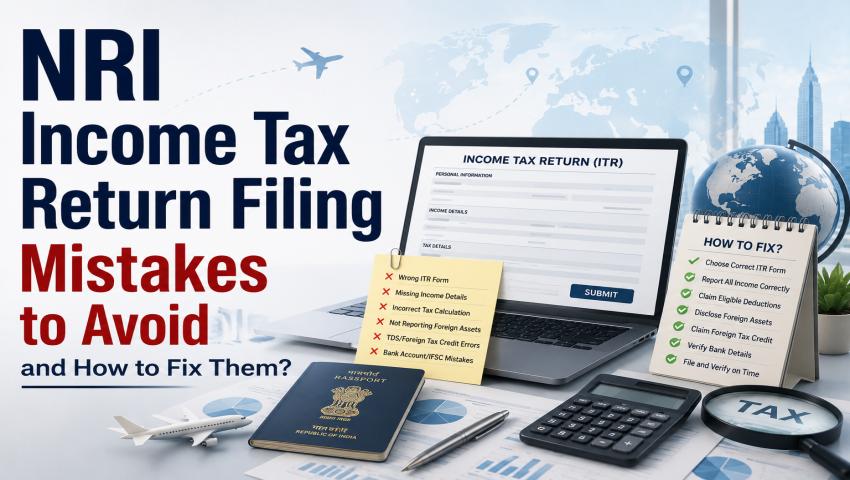
NRI Income Tax Return Filing Mistakes to Avoid and How to Fix Them?
If you are a Non-Resident Indian (NRI), filing your Income Tax Return (ITR) in India is often far more complicated than it looks. Between residential status rules, foreign income disclosures, DTAA benefits, and TDS on property sales, there are dozens of places where things can go wrong.

How to Become Debt-Free?
At first, one loan or one credit card may seem easy to manage. But over time, you may have multiple EMIs, credit card bills, and other payments.

Why Trademark Registration is Important for Your Business in India?
Your business name, logo, and tagline help customers recognize and trust your products or services. If these are not legally protected, someone else may copy them or even register them before you.